
Does My Business Need to Comply with the Waste Regulations?

Short answer: yes. If you run a business, charity or any other workplace, you produce waste, and if you produce waste, you have legal duties. The size of your business, the type of waste and where you operate change which duties apply, but there is no sector or headcount that switches them all off.

This guide explains the main waste obligations for businesses in England, what has changed recently, and how to check whether you are compliant. It also flags where Wales, Scotland and Northern Ireland differ.

What do we mean by “the Waste Regulations”?

There is no single set of regulations called “the Waste Regulations”. Businesses are usually caught by a combination of:

  • The waste duty of care (Section 34, Environmental Protection Act 1990), which applies to everyone who produces, keeps, carries, treats or disposes of business waste.
  • The Waste (England and Wales) Regulations 2011, which require businesses to take all reasonable steps to apply the waste hierarchy (prevent, reuse, recycle, recover, then dispose).
  • Workplace recycling rules (“Simpler Recycling”), which require businesses in England to separate certain waste streams.
  • Hazardous waste regulations, which apply if you produce waste that is harmful to people or the environment.
  • Producer responsibility rules, covering packaging, electrical and electronic equipment (WEEE) and batteries, which apply depending on what you place on the market.
  • Digital waste tracking, a new system that is rolling out in phases.

Which of these apply to you depends on your answers to a few simple questions, covered below.


1. The duty of care: it applies to every business

If your business produces waste of any kind, the duty of care applies to you. In practice it means you must:

  • Store waste safely and securely so it cannot escape, be stolen or cause pollution.
  • Only pass waste to an authorised person, such as a registered waste carrier or a permitted site. Check the carrier’s registration on the Environment Agency public register.
  • Describe the waste accurately and complete a waste transfer note (or hazardous waste consignment note) for each transfer. Waste transfer notes should be kept for at least two years; hazardous waste consignment notes for at least three years.
  • Take reasonable steps to make sure the waste is managed lawfully after it leaves your premises.

You remain responsible for your waste until it has been properly disposed of or recovered. If a “man with a van” takes it and tips it illegally, you can still be prosecuted. Penalties for duty of care offences can include unlimited fines, and serious cases can lead to imprisonment.


2. Workplace recycling: Simpler Recycling in England

England’s Simpler Recycling reforms require workplaces to separate their waste into core streams, working with their waste collector. In broad terms these are:

  • Dry recyclables (paper and card, plastic, metal and glass)
  • Food waste
  • Residual (general) waste

The key dates are:

DateWho is covered
31 March 2025Businesses and non-domestic premises with 10 or more full-time equivalent (FTE) employees
31 March 2027Micro-firms with fewer than 10 FTE employees

Points that catch people out:

  • Headcount is counted across the whole organisation, not per site. Three sites with five staff each is a 15-person business, not three micro-firms.
  • It is not just offices and shops. Charities, schools, care homes and other non-domestic premises are in scope.
  • Staff kitchens count. If your premises produce waste similar to household waste, the rules apply to it.
  • Plastic film and bags are due to be added to the plastic stream at a later date than originally planned. Check current guidance for the latest timetable.

If you do not comply, the Environment Agency can issue compliance notices.

If you are a micro-firm, the 2027 deadline is closer than it feels. Talk to your waste collector now about containers, collection frequency and contract changes.


3. Hazardous waste

Many businesses produce hazardous waste without realising it. Common examples include:

  • Fluorescent tubes and some other lighting
  • Batteries
  • Waste oils, solvents, paints and adhesives
  • Asbestos
  • Some electrical equipment and electronic screens
  • Clinical and healthcare waste
  • Certain chemical-contaminated materials

If you produce hazardous waste you must classify it correctly, keep it separate from non-hazardous waste, use a registered carrier, and complete consignment notes for each movement. Mixing hazardous waste with other waste is generally unlawful.


4. Digital waste tracking: what has just changed

Digital waste tracking is designed to replace much of the paper-based system with a single national digital service, to improve traceability and tackle waste crime.

  • From 1 October 2026, operators of permitted waste receiving sites in England and Wales must record the waste they receive through the government’s digital service. Scotland and Northern Ireland have their own timetables, so check the position there.
  • Waste collectors, carriers, brokers and dealers are expected to follow in a later phase, anticipated from October 2027.
  • Waste producers have no mandatory date yet.

For now, you must carry on completing waste transfer notes and consignment notes as normal. However, it is sensible to ask your waste contractor how they are preparing, because the data they will need from you is likely to increase.


Business waste bins separated for dry recycling, food waste and general waste

Do you know what waste your business produces?

5. Producer responsibility: packaging, WEEE and batteries

Separate from the day-to-day waste you throw away, you may have obligations because of what you supply:

  • Packaging: extended producer responsibility (EPR) rules require larger businesses that supply or handle packaging to report packaging data and pay fees. Thresholds are based on turnover and tonnage, so check whether you are in scope.
  • WEEE: businesses that sell electrical and electronic equipment have take-back and financing duties.
  • Batteries: businesses that supply batteries have their own registration and take-back duties.

If you manufacture, import or sell products, take specific advice on these.


6. Does it apply outside England?

Yes, although the detail differs.

  • Wales: workplace recycling regulations have applied since April 2024, requiring separate collection of core materials, including food waste.
  • Scotland: the Waste (Scotland) Regulations 2012 require businesses to present dry recyclables and, for many, food waste for separate collection.
  • Northern Ireland: separate legislation applies, including duties to segregate recyclables, with its own timetable for digital waste tracking.
  • Republic of Ireland and the Isle of Man: each has its own waste legislation, and the English rules above do not apply.

If you operate across more than one jurisdiction, you need to manage each site against the local rules.


A quick compliance checklist

Ask yourself:

  1. Do I know what types and volumes of waste my business produces?
  2. Is any of it hazardous, and is it classified and segregated correctly?
  3. Is my waste collector or carrier registered, and do I hold up-to-date transfer notes and consignment notes?
  4. Do I separate dry recyclables, food waste and general waste as required for my size and location?
  5. Have I recorded my headcount across the whole organisation to confirm which deadline applies?
  6. Do my staff know what goes where?
  7. If I supply packaging, electrical goods or batteries, have I checked my producer responsibility obligations?
  8. Do I know what my contractor needs from me for digital waste tracking?

If you cannot answer yes to all of these, a waste compliance review is a sensible next step.


What happens if you get it wrong?

Consequences can include compliance notices, fixed penalties, prosecution with unlimited fines, and reputational damage, particularly if your waste ends up fly-tipped or illegally dumped. Poor waste management is also frequently a health and safety issue, from fire risks in poorly stored waste to manual handling injuries and exposure to hazardous substances.


How we can help

Waste compliance sits alongside health, safety and environmental management, and many businesses find it easier to deal with them together. We can prepare a legal register detailing each piece of waste legislation that applies to your business and what you must do to comply with it. We can also maintain this register when new legislation is introduced or your sites or operations change.

Contact one of our team to find out how we can help you with your waste obligations.

This article is general guidance and not legal advice. Legislation and deadlines change; please contact us for advice on your specific circumstances.

When Does DSEAR Apply?

Short answer: DSEAR applies whenever your work involves a substance that could cause a fire, explosion or similar energetic event. The Dangerous Substances and Explosive Atmospheres Regulations 2002 (DSEAR) cover far more than heavy industry. Petrol, solvents, LPG, wood dust, flour and even the hydrogen given off by charging forklift batteries can bring a workplace within scope.

This guide explains when DSEAR applies, which activities are excluded and what employers need to do.

What is DSEAR?

DSEAR is the main piece of Great Britain’s health and safety law for protecting people from the fire and explosion risks of dangerous substances at work. It requires employers to assess those risks and then eliminate or reduce them, so far as is reasonably practicable. The regulations are enforced by the Health and Safety Executive (HSE) and, for some premises, local authorities.

What is a “dangerous substance” under DSEAR?

A substance counts as dangerous under DSEAR if it could cause harm through fire, explosion or a similar energetic reaction. This includes:

  • Flammable liquids, such as petrol, solvents, thinners, alcohols and some paints, varnishes and adhesives
  • Flammable gases, such as LPG, propane, acetylene, hydrogen and natural gas
  • Aerosols containing flammable propellants
  • Flammable solids, such as certain metal powders
  • Oxidising substances and organic peroxides, which can feed or intensify a fire
  • Self-reactive, self-heating and pyrophoric substances, which can ignite without an obvious ignition source
  • Substances that give off flammable gas on contact with water
  • Combustible dusts, such as flour, sugar, grain, wood, paper, plastics and some metal dusts, which can form explosive clouds when dispersed in air

Look at hazard pictograms and the supplier’s safety data sheets, these are a good first indicator of whether a substance is covered.

DSEAR

Does DSEAR apply to you?

What is an explosive atmosphere?

DSEAR is particularly concerned with explosive atmospheres. These are mixtures of air and flammable gases, vapours, mists or dusts in which, once ignited, burning spreads through the whole mixture. A small leak in a poorly ventilated room, a cloud of dust in a hopper or vapour from a spray booth can each create one. If there is also an ignition source (a spark, static electricity, a hot surface or an electrical fault), the result can be devastating.

When does DSEAR apply to my business?

DSEAR applies when dangerous substances are present at work, whether you:

  • Use them in a process, such as spraying, mixing, cleaning or welding
  • Store them, for example solvents, gas cylinders or fuel
  • Produce or handle them, intentionally or as a by-product (such as dust from sanding or cutting)
  • Transport them within or around your premises

It applies regardless of business size or sector. Typical examples include:

  • Vehicle repair, spraying and refinishing
  • Woodworking, joinery and furniture manufacture
  • Food and drink production, milling and bakeries
  • Warehousing, including battery charging areas
  • Engineering, welding and fabrication
  • Waste and recycling, where dust, gases and fire risks are common
  • Farms, including grain stores and fuel storage
  • Laboratories, schools and universities
  • Petrol stations and fuel depots

DSEAR protects employees, contractors, visitors and members of the public who could be affected by your work, and self-employed people have duties too. Small quantities can still bring DSEAR into play, although the controls needed should be proportionate to the risk.

When does DSEAR not apply?

DSEAR does not apply to some activities, which are covered by other specific legislation, including:

  • Areas used directly for the medical treatment of patients
  • Appliances burning gaseous fuel that are covered by gas appliance rules
  • The manufacture, handling, use, storage and transport of explosives and chemically unstable substances, which fall under explosives legislation
  • Mineral extraction industries, which have their own regulations
  • Certain forms of transport, such as use of vehicles on public roads, which have separate rules

If you are unsure whether an exclusion applies to your activity, take advice before relying on it – in some cases only parts of DSEAR are disapplied.

DSEAR or COSHH: what’s the difference?

The two sets of regulations are often confused, but they address different harms. COSHH deals with hazardous substances that damage health, such as through inhalation or skin contact. DSEAR deals with substances that can cause fire, explosion and similar events. Many substances fall under both. Solvents, for example, can harm health through exposure and also burn or explode, so you may need to assess the risks under each.

What do I need to do to comply with DSEAR?

DSEAR compliance usually follows these steps:

  1. Carry out a risk assessment. Identify the dangerous substances, how they might ignite or explode and who could be harmed. Consider the quantities, the processes, the possible ignition sources and what could go wrong.
  2. Eliminate or reduce the risk. Substitute with a less hazardous substance where you can, reduce quantities, improve ventilation and control leaks and spills.
  3. Control ignition sources. Use suitable equipment in hazardous areas, manage static, control hot work and keep unsuitable equipment out.
  4. Classify hazardous areas into zones. Where explosive atmospheres may occur, areas are classed by how often and for how long they are likely to be present (zones 0, 1 and 2 for gases and vapours; zones 20, 21 and 22 for dusts). This determines the equipment that can be used there.
  5. Mark hazardous areas where necessary. Display the explosive atmosphere warning sign at entry points.
  6. Mitigate the effects. Use measures such as explosion relief, suppression, isolation and separation, so that harm is limited if an incident occurs.
  7. Prepare for emergencies. Provide procedures, alarms, escape routes and equipment, and practise them.
  8. Inform, instruct and train. Everyone who works with or near dangerous substances must understand the risks and controls.
  9. Review regularly. Revisit your assessment when substances, processes, equipment or layouts change.

What happens if I don’t comply?

Fires and explosions involving dangerous substances can cause fatalities, life-changing injuries and major damage to property and business continuity. HSE can issue improvement and prohibition notices and prosecute, and serious breaches can bring unlimited fines or even imprisonment. Insurers may also challenge claims where a business has not assessed or controlled its risks.

Does DSEAR apply in Northern Ireland and the Republic of Ireland?

DSEAR applies in Great Britain. Northern Ireland has an equivalent set of regulations, the Dangerous Substances and Explosive Atmospheres Regulations (Northern Ireland) 2003, and the Republic of Ireland regulates explosive atmospheres and chemical agents under its own health and safety legislation. The principles are broadly the same, but the details differ, so check the rules that apply where you operate.

Not sure whether DSEAR applies to you?

If your business stores, uses or produces flammable liquids, gases, aerosols or dusts, assume DSEAR is relevant and start by listing the substances you have and where they are. The HSE provides additional guidance for businesses.


This article is general guidance and not legal advice. Requirements depend on your specific work activities and location.

Does COSHH Apply to My Business?

Short answer: almost certainly, yes. If anyone at your workplace uses, makes, handles or is exposed to substances that could harm their health, the Control of Substances Hazardous to Health Regulations 2002 (COSHH) apply to you. That covers far more businesses than most owners expect, from building sites and factories to salons, schools, care homes and offices.

This guide explains what COSHH covers, who must comply, what is excluded and what you need to do.

What is COSHH?

COSHH is the main piece of Great Britain’s health and safety law governing hazardous substances at work. It requires employers to prevent or adequately control exposure to substances that can cause ill health, whether through breathing them in, skin contact, swallowing or contact with the eyes.

The regulations are enforced by the Health and Safety Executive (HSE) and, for some sectors, local authorities.

Which substances does COSHH cover?

COSHH applies to a wide range of substances hazardous to health, including:

  • Chemicals and products containing them, such as cleaning products, paints, solvents, adhesives, de-greasers and disinfectants
  • Fumes, such as welding or soldering fumes
  • Dusts, such as wood dust, flour dust, silica dust from cutting stone or concrete, and cement
  • Vapours, gases and mists, such as spray mists and exhaust fumes
  • Biological agents, such as bacteria, viruses and fungi, including Legionella in water systems
  • Germs that cause diseases, such as leptospirosis (Weil’s disease) or hepatitis, where work brings people into contact with them
  • Nanotechnology materials, where hazardous
  • Asphyxiating gases, which displace oxygen

Many everyday products carry hazard warning pictograms on the label. These are a good first clue that COSHH is relevant. The supplier’s safety data sheet gives the detail you need for your assessment.

Who does COSHH apply to?

COSHH places duties on employers, but it also protects others affected by your work. You must consider:

  • Your employees and agency or temporary workers
  • Contractors working on your premises
  • Visitors, customers and members of the public who could be exposed
  • Self-employed people, who have duties for their own protection and that of others

Business size doesn’t matter. A sole trader with one employee has the same duties as a large organisation, although the paperwork and controls should be proportionate to the risk.

Does COSHH apply to offices and low-risk workplaces?

Yes, although the risks are usually lower. Offices use cleaning products, toner and printer consumables, and some have air conditioning or water systems that need managing for Legionella. You still need to consider whether any substances could cause harm. In many cases a short, sensible assessment will show that risks are low and existing controls are enough.

What does COSHH not cover?

Some hazards have their own specific regulations, so COSHH does not apply to them:

  • Asbestos, covered by the Control of Asbestos Regulations 2012
  • Lead, covered by the Control of Lead at Work Regulations 2002
  • Radioactive substances and ionising radiation, covered by the Ionising Radiations Regulations 2017
  • Substances hazardous only because they are explosive, flammable, or are at extreme temperature or pressure, which are covered by other legislation such as the Dangerous Substances and Explosive Atmospheres Regulations 2002 (DSEAR)

Even where COSHH doesn’t apply, you will normally still have duties under these other regulations and under the Health and Safety at Work etc. Act 1974.

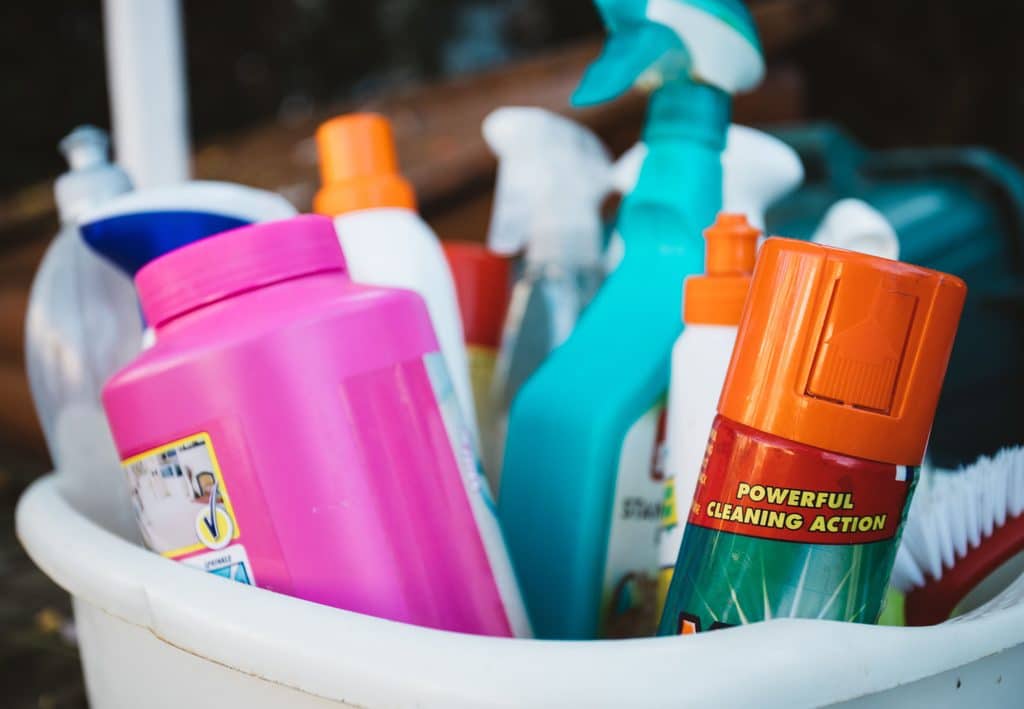
COSHH bucket

Do you know what chemicals are used in your business?

What do I need to do to comply with COSHH?

In practice, COSHH compliance comes down to these steps:

  1. Assess the risks. Identify which hazardous substances are present, who could be exposed, how and how much. Record your significant findings if you employ five or more people.
  2. Prevent or control exposure. Where you can, eliminate the substance or substitute something safer. Otherwise use engineering controls such as enclosure or local exhaust ventilation, safe working systems, and personal protective equipment (PPE) only as the last line of defence.
  3. Make sure controls are used and maintained. Local exhaust ventilation must be thoroughly examined and tested at least every 14 months, and records kept.
  4. Monitor exposure where needed. Compare exposure against the workplace exposure limits in HSE’s EH40 guidance.
  5. Provide health surveillance where required. This applies where there is a risk of identifiable ill health, such as dermatitis or occupational asthma.
  6. Inform, instruct and train your people. Workers need to understand the risks, the controls and what to do if something goes wrong.
  7. Plan for emergencies. Have procedures for spills, accidents and incidents involving hazardous substances.
  8. Review regularly. Revisit your assessment whenever processes, substances or work methods change.

What happens if I don’t comply?

Poor COSHH compliance can lead to serious occupational illness, including occupational asthma, dermatitis, cancers and lung disease, often with effects that appear years later. The HSE can issue improvement or prohibition notices and prosecute, with unlimited fines for serious breaches. Beyond enforcement, you face the cost of civil claims, sickness absence and reputational damage.

Does COSHH apply in Northern Ireland and the Republic of Ireland?

COSHH itself applies in Great Britain. Northern Ireland has its own equivalent, the Control of Substances Hazardous to Health Regulations (Northern Ireland) 2003, and the Republic of Ireland regulates chemical and biological agents under separate legislation. The core principle is the same: assess, control and review. If you operate across more than one jurisdiction, check the requirements for each.

Not sure where you stand?

If your business uses any chemicals, dusts, fumes or biological agents, assume COSHH applies and start by listing the substances you use. If you’re unsure whether your assessments are adequate, our health and safety consultants can help you review your hazardous substances, carry out COSHH assessments and put practical controls in place.


This article is general guidance and not legal advice. Requirements depend on your specific work activities and location.