
For any food business operating within the UK—from artisan micro-producers and high-street caterers to large-scale manufacturers and commercial meat processors—managing food safety is not merely good commercial practice; it is a fundamental statutory obligation.
At the core of UK food hygiene compliance sits HACCP (Hazard Analysis and Critical Control Point). Far from being a static shelf-bound folder, a properly executed HACCP framework is a dynamic, preventative management tool designed to identify, mitigate, and control food safety hazards before they compromise consumer health or expose your business to regulatory enforcement.
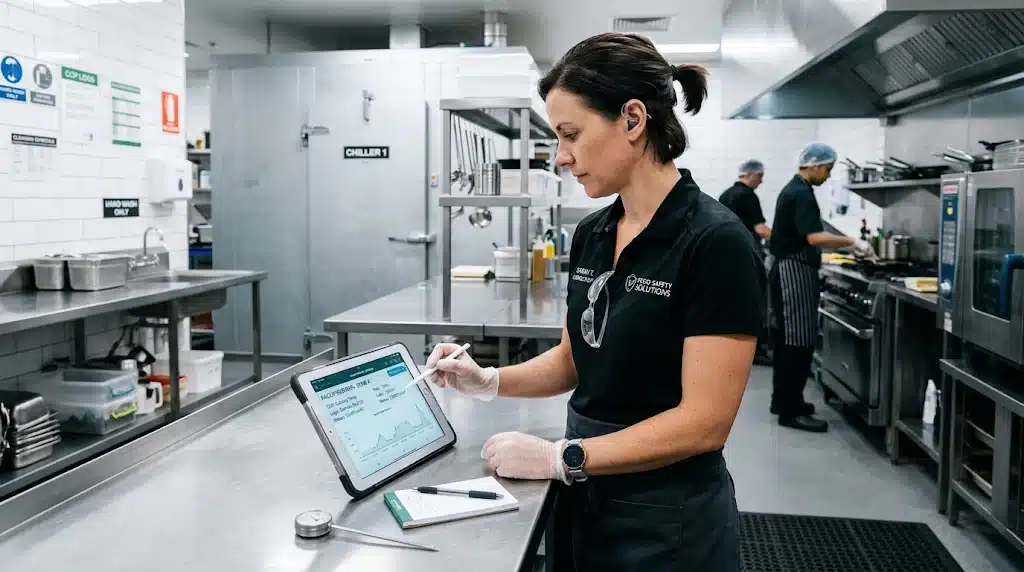
Does your food business have a HACCP plan?
What is HACCP and Why is it Legally Mandatory in the UK?
HACCP is a structured, internationally recognised management system focused on identifying biological, chemical, physical, and allergenic hazards at specific points throughout the food production and preparation chain.
The UK Legal Landscape
Following Brexit, the foundational European hygiene regulations were retained in UK law via the European Union (Withdrawal) Act 2018. Under Article 5 of Retained Regulation (EC) No 852/2004 (enforceable across Great Britain via the Food Hygiene Regulations), all Food Business Operators (FBOs) are legally required to put in place, implement, and maintain a permanent procedure based on the HACCP principles.
Key regulatory considerations under UK law include:
- Scope of Compliance: The requirement applies across the entire supply chain—including primary production, storage, distribution, catering, and retail.
- Proportionate Implementation: The Food Standards Agency (FSA) recognises that a one-size-fits-all approach is unworkable. While small caterers and retailers can often satisfy legal obligations using FSA-recognised frameworks like Safer Food, Better Business (SFBB) or Safe Catering (Northern Ireland), manufacturers, multi-site operators, and high-risk operations require bespoke, fully documented HACCP plans.
- Specialist Premises: Meat plants and slaughterhouses operating under Retained Regulation (EC) No 853/2004 must maintain rigorous, specialist HACCP audit trails subject to strict FSA or Local Authority approval.
The 4 Primary Categories of Food Safety Hazards
To construct a robust HACCP system, your hazard analysis must evaluate four critical categories of harm:

Operationalising the 7 Principles of HACCP
A fully compliant UK HACCP plan rests on the seven Codex Alimentarius principles, preceded by essential preliminary steps (such as assembling a competent HACCP team, product mapping, and process flow verification).
1. Conduct a Comprehensive Hazard Analysis
Map every stage of your operational process flow—from goods-in and intake storage to preparation, thermal processing, chilling, packaging, and dispatch. Identify all plausible hazards at each step and specify preventative control measures.
2. Determine Critical Control Points (CCPs)
Identify the exact steps where control can be applied and is essential to prevent, eliminate, or reduce a food safety hazard to an acceptable level (e.g., using a decision tree).
Note: Not every operational step is a CCP. Routine hygiene activities are managed through Prerequisite Programmes (PRPs) such as pest control, waste management, and general sanitations.
3. Establish Critical Limits
Define clear, measurable target boundaries that separate safe products from unsafe outcomes at every CCP.

Standard UK Regulatory & Guidance Thresholds:
- Cooking Core Temperature: >= 75C for 30 seconds (or equivalent thermal treatments: 70C for 2 minutes; 80C for 6 seconds).
- Hot Holding: >= 63C maintained continuously (Food Safety (Temperature Control) Regulations 1995).
- Chilled Storage: Statutory upper legal limit of =< 8C (FSA best practice targets =< 5C).
- Reheating (Scotland): >= 82C core temperature.
4. Establish a CCP Monitoring System
Determine how each CCP will be monitored, how often checks will occur, and who is accountable. Monitoring must generate objective data (e.g., calibrated probe thermometer logs, digital data-logger histories).
5. Establish Corrective Actions
Predetermine the precise operational steps required when monitoring indicates that a CCP has breached critical limits. Corrective action protocols must address two elements:
- Quarantine/Isolate/Dispose: Isolating and evaluating affected product batches.
- Root-Cause Resolution: Rectifying equipment or process failure to prevent recurrence.
6. Establish Verification Procedures
Establish routine auditing and validation measures to confirm that your HACCP plan is operating effectively in practice. This includes periodic laboratory microbiological testing, swab sampling, internal compliance audits, and annual plan reviews.
7. Establish Documentation and Record-Keeping
Maintain proportionate, reliable records demonstrating historical compliance. Records are your primary line of legal defence during Environmental Health Officer (EHO) inspections or third-party accreditation audits (e.g., BRCGS, SALSA).
Common HACCP Audit Pitfalls Identified by UK Consultants
During independent food safety management system reviews, several recurring non-conformances frequently surface:
- Treating HACCP as a One-Off Exercise: Failing to review the plan when recipes, ingredients, shift patterns, processing equipment, or suppliers change.
- Confusing PRPs with CCPs: Overloading a HACCP plan with basic operational hygiene steps (e.g., hand washing) rather than true Critical Control Points.
- Inadequate Record Retention: Failing to store daily CCP monitoring logs for sufficient time frames (typical retention guidelines dictate preserving routine logs for at least 12 months, or product shelf-life plus 1 year for long-life products).
- Lack of Staff Competence: Failing to ensure staff overseeing CCP monitoring hold formal, accredited HACCP qualifications appropriate to their responsibilities (Level 2, 3, or 4 Awards in HACCP).
How Ashbrooke Management Consultants Can Help
Navigating statutory food compliance while managing efficient day-to-day operations can prove challenging. We deliver practical, risk-focused advice tailored to UK food businesses:
- Bespoke legal compliance registers: Developing tailored, audit-ready legal registers detailing the legislation that applies specifically to your business.
- Regular update service: A regular update service to ensure your legal registers are always up to date.
Contact Ashbrooke Management Consultants today to schedule a confidential compliance review.

