
Building contractor sentenced over unsafe work

Building contractor sentenced after unsafe work methods constituted a public risk and resulted in asbestos being disturbed.

Preston Crown Court heard that in November 2020, Mr Mohammed Shafiq, owner of a roller shutter business, purchased a former warehouse in Manner Sutton Street, Blackburn to convert into smaller work units, including one for his own use – Mr Shafiq was using his own employees for this.

A report was received by the Health and Safety Executive (HSE) from a member of the public, concerned about the fact that bricks from the blocked-up windows were being knocked out from inside onto the street below, causing risk to passers-by.

The HSE investigation found that as well as the risk posed to pedestrians, no edge protection had been installed to prevent the employees from falling. They were also at risk of an internal fall down an open shaft. Additionally, an asbestos survey had not been carried out on the building prior to work commencing.
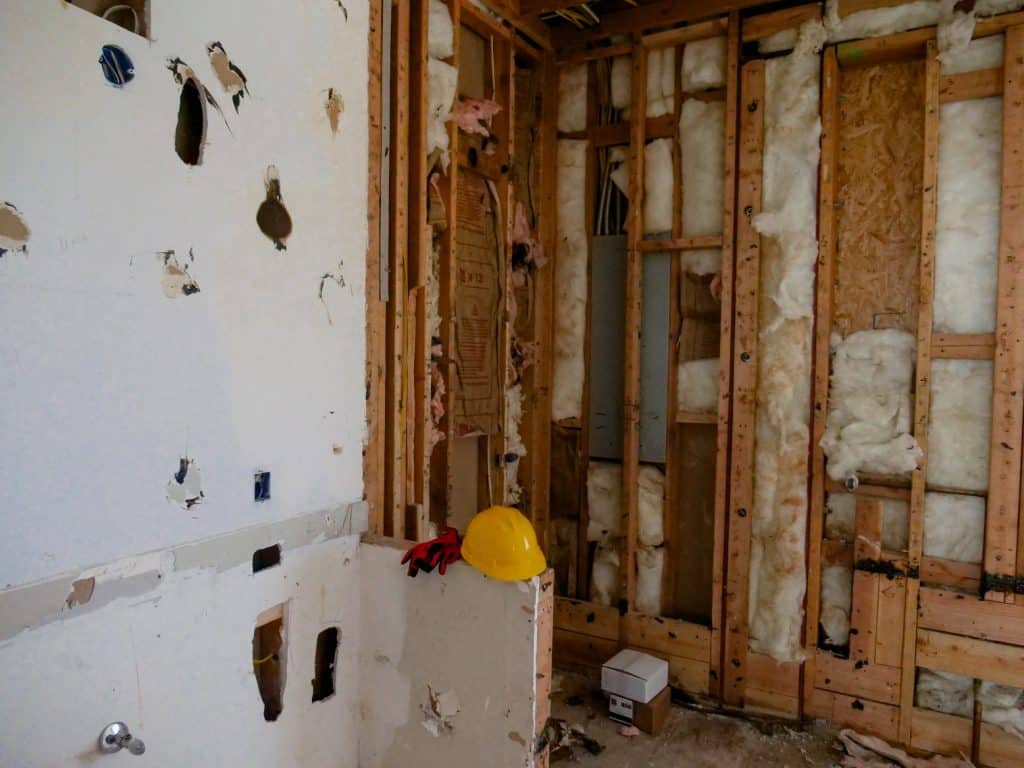
Building contractor sentenced over unsafe work
Refurbishment projects may require an asbestos survey (stock image)

As a result, piles of disturbed asbestos containing materials (ACMs) such as asbestos cement and insulation, were lying throughout the site. Workers were dry sweeping construction dust and debris possibly containing carcinogenic asbestos dusts without any respiratory protective equipment or suitable personal protective equipment. None of the workers had been provided with any training in asbestos awareness.

Live electric cables were being trailed through water without RCD protection, posing a risk of electric shock, and there was a general lack of training and suitable equipment for work to be carried out in a safe manner. An experienced principal contractor should have been hired to assess risks and undertake refurbishment work in a controlled manner.

The building contractor sentenced over unsafe work was Mohammed Shafiq of Blackburn who pleaded guilty to breaching Regulation 5 of the Control of Asbestos Regulations 2012, Regulation 4 of the Construction (Design and Management) Regulations 2015 and Regulation 4 of the Work at Height Regulations 2005. He received a 12-month suspended sentence and was fined £5,000 and ordered to pay costs of £4,636.08

HSE inspector Christine McGlynn said after the hearing:

“The public can be reassured that HSE takes concerns seriously and will not hesitate to investigate thoroughly and prosecute those who put workers and members of the public at risk.’’

Construction projects require detailed planning to ensure that they are carried out safely.  The appointment of a principal contractor to plan and coordinate the construction project will help to ensure activities are done safely.  Workers engaged in construction activities should be competent and have a good understanding of safe working practices.  Where construction involves disturbing the fabric of a building, an assessment is required in respect of asbestos.  Asbestos containing materials may be present in any building which was constructed or refurbished before 2000 and it may be necessary to engage a specialist asbestos contractor to undertake an intrusive survey. 

If you require advice on health and safety in your workplace, please contact one of the Ashbrooke team.
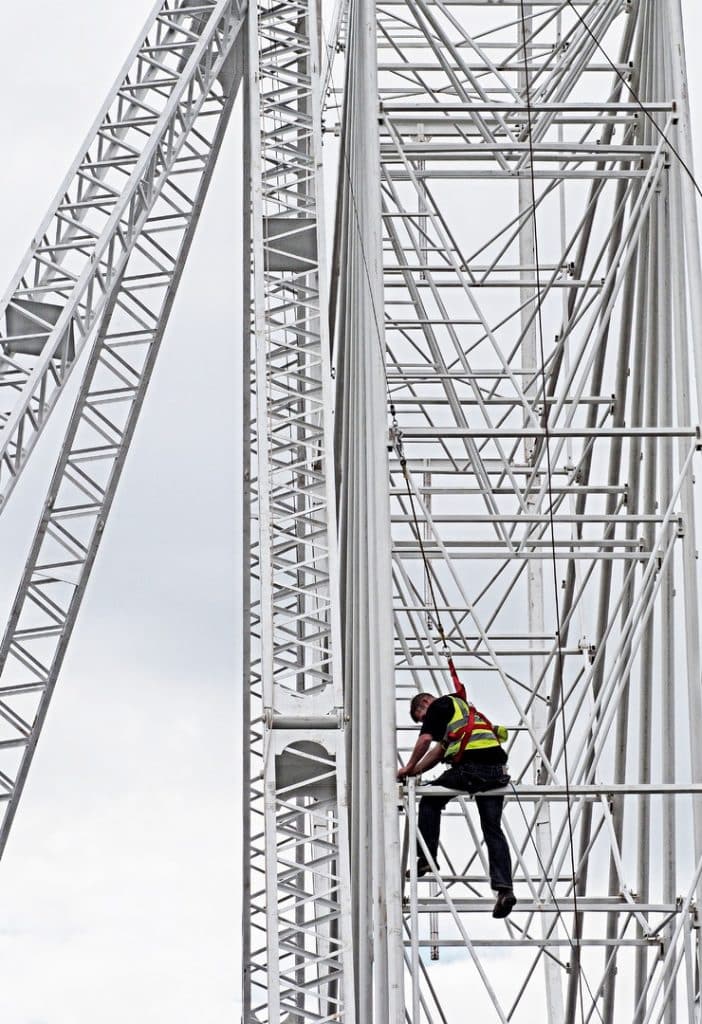

Working at height leads to prosecution

A steel fabrication company has been fined £8,000 after employees working at height fell two metres from the forks of a telehandler.

The workers of Eagle Structural Ltd were dismantling an unwanted shipping container at Great Carlton, Lincolnshire on 7 October 2019.

Operatives were working in an unsecured non-integrated working platform when it fell from the forks of a telehandler. One employee suffered a broken arm and fractured elbow and has been told that he will never regain a full range of movement in his arm. The second employee suffered internal bruising.

An investigation by the Health and Safety Executive (HSE) found that the non-integrated working platform was not compatible with the telehandler and that it had not been properly secured to prevent it falling.

Working at height
Working at height requires careful planning (stock image)

Eagle Structural Ltd of Lincolnshire pleaded guilty to breaching Regulation 8(b)(i) of The Work at Height Regulations 2005. At Lincoln Magistrates’ Court on 1 July 2022, the company was fined £8,000 and ordered to pay costs of £2,497.

Speaking after the hearing, HSE inspector, Tim Nicholson said:

“This incident could so easily have been avoided by simply carrying out correct control measures and safe working practices. Companies should be aware that HSE will not hesitate to take appropriate enforcement action against those that fall below the required standards.”

Working at height requires careful planning and the use of suitable equipment.  A risk assessment should be undertaken as part of the planning and detail the controls required to ensure workers’ safety.  Any worker involved in an activity at height must be competent to carry out the task and be proficient in using the equipment provided. 

If you require advice on health and safety in your workplace, please contact one of the Ashbrooke team.

Fire Safety Guidance in Construction

Every year many construction site workers are killed or injured because of their work, and many others suffer serious ill health. The hazards are not, however, restricted to people working on sites. Children and other members of the public are also killed or injured because construction activities have not been adequately controlled. The construction industry’s performance has steadily improved, but the rates of death, serious injury and ill health are still among the highest of all industries. Fire safety is a key risk that construction operations need to manage and control.

The Health and Safety Executive (HSE) has updated its guidance on fire safety in construction HSG168.  The third edition of the guidance was published this month and explains how everyone involved in construction projects can comply with their legal duties relating to fire risks. It is aimed at all those who procure, design, develop and manage construction sites, including clients and designers – it is relevant to all construction projects.

fire safety in construction

The main changes to this guidance relate to elimination, and or, reduction of fire risks at the pre-construction stage as required by the Construction (Design and Management) Regulations 2015. The HSE has also added a glossary.

Each year there are estimated to be hundreds of fires on construction sites, potentially putting the lives of workers and members of the public at risk. Fire safety in construction is about eliminating fire risks during the design phase (where practicable), preventing fires from starting and ensuring people’s safety if they do.

This guidance does not reference the findings of the Grenfell Tower fire in 2017 because the fire did not occur while the building was being renovated or constructed.

The HSG168 guide is available free of charge on the HSE website. If you require advice for your construction project, please contact one of the Ashbrooke team.

Leading Health and Safety at Work

Company directors and Boards have a duty to provide leadership within their organisations for health and safety management. The Health and Safety Executive (HSE) has published a guide for directors which provides advice on the effective leadership of health and safety.

Health and Safety
Boardroom leadership in health and safety management

Appointing a Competent Person

As an employer, you must appoint a competent person or people to help you meet your health and safety legal duties.  Specifically, regulation 7 of the Management of Health and Safety at Work Regulations 1999 requires employers to appoint one or more competent persons to assist on health and safety measures required to comply with statutory duties. In this article we look at the things to consider before appointing a Competent Person.

Continue reading “Appointing a Competent Person”

New landlord safety duties

The Electrical Safety Standards in the Private Rented Sector (England) Regulations 2020 (‘Regulations’) come into force on 1 June 2020 and impose new safety duties for landlords on specified residential premises in England. The Regulations are likely to have significant financial consequences for landlords particularly where breaches are subject to enforcement action. The Regulations require local housing authorities to enforce the duties and include a power to arrange remedial action in certain circumstances.

Continue reading “New landlord safety duties”