
Short answer: almost certainly, yes. If anyone at your workplace uses, makes, handles or is exposed to substances that could harm their health, the Control of Substances Hazardous to Health Regulations 2002 (COSHH) apply to you. That covers far more businesses than most owners expect, from building sites and factories to salons, schools, care homes and offices.
This guide explains what COSHH covers, who must comply, what is excluded and what you need to do.
What is COSHH?
COSHH is the main piece of Great Britain’s health and safety law governing hazardous substances at work. It requires employers to prevent or adequately control exposure to substances that can cause ill health, whether through breathing them in, skin contact, swallowing or contact with the eyes.
The regulations are enforced by the Health and Safety Executive (HSE) and, for some sectors, local authorities.
Which substances does COSHH cover?
COSHH applies to a wide range of substances hazardous to health, including:
- Chemicals and products containing them, such as cleaning products, paints, solvents, adhesives, de-greasers and disinfectants
- Fumes, such as welding or soldering fumes
- Dusts, such as wood dust, flour dust, silica dust from cutting stone or concrete, and cement
- Vapours, gases and mists, such as spray mists and exhaust fumes
- Biological agents, such as bacteria, viruses and fungi, including Legionella in water systems
- Germs that cause diseases, such as leptospirosis (Weil’s disease) or hepatitis, where work brings people into contact with them
- Nanotechnology materials, where hazardous
- Asphyxiating gases, which displace oxygen
Many everyday products carry hazard warning pictograms on the label. These are a good first clue that COSHH is relevant. The supplier’s safety data sheet gives the detail you need for your assessment.
Who does COSHH apply to?
COSHH places duties on employers, but it also protects others affected by your work. You must consider:
- Your employees and agency or temporary workers
- Contractors working on your premises
- Visitors, customers and members of the public who could be exposed
- Self-employed people, who have duties for their own protection and that of others
Business size doesn’t matter. A sole trader with one employee has the same duties as a large organisation, although the paperwork and controls should be proportionate to the risk.
Does COSHH apply to offices and low-risk workplaces?
Yes, although the risks are usually lower. Offices use cleaning products, toner and printer consumables, and some have air conditioning or water systems that need managing for Legionella. You still need to consider whether any substances could cause harm. In many cases a short, sensible assessment will show that risks are low and existing controls are enough.
What does COSHH not cover?
Some hazards have their own specific regulations, so COSHH does not apply to them:
- Asbestos, covered by the Control of Asbestos Regulations 2012
- Lead, covered by the Control of Lead at Work Regulations 2002
- Radioactive substances and ionising radiation, covered by the Ionising Radiations Regulations 2017
- Substances hazardous only because they are explosive, flammable, or are at extreme temperature or pressure, which are covered by other legislation such as the Dangerous Substances and Explosive Atmospheres Regulations 2002 (DSEAR)
Even where COSHH doesn’t apply, you will normally still have duties under these other regulations and under the Health and Safety at Work etc. Act 1974.
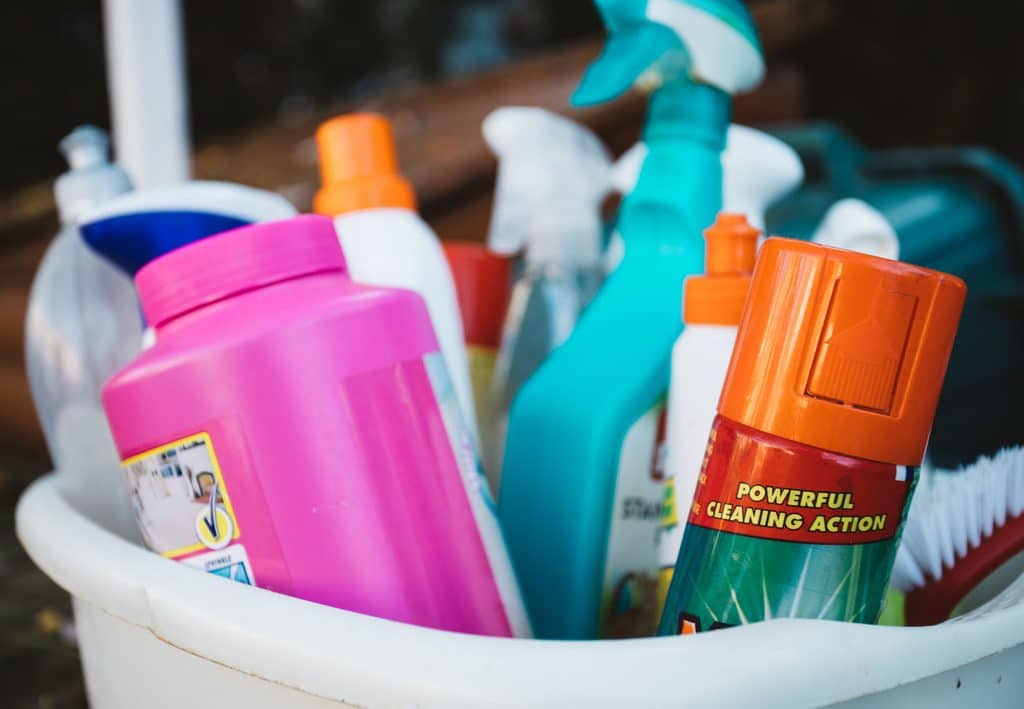
Do you know what chemicals are used in your business?
What do I need to do to comply with COSHH?
In practice, COSHH compliance comes down to these steps:
- Assess the risks. Identify which hazardous substances are present, who could be exposed, how and how much. Record your significant findings if you employ five or more people.
- Prevent or control exposure. Where you can, eliminate the substance or substitute something safer. Otherwise use engineering controls such as enclosure or local exhaust ventilation, safe working systems, and personal protective equipment (PPE) only as the last line of defence.
- Make sure controls are used and maintained. Local exhaust ventilation must be thoroughly examined and tested at least every 14 months, and records kept.
- Monitor exposure where needed. Compare exposure against the workplace exposure limits in HSE’s EH40 guidance.
- Provide health surveillance where required. This applies where there is a risk of identifiable ill health, such as dermatitis or occupational asthma.
- Inform, instruct and train your people. Workers need to understand the risks, the controls and what to do if something goes wrong.
- Plan for emergencies. Have procedures for spills, accidents and incidents involving hazardous substances.
- Review regularly. Revisit your assessment whenever processes, substances or work methods change.
What happens if I don’t comply?
Poor COSHH compliance can lead to serious occupational illness, including occupational asthma, dermatitis, cancers and lung disease, often with effects that appear years later. The HSE can issue improvement or prohibition notices and prosecute, with unlimited fines for serious breaches. Beyond enforcement, you face the cost of civil claims, sickness absence and reputational damage.
Does COSHH apply in Northern Ireland and the Republic of Ireland?
COSHH itself applies in Great Britain. Northern Ireland has its own equivalent, the Control of Substances Hazardous to Health Regulations (Northern Ireland) 2003, and the Republic of Ireland regulates chemical and biological agents under separate legislation. The core principle is the same: assess, control and review. If you operate across more than one jurisdiction, check the requirements for each.
Not sure where you stand?
If your business uses any chemicals, dusts, fumes or biological agents, assume COSHH applies and start by listing the substances you use. If you’re unsure whether your assessments are adequate, our health and safety consultants can help you review your hazardous substances, carry out COSHH assessments and put practical controls in place.
This article is general guidance and not legal advice. Requirements depend on your specific work activities and location.
