A Wellington dairy farmer pollution prosecution following incident after slurry entered watercourse.
A farmer has been given 14 weeks in prison suspended for a year and ordered to pay £10,000 costs after he persistently allowed slurry to run off into a stream near his farm.
David Bartlett, aged 70, of Upcott Dairy Farm, Sampford Arundel, Wellington, appeared for sentencing before District Judge Brereton at Taunton magistrates’ court on Thursday 18 July.
He had previously pleaded guilty to three offences relating to pollution to the Westford stream, a tributary of the River Tone. He was also ordered to pay £154 victim surcharge.
In a case brought by the Environment Agency, the court heard that the farm had a long history of failing to properly contain slurry and had been warned several times in the past for causing pollution of the Westford stream.
In October 2022, Agency officers installed remote monitoring equipment on the stream which confirmed regular pollution events were continuing to occur.
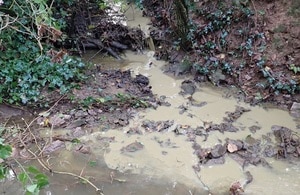
Using the data from the remote monitoring, officers went to the monitoring site in December 2022 where they found significant amounts of sewage fungus contaminating the bed of the watercourse, an indication of persistent pollution.
Pollution resulted in poor quality of water
Continuing upstream towards Upcott Dairy Farm, colonies of bloodworm were evident. These are a species of pollution tolerant organism associated with poor water quality. No invertebrate life forms were noted when stones in the stream bed were turned over, further indicating the poor quality of the water.
Near the farm, one of the officers saw a nearby ditch had suddenly started to discharge a significant amount of effluent with the appearance and smell of slurry. The source was quickly traced to an overflowing underground slurry tank on Upcott Dairy Farm.
Officers also investigated the system used for applying slurry to fields. Typically, farmers will use slurry to provide nutrients to their crops or grass. Bartlett was using a simple pipe to dispose of slurry in a single location.
Although not discharging slurry at the time of the pollution event inspection, it was clear there was significant contamination of slurry around the end of the pipe and evidence that slurry had tracked down the field toward the Westford stream.
A subsequent visit found slurry being pumped on to waterlogged land with no attempt to use the slurry for crop benefit. The slurry was several inches thick in the field indicating it had been pumped over a prolonged duration in the same location.
Toward the bottom of the field there was a significant build-up of mud and slurry either side of the gateway crossing the stream. This too presented a risk of further runoff pollution into the stream.
Pollution survey revealed stream affected for 2.5km
A biologist’s survey and report confirmed that the Westford stream had experienced repeated, acute and sustained chronic pollution events by slurry. Lack of slurry storage had led to slurry being pumped inappropriately on to a single patch of land where it was likely to run-off and cause pollution.
Bartlett had failed, despite repeated warnings, to install slurry storage facilities that would allow slurry to be stored during winter when ground conditions were unsuitable.
The report stated there had been “a significant negative impact on the aquatic invertebrate community and water quality along 2.5km of Westford stream.”
Bartlett submitted a statement to the Environment Agency in which he made limited admissions, implying others, such as his neighbour and the local authority were responsible. He denied deliberately pumping slurry into the watercourse.
Judge Brereton said there were significant aggravating features in the case, including Bartlett having previously been warned over causing pollution, his failure to carry out proper checks or make structural improvements by way of an adequate, compliant slurry storage system which is capable of storing slurry having received funds from the Rural Payments Agency to pay for infrastructure that would improve the environment and not cause significant, sustained pollution incidents.
Dairy farmer repeatedly ‘failed to acknowledge’ advice
This farmer has, over the years, caused numerous pollution incidents and he has repeatedly failed to acknowledge the advice given or to improve the facilities for storing or properly using slurry.
For over 30 years there has been legislation in place requiring all livestock farmers to have storage facilities capable of storing a minimum of four months’ slurry production. The 2018 Reduction and prevention of Agricultural Diffuse Pollution Regulations now also require farmers to plan all applications of slurry in order to reduce the risk of pollution. Pumping slurry on to waterlogged land is unlawful and is likely to cause diffuse pollution.
We hope Mr Bartlett will now work with us to voluntarily improve the facilities at Upcott Dairy Farm. If he doesn’t, we won’t hesitate to use other legislative powers to reduce the risk of further pollution
Pollution prosecution charges
The charges against the defendant were:
On and before the 2 December 2022 you, David Bartlett, did cause an unpermitted water discharge activity, namely the discharge of poisonous, noxious or polluting matter from Upcott Dairy Farm, Sampford Arundel, Wellington, Somerset, into inland fresh waters contrary to Regulations 12(1)(b) and Regulation 38(1)(a) of the Environmental Permitting (England and Wales) Regulations 2016.
On and before the 2 December 2022 you, David Bartlett, a Land Manager did not ensure that organic matter, namely cattle slurry, was not applied to agricultural land that was waterlogged, flooded or snow covered in that you applied organic fertilizer to waterlogged ground contrary to Regulation 3(a) and 11 of the Reduction and prevention of Agricultural Diffuse Pollution (England) Regulations 2018
On and before the 2 December 2022 you, David Bartlett, a Land Manager did not ensure that for each application of organic or manufactured fertilizer to agricultural land, the application was planned so as not to give rise to a significant risk of agricultural diffuse pollution contrary to Regulation 4(1)(a)(ii) and 11 of the Reduction and Prevention of Agricultural Diffuse Pollution (England) Regulations 2018.
Prevent pollution with effective slurry management
Effective slurry management is crucial for both environmental sustainability and farm productivity. Here are some best practices for slurry management in the UK:
Multiple people involved in large scale illegal waste crime in Staffordshire are facing prison following a successful prosecution by the Environment Agency.
The sentencing, which led to the conviction of 5 of the defendants, took place on 2 April 2024, at Shrewsbury Crown Court sitting at Telford Magistrates, following an 8-week trial in September and October 2023.
The prosecution concerned a large-scale illegal dumping of waste at Bonnie Braes Farm in Staffordshire, with offences taking place between 1 March 2014 and 30 June 2015.
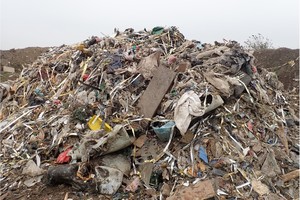
At least 100,000 tonnes of waste was brought onto the site during the charge period, when there was no legal right to do so. This activity included a significant amount waste from excavation, alongside other mixed refuse and some asbestos.
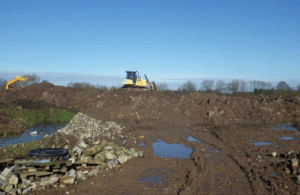
The volume of waste added to the site meant that the land was raised by 6 – 7 metres in height. Additional concern was created by the crucial gas distribution pipeline which passes underneath Bonnie Braes Farm, one of two that supplies Stoke-on-Trent. A fracture of the pipeline would have had devastating consequences, causing disruption to the supply of gas as well as the potential closure of the busy A500 road for a significant period.
Mr Recorder Nicholls, found that the offending caused Category 1 harm to the environment due to the eyesore that the deposits caused. In considering the large scale illegal waste crime in Staffordshire, he stated the impact that the weight had on the site, created negative effects not only to the gas pipeline but also to a culvert on the site, which was found to have collapsed, causing significant flooding to the land in heavy rain. The operation of the site also caused significant disruption on lanes that were unsuitable for large vehicles and the tracking of mud from the site across the roads.
We are glad to see the outcome of these prosecutions and will continue to work tirelessly to tackle environmental crime. Illegal waste sites like this, undermine legitimate businesses, undercut their prices, and blight the environment. We would urge everyone to check that a waste site is licenced before using them by checking the public register online at GOV.UK. If people suspect criminal activity, they should report it to our 24-hour incident hotline 0800 807060 or anonymously through CrimeStoppers on 0800 555111.
Mr Recorder Nicholls imposed the sentences as follows:
Raymond Bowden,64 of Liverpool Road, Church Lawton, was sentenced to 30 months immediate custody. He was also disqualified from holding the position of a director for a period of 8 years and 3 months. A Proceeds of Crime Application is outstanding and will be determined at a future date.
Joe Frizell, 48 of Crewe Road, Shavington, was sentenced to 2 years immediate custody. He was also disqualified from holding the position of a director for a period of 6 years. A Proceeds of Crime Application is outstanding and will be determined at a future date.
James Bowden, 44 of Bignall Hill, Bignall End was sentenced to 15 months imprisonment that was immediately suspended for 18 months. He must undertake 240 hours of unpaid work. He was also disqualified from holding the position of a director for a period of 5 years. A Proceeds of Crime Application is outstanding and will be determined at a future date.
Victoria Webb-Johnson, 47 of Sydney Road, Crewe was sentenced to 10 weeks imprisonment suspended for 12 months. She was also ordered to pay a contribution towards the costs of the prosecution of £8000 and the victim surcharge.
Stefan Paraszko, 66 of High Street Silverdale, was sentenced to 11 months imprisonment that was immediately suspended for 18 months and the victim surcharge.
VWJ Earth Moving Limited was fined £11,000 and ordered to pay a contribution towards the costs of the prosecution of £8000 and the victim surcharge
Jumbo Waste and Metal Limited was fined £1, as the company is in liquidation, and the victim surcharge.
TW Frizell (Haulage & Plant Hire) Ltd was fined £1, as the company is in liquidation, and the victim surcharge.
Joe Frizell was also sentenced alongside RJC Regeneration Limited in respect of a matter that occurred at Elms Farm, Betley, Crewe. In that case waste was deposited without the benefit of an Environmental Permit and exceeded the allowances of any waste exemptions.
In respect of the Elms Farm case, Mr Recorder Nicholls imposed the following sentences:
Joe Frizell was sentenced to 2 months immediate custody to run concurrently with his other sentence – this means he received a total of 2 years immediate custody overall.
RJC Regeneration Limited was fined £8000 and the victim surcharge
Further information
In the matter large scale illegal waste crime in Staffordshire from Chester Crown Court, Joe Frizell, RJC Regeneration Ltd and Mark Oulton pleaded guilty on 18 July 2023 to offences relating to the depositing of illegal waste at Doddlespool Farm and Elms Farm, Crewe at Chester Crown Court on 18 July 2023.
Mark Oulton, 53 of Main Road, Betley, was sentenced by Chester Crown Court on 8 September 2023 to 9 months custody suspended for 18 months. In addition, he was sentenced to 130 hours unpaid work, a £5000 fine and ordered to pay a contribution towards the prosecution costs of £27,000. Mr Oulton was also made subject to a court order requiring him to remove waste illegally deposited and stored on Doddlespool Farm by 8 September 2024.
Large Scale Illegal Waste Crime Charges
Jumbo Waste & Metals Ltd
Jumbo Waste & Metals Ltd did between the 1st March 2014 and the 30th June 2015, contravened regulation 12(1) of the Environmental Permitting (England and Wales) Regulations 2010 operate a regulated facility on land known as Bonnie Braes Farm, Bignall End, without the authorisation of an environmental permit, contrary to Regulation 38(1)(a) of the Environmental Permitting (England and Wales) Regulations 2010.
Raymond Bowden
Raymond Bowden did between the 1st March 2014 and the 30th June 2015, contravened regulation 12(1) of the Environmental Permitting (England and Wales) Regulations 2010 operate a regulated facility on land known as Bonnie Braes Farm, Bignall End, without the authorisation of an environmental permit, contrary to Regulation 38(1)(a) of the Environmental Permitting (England and Wales) Regulations 2010.
James Bowden
Between the 12th January 2015 and the 30th June 2015, Jumbo Waste & Metals Ltd contravened regulation 12 of the environmental permitting (England and Wales) Regulations 2010 by operating a regulated facility at Bonnie Braes Farm, Bignall End outside the terms of authorisation of an environmental permit and this offence was committed with the consent or connivance or was attributable to the neglect of James Bowden, being a director of the said company, contrary to Regulation 38(1) and Regulation 41(1) of the Environmental Permitting (England and Wales) Regulations 2010.
Stefan Paraszko
Stefan Paraszko pleaded guilty to between the 1st March 2014 and the 30th June 2015, contravened regulation 12(1) of the Environmental Permitting (England and Wales) Regulations 2010 operating a regulated facility on land known as Bonnie Braes Farm, Bignall End, without the authorisation of an environmental permit, contrary to Regulation 38(1)(a) of the Environmental Permitting (England and Wales) Regulations 2010.
TW Frizell (Haulage & Plant Hire) Ltd
TW Frizell (Haulage & Plant Hire) Ltd, between the 1st March 2014 and the 30th June 2015, deposited controlled waste on land at Bonnie Braes Farm, Bignall End when there was no environmental permit in force authorising the deposits, contrary to sections 33(1)(a) and 33(6) of the Environmental Protection Act 1990.
Joe Frizell
Between the 1st March 2014 and the 30th June 2015, TW Frizell (Haulage & Plant Hire) Ltd deposited controlled waste on land at Bonnie Braes Farm, Bignall End when there was no environmental permit in force authorising the deposits and this offence was committed with the consent or connivance or was attributable to the neglect of Joe Frizell, being a director of the said company, contrary to sections 33(1)(a), 33(6) and 157(1) of the Environmental Protection Act 1990.
VWJ Earthmoving Ltd
VWJ Earthmoving Ltd pleaded guilty to between the 1st March 2014 and the 30th June 2015, depositing controlled waste on land at Bonnie Braes Farm, Bignall End when there was no environmental permit in force authorising the deposits, contrary to sections 33(1)(a) and 33(6) of the Environmental Protection Act 1990.
Victoria Webb-Johnson
Victoria Webb-Johnson pleaded guilty to between the 1st March 2014 and the 30th June 2015, VWJ Earthmoving Ltd deposited controlled waste on land at Bonnie Braes Farm, Bignall End when there was no environmental permit in force authorising the deposits and this offence was committed with the consent or connivance or was attributable to the neglect of Victoria Webb-Johnson, being the director of the said company, contrary to sections 33(1)(a), 33(6) and 157(1) of the Environmental Protection Act 1990.
Chester Court Charges
Mark Oulton
Between 16 February 2018 to 22 March 2021 at Doddlespool Farm, Main Road, Betley, Crewe, CW3 9AE, Mark Oulton did operate a regulated facility, namely a waste operation for storage of waste, except under and to the extent authorised by an environmental permit, contrary to Regulations 12 and 38(1)(a) of the Environmental Permitting (England and Wales) Regulations 2016.
Between 3 October 2017 to 22 March 2021 at Elms Farm, Betley Road, Betley, Crewe, Mark Oulton did operate a regulated facility, namely a waste operation for storage of waste, except under and to the extent authorised by an environmental permit, contrary to Regulations 12 and 38(1)(a) of the Environmental Permitting (England and Wales) Regulations 2016.
RJC Regeneration Ltd
Between 3 October 2017 to 23 March 2018 at Elms Farm, Betley Road, Betley, Crewe, RJC Regeneration Ltd did deposit waste on land without the benefit of an environmental permit contrary to Section 33(1)(a) of the Environmental Protection Act 1990.
Joe Frizell
Between 3 October 2017 to 23 March 2018 at Elms Farm, Betley Road, Betley, Crewe, RJC Regeneration Ltd did deposit waste on land without the benefit of an environmental permit and that offence was committed with the consent, connivance or was attributable to the neglect of Joe Frizell contrary to Sections 33(1)(a) and 157 of the Environmental Protection Act 1990.
A company which handles hazardous waste has agreed a pollution enforcement undertaking with the regulator. The company made a payment of £25,000 to an environmental charity following the contamination of groundwater at its site.
Augean South Limited of Stamford Road, Kings Cliffe, Northamptonshire also paid £11,058.90 to cover the costs of the Environment Agency investigation.
The discharge in 2020 had a short-term impact on wildlife and saw some amphibian species decline but populations recovered by the following summer. Vegetation also naturally improved after the pollution.
Routine inspections in March 2020, detected high levels of chemicals in the groundwater adjacent to the treatment centre at East Northants Resource Management Facility. The site is operated by Augean South Limited.
Enforcement undertakings are one of the civil sanctions available to the Environment Agency, enabling the wrongdoer to put right the situation and compensate for any environmental harm.
As part of this agreement, Augean donated £25,000 to the Rockingham Forest Trust, a local charity which promotes environmental projects in Northamptonshire.
It is believed that heavy rainfall during the winter and subsequent storms contributed to the chemical discharge.
The Environment Agency was satisfied Augean took appropriate action to resolve the situation. The company had acted in a timely manner to remove and clean the affected land, whilst continuing to monitor the groundwater and soil. There have been no similar incidents since at the waste facility.
Enforcement undertaking
An Enforcement Undertaking is a voluntary offer made by an offender to:
put right the effects of their offending
put right the impact on third parties
make sure the offence cannot happen again
Where the Environment Agency accepts the offer, it becomes a legally binding agreement between the Agency and the business or person who makes the offer. The regulator will only consider accepting an enforcement undertaking in cases where:
it is not in the public interest to prosecute
the offer itself addresses the cause and effect of the offending
the offer protects, restores or enhances the natural capital of England
The Environment Agency publishes details of all enforcement undertakings on its website.
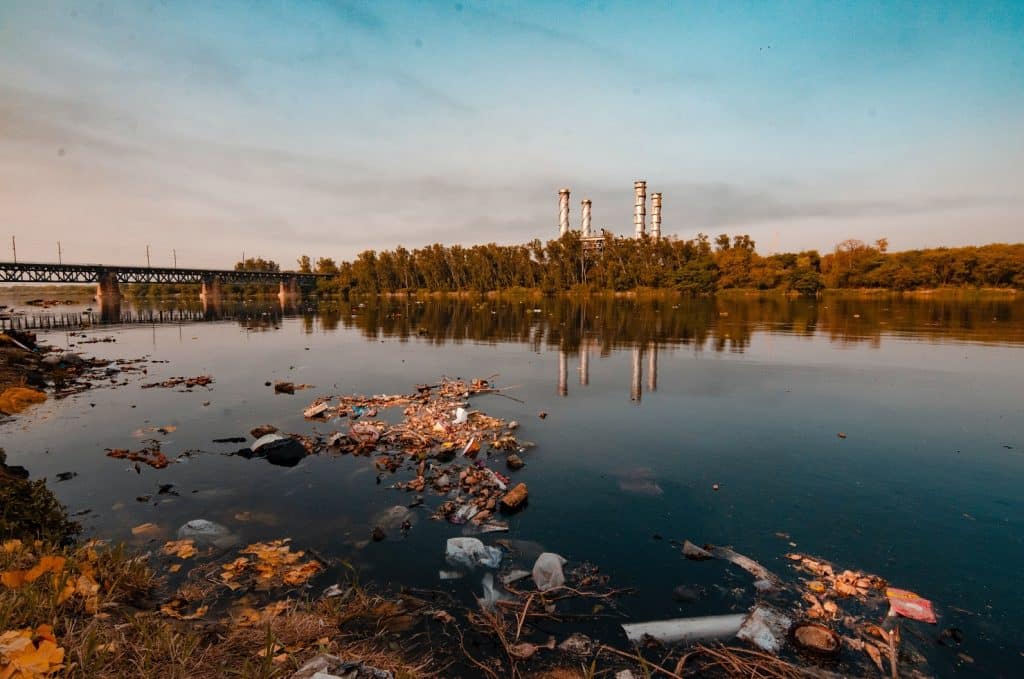
Enforcement undertakings can be offered following pollution incidents (stock image)
The Agency is more likely to accept offers when they are offered early and proactively. Generally, the regulator will only consider accepting an enforcement undertaking offer when:
they are confident the terms of the enforcement undertaking will be complied with
they believe a breach of relevant legislation has occurred
they consider the enforcement undertaking to be the correct regulatory outcome taking into account (i) the nature of the offence and its impact, and (ii) other forms of enforcement available, to remedy the issues concerned, to the environment and the community
the offer is above what the company would normally need to do to comply
the offer is given in good faith
the offeror makes a positive commitment, at the right company level to stop the offending conduct or alleged breach and to maintain compliance
the offeror rectifies the consequences of the conduct, including interacting with any third party affected by the offence
the offer does not contain restrictions on how the Agency may publish its acceptance in cases involving pollution of the environment or harm to human health and it is demonstrated that any necessary remediation or restoration work commenced or will commence at the earliest opportunity.
There are a number of situations where the Agency will not accept an enforcement undertaking for example, incidents or breaches which are serious (category 1 and 2) unless low culpability or negligence at a low level. Where legal proceedings have commenced or where the offence was intentional then the Agency are unlikely to accept enforcement undertakings. For this reason, where a company is considering offering an enforcement undertaking it should be made at a very early stage and it must not include clauses denying liability or restrictions on publicity.
£1.2m fine for water company, Anglian Water following Environment Agency prosecution. Anglian Water has been hit with fines totalling £1,221,000 after it admitted to causing pollution incidents in two separate court cases this week.
The water company was ordered to pay £871,000 after a catalogue of system and maintenance failures caused several incidents of pollution across Cambridgeshire, Buckinghamshire, and Northamptonshire across a five-month spell, between May and September 2019.
The list of process failures included reporting delays, faulty screening and a general breakdown in planning and maintenance, all of which caused damaging blockages and pollution. After one particular incident, a subsequent biological survey showed dead aquatic invertebrates for 1,500 metres. The court also heard how at one site an unchecked build-up of ‘unflushables’ such as cotton buds and sanitary pads caused a blockage resulting in discharge of settled sludge into the treated sewage.
The site was originally fitted with a screen to prevent blockages in the process but was removed in 2018. The court heard that increased cleaning had not taken place and no steps taken to reduce the risk of blockages caused by the removal of the screen.
The water company was also ordered to pay £37,605.13 in costs at Loughborough Magistrates Court on 12 September 2022.
Big fines for water companies causing pollution
In a separate court case, heard at Cambridge Magistrates Court, Anglian Water was sentenced to pay £350,000 after a pumped sewer at Bourn Brook at Caldecott, Cambridgeshire, burst for the sixth time in several years. Officers visiting the site in September 2019 found ammonia and low oxygen levels in the water, posing a potential risk to wildlife at the site. Despite efforts from Anglian Water to stop the polluted water from spreading, its methods proved insufficient and a total of 4km of the watercourse was affected for at least five days.
Since 2004 the sewer, which is only 1.5km long, had burst 6 times. The court found that Anglian Water had been too slow in putting in place potential mitigation measures. They only located air valves, designed to reduce stress on the sewer, after the incident took place. These valves had been in place for at least 25 years.
Anglian Water pleaded guilty to causing poisonous, noxious, or polluting matter to enter inland freshwaters without an environmental permit, and were told to pay £28,025.66 in costs as well as a victim surcharge of £181.
“Serious pollution is a serious crime and I welcome these sentences from the courts.
“The Environment Agency will pursue any water company that fails to uphold the law or protect nature, and will continue to press for the strongest possible penalties for those which do not.”
Sir James Bevan, Chief Executive of the Environment Agency
Waste offences in Darlington have resulted in a Darlington man been given a two-year community order to incorporate 20 rehabilitation activity days and 300 hours unpaid work after magistrates in Middlesbrough sentenced him for serious waste offences. He was also disqualified from acting as a company director for three years and ordered to pay £490 costs.
John Burnside Jones (26), of Coniscliffe Road, Darlington was sentenced at Teesside Magistrates’ Court on Friday 2 September 2022 having previously pleaded guilty to involvement in illegally misdescribing waste for financial gain.
Courtesy of the Environment Agency
Environment Agency officers visited Jones’ waste operation at the Trinity Works site in Haverton Hill, Billingham in January 2019. They found the business to be processing large volumes of waste types which the site’s environmental permit did not allow. The site was also found to lack the required management systems to deal with the environmental risks. Jones was served with notices requiring details of the site’s waste but failed to respond to these in full.
Further investigations by the Environment Agency revealed that between September 2018 and February 2019, over 6,000 tonnes of unpermitted, combustible waste had been transported to the site from as far away as Bristol. Jones had then transported more than 11,000 tonnes of inert waste soils to a nearby landfill site during the same period. The discrepancy between the volumes of incoming and outgoing waste was a result of Jones mixing incoming waste with soil and stones left from previous site operations and falsely describing this resulting mixture as inert waste.
Inert waste incurs significantly lower landfill tax per tonne and may also be disposed of at a much-reduced rate at landfill facilities without the same level of safeguards and protections as would otherwise be required. By fraudulently misdescribing the waste, Jones was able to make large sums of money by flouting his environmental obligations.
In mitigation, Jones stated that although his company had operated the site, he had limited direct involvement and had been very naïve in relying upon others to run the site for him. He had never previously been in trouble and fully co-operated with the investigation. He admitted that he had never seen the site’s environmental permit and was oblivious to its requirements.
The court ruled that the offending was deliberate and committed for financial gain. At an earlier hearing the permit holder James William Mason, 64, of Camden Street, Stockton-on-Tees had pleaded guilty to allowing the illegal waste activities to be undertaken on his site and was ordered to pay a total of £2,528 in fines and costs.
The conditions of an environmental permit are designed to protect people and the environment. Failure to comply with these legal requirements is a serious offence that can damage the environment, undermine local legitimate environmental permit holders, put jobs at risk and cause misery for local communities.
We welcome sentencing by the Court, which should act as a deterrent to others considering flouting the law.
In most situations waste can only be kept on land if there is an environmental permit in place. The permit will contain a number of conditions which must be observed in order to protect the environment. Failure to comply with the conditions of an environmental permit is a criminal offence which can be committed by the permit holder as well as the person conducting the activities if they are different. Any transfer of waste from one party to another must be accompanied by a controlled waste transfer note which accurately describes the waste and contains the relevant six-digit waste category code.
If you operate a waste management facility your environmental permit requires you to have a written management system in place and in this article all you need to know about permit management systems, we explain what you need. A management system is simply a set of procedures describing what you will do to minimise the risk of pollution from the activities covered by your environmental permit.
If you have a waste permit that was granted before 6 April 2008 that does not require you to have a working plan or management system, you will still need to manage and operate your waste activity in line with a written management system. If you are applying for:
a standard rules permit, the risks are identified in the generic risk assessment
a bespoke permit, you will have identified the risks by carrying out your risk assessment
ISO 14001, BS 8555, EMAS: Which system is best for your business?
All you need to know about permit management systems
Your risk assessment will be part of your management system. You must submit a summary of your management system as part of your application if you are applying for a bespoke permit. You do not need to do this if you submit a B6.5 or B6.6 application form for a standalone water discharge or a groundwater activity, but you must have your management system in place before you start operating.
You do not have to submit a summary of your management system if you are applying for standard rules permits, but you must have your management system in place before you start operating. Your management system will normally be reviewed on the pre-operation site visit by an officer from the Environment Agency.
Where you are applying for a standard rules permit for waste activities and plan to store combustible waste, you will need to submit a fire prevention plan as part of your application. Our consultants can provide advice and support in developing a fire prevention plan and have successfully submitted many plans on behalf of clients which have been approved by the Environment Agency. If you require advice and support with your fire prevention plan, please contact one of the Ashbrooke team.
Once you are operating you must implement your management system, or you will be in breach of your permit.
What to put in your permit management system and how to organise it
The amount of information you will need in your management system will depend on how complicated and risky your activities are. If your permit is for low-risk activities, for example a small sewage treatment works, your management system can be simple. If you have a number of permits they may be covered by an overall management system. You may carry out certain things in the same way at different permitted sites and you may also have site specific procedures.
You need to be able to explain to the regulator what happens at each site and which parts of the overall management system apply to each facility. For example, at some sites you may need to show you are carrying out additional measures to prevent pollution because they are nearer to sensitive locations than others. Our consultants recently supported a client who was near to a site of special scientific interest (SSSI) which required additional measures in both the management system and the fire prevention plan.
How to develop your permit management system
You can develop and maintain your own management system or use an environmental management system scheme or standard.
If you have a larger site or carry out a more complex activity (like installations and waste operations dealing with hazardous waste), the Environment Agency prefers management systems based on a recognised standard and independently checked by an accredited body.
An environmental management system may be certified against a standard such as ISO 14001. The organisation or individual carrying out certification may be accredited by a National Accreditation Body such as the UK Accreditation Service (UKAS).
Using an accredited certified management system is not a guarantee that you will meet all of your permit conditions. You are still responsible for implementing your system effectively and making sure you comply with each permit condition. This is where our consultants can provide value to your operations in ensuring that any system is relevant to your permit operation and is efficient and effective.
However, the independent checks carried out for an accredited certified scheme or standard should result in greater confidence in your management system, and in your management of compliance. This may lead to fewer checks from the Environment Agency under the operator and performance risk assessment methodology (OPRA). Independent inspections and audits will also provide some assurance to the company board and senior managers that procedures are implemented and being followed in practice.
When applying for an environmental permit you will need to detail on the application form if you are using any of the following as the basis for your management system:
If you are applying for a permit for a standalone water discharge activity or a point source standalone groundwater activity, you only need to read the section on ‘Water discharge and groundwater activity’.
Your management system must include a plan of your site, drawn to scale. The plan must highlight where you do the activities covered by your permits (and any exemptions you have registered). The plan can become incredibly detailed as the regulator lists all the features which must be included. Often you may need to produce a number of plans in order to include all the features that are required.
Waste, installations and mining waste permits
So far in this article, all you need to know about permit management systems, we have looks at the general requirements of a system. However, there are some specific requirements for waste installations and mining permits. In these cases your plan must also show any:
buildings, and other main constructions, like treatment plants, incinerators, storage silos and security fences
storage facilities for hazardous materials like oil and fuel tanks, chemical stores, waste materials
location of items for use in accidents and emergencies, like absorbants for chemical spills
entrances and exits that can be used by emergency services
points designed to control pollution, for example inspection or monitoring points
trade effluent or sewage effluent treatment plants
effluent discharge points
land that you believe is contaminated, for example areas of your site that have previously been used for industrial purposes
Permit sites near vulnerable locations
Your plan must also show areas particularly vulnerable to pollution that are on or near to your site, for example:
rivers or streams
groundwater used for drinking water
residential, commercial or industrial premises
areas where wildlife is vulnerable or protected
Use the Environment Agency’s risk assessment guide to help you think about areas that are vulnerable to pollution. If having read this all you need to know about permit management systems article you are unsure what to include, our consultants can provide further advice and support.
Drainage
The plan must show your foul and combined drainage facilities marked in red and your surface water drainage, facilities marked in blue.
It must also show:
the direction of flow of the water in the drain
the location of discharge points to the sewer, watercourse or soakaway
the location of manhole covers and drains
the location of stop and diverter valves and interceptors
Water, gas, electricity
Your plan must show the location of mains water, gas and electricity supplies on your site, including:
the mains water stop tap
gas and electric isolating valves and switches
the routes for gas, electricity and water supplies around your site – electric wiring and gas and water pipes must be labelled on the plan
Water discharge and groundwater activity
If you are applying for a permit for a standalone water discharge activity or a point source standalone groundwater activity your site plan must show:
your wastewater treatment plant
monitoring points – the locations from which you will take samples to check for contaminants or pollutant substances as required by your permit
the location of emergency equipment
the location of any mitigation measures referred to in your management system
the outlet to surface water (standalone water discharges only)
the infiltration system (standalone groundwater activity only)
If you are applying for a permit for a standalone groundwater activity where you are land spreading, your site plan must show:
the field locations for spreading
monitoring points – the locations from which you will check your discharge for contaminants or pollutant substances as required by your permit
the location of emergency equipment
the locations of any pollutant storage areas linked to your permit
Permit site operations
As a permit holder, you must break down the operations that will be carried out on your site during start up, normal operation and shut down, into a list of activities and processes, for example unloading waste, storing waste, incinerating waste.
For waste, mining waste, and installations, you should list the wastes that will be produced by each activity or process.
Finally, list the steps you will take to prevent or minimise risks to the environment from each activity or process and type of waste. Be specific about the actions you will carry out to do this.
For water discharge and point source groundwater activities, this will normally be the operation of a wastewater treatment works or effluent treatment equipment that is part of your activity and included in the permit.
If you manage, treat or dispose of waste
If you are a waste operator you must include a waste storage plan that states:
the longest amount of time that you will store each type of waste
how you will make sure you will not exceed these time limits – you need to consider your emissions when deciding how long you can store types of waste for
the maximum amount of each type of waste you will store in terms of volume
the maximum height of each storage pile on site
how you will identify the specific types of waste you are storing
how you will separate different types of waste if required, for example how far apart you will keep waste types that cannot be mixed
how you will make sure your site only takes waste that your permit allows you to store
Fire prevention plans
If you need a permit for waste activities and you plan to store combustible waste, you will need to write a fire prevention plan and submit it with your application. This must explain how you would prevent fire at your site or manage risks from fire if one occurs. You should note that following the increase in waste facility fires in recent years, the Environment Agency has significantly strengthened its guidance on fire prevention plans and any plan submitted for approval must be robust.
The regulator also charged an assessment fee per hour where existing permit operators need to produce a fire prevention plan. If plans are not approved on the first submission, the costs can increase significantly as the regulator re-assesses each version submitted for approval.
Our consultants can provide advice and support in developing a fire prevention plan and have successfully submitted many plans on behalf of clients which have been approved by the Environment Agency. If you require advice and support with your fire prevention plan please contact one of the Ashbrooke team.
Site and equipment maintenance plan
You need a plan for how you will maintain the infrastructure of your site and any machinery.
You must maintain any machinery according to the manufacturers’ or suppliers’ recommendations (for example, following the instructions and guidelines of any manuals that came with your equipment). The maintenance plan is also referred to as a maintenance schedule.
You will need to record each time you carry out maintenance, for example, each time you check the calibration of monitoring equipment to make sure it meets the manufacturer’s recommendations. Records can be specific to the equipment, on a daily or weekly checklist or for very small operations, you could record maintenance tasks in a site diary.
Contingency plans
You need a plan for how you will minimise the impact on the environment of any:
breakdowns
enforced shutdowns
any other changes in normal operations, for example due to extreme weather
Accident prevention and management plan
You need a plan for dealing with any incidents or events that could result in a pollution or where you are not able to comply with your permit. The plan must identify potential accidents, for example:
equipment breakdowns
enforced shutdowns
fires
vandalism
flooding
any other incident which causes an unexpected change to normal operations, such as extreme weather
For each potential incident, it must also state the:
likelihood of the accident happening
consequences of the accident happening
measures you’ll take to avoid the accident happening
measures you’ll take to minimise the impact if the accident does happen
Your accident plan must also say how you will record, investigate and respond to accidents or breaches of your permit.
Your accident plan must also include:
the date it was reviewed
when it will next be reviewed
a list of emergency contacts and how to reach them
a list of substances stored at your site, and your storage facilities
forms to record accidents on
Consider taking the following actions, if you think they are relevant to the operations you carry out at your site:
make emergency services aware of your activities
take out insurance to cover the cost of clean-up following an accident
develop a system to allow access to important information away from your site
Online security: protect your business
You can take some simple steps to protect your business against online security threats. Good online security will help make sure your business does not cause pollution. Any pollution that does occur is your responsibility as the permit holder.
See the National Cyber Security Centre website for guidance about online security which is becoming an increased risk for many businesses. This will be particularly important where you have waste processing or environmental monitoring equipment controlled by computers.
Contact information for the public
If you have a waste or an installation permit, you must display a notice board at or near the site entrance telling the public about the site. It must include:
Environment Agency telephone number 03708 506506 and the incident hotline 0800 807060 (or another number we subsequently tell you about in writing)
A notice board is optional for other permits and will depend on whether you consider that the public will need to see emergency contact information at your site.
higher average temperatures – particularly in summer and winter
more heat waves and hot days
rising sea levels
changes in rainfall patterns and intensity
more storms
It is important you consider if a changing climate could affect your operations, including how this might affect your ability to comply with your permit.
Plan for negative climate impacts on how you operate now, during and after any transition to net zero. Include the associated risks to local communities and the environment. These impacts and risks may change over the lifetime of the activity.
Plan for the impacts of multiple events, such as supply chain failure and extreme weather, happening at the same time.
Plan to complete changes to ensure your operations remain resilient at stages along a climate projection of at least a 2°C global mean temperature rise by 2050. Do this by following and regularly updating your climate change risk assessment. Also, assess what further requirements may be necessary along a projected 4°C rise by 2100. You do not need to assess risks or plan actions beyond the end of the life of your activity.
To anticipate and prevent risks to local communities and to the environment, plan to test the effectiveness of your:
any complaints you receive in relation to activities covered by your permit (for example complaints from neighbours about noise, odour or dust from your site)
how you investigate those complaints
any actions taken as a result of complaints
Managing staff competence and training records
You need to have enough staff and resources to make sure the site is run effectively in order to comply with your permit. Your management system needs to explain who is responsible for what procedures and who is technically competent.
For each of your managers, staff and contractors make a list of any roles they carry out that relate to activities covered by your permit. You will also need a procedure to:
check your staff and contractors have taken the training or qualifications required for the work they do
record any training, refresher training or qualifications taken by your staff or contractors
You must keep any records required by your permit. In some cases, the permit will tell you how long to keep a record for. Otherwise, you must consider how long you’ll need to keep different records for (and write this in your management system). You must keep records to show how your management system is being implemented in line with the requirements of your permit and this guide. You need to keep:
permits issued to the site
other legal requirements
your risk assessment
all management system plans
any plans required by the application or permit depending on your type of activity (for example odour management plan at waste sites)
all operating procedures
staff competence and training (for example qualifications, courses attended)
emissions and any other monitoring undertaken (for example water samples)
compliance checks, findings of investigation and actions taken
complaints made, findings of investigation and actions taken
audits of management system, findings (reports) and actions taken
management reviews and changes made to the management system
where applicable, certification audit reports and any actions carried out
You also need to include copies of your plans with your management system if:
your permit requires you to implement an approved plan
you have been asked to do this because there’s a problem at your site
If you manage, treat or dispose of waste
If you are a waste operator you must record the following for each delivery of waste to your site:
If you have a permit for waste, mining waste or installations you will need to have a site condition report to record the condition of land or quality of groundwater on your site.
Keep this up to date through the life of your permit and include the following information:
details of any historic spills or contamination (incidents that took place before you began operating) and what was done in response to those incidents
evidence of the effectiveness of any measures you have taken to protect land or groundwater since you started operating
If you want to cancel (surrender) your permit, you will need to show you have taken the necessary measures to avoid any pollution risk from your activities.
You also need to show that you have returned the site to a satisfactory state. This means that the condition of land and groundwater has not deteriorated as a result of your activities. Our consultants can provide advice and support drafting site condition plans for permit applications as well as updating condition plans for site permit surrenders. If you require site condition plan advice and support, please contact one of our team.
Individual subject management plans
Sites for waste, mining waste or installations may have to include the following plans:
It is also worth noting that the Environment Agency when assessing the above plans, may use different officers to assess each individual plan. Therefore, the Agency will require odour, emissions, noise and pest plans to be separate standalone documents. Unfortunately, this does result in duplication and additional work.
Agency permit application assessment officers could be based anywhere in England and will often not be familiar with the local area around your site, so it is important to include all relevant details.
Jacksons can provide advice and support in drafting these types of management plans for permit applications and permit modifications. If you require advice and support, please contact one of our team.
Review your permit management system
You must have a procedure for checking you are complying with your permit, procedures and management system. Record what checks are carried out, who did them and what action was taken.
You must review and update your management system:
when you make changes to your site, operations or equipment that affect the activities covered by your permit, for example if you install a new boiler
whenever you apply to change (‘vary’) your permit
after any accident, complaint or breach of your permit
if you encounter a new environmental problem or issue, and have implemented new control measures to control it
If you have ISO 14001, then it is a requirement to carry out a management review at set periods, often annually, in order to review your environmental objectives, the results of internal and external audits, etc.
You must keep a record of changes to your management system, particularly major changes such as:
a change to the maximum amount of waste stored on your site
a new noise screen
new waste treatment equipment, for example a Trommel
implementation of new control measures
The Environment Agency may also review your management system and make recommendations for improvements after any accident, permit breach or other incident. It may also ask you to improve your management system if it thinks you have not identified or minimised risks from pollution. Our consultants have considerable experience in liaising with the Environment Agency on behalf of clients regarding environmental permit issues.
Site closure
It is no longer possible to simply hand your environmental permit back when you stop operating. You must submit an application to surrender your permit to the Environment Agency. You will have a period of site closure from when you stop operating until you are able to cancel (surrender) your permit if you have a permit for a:
landfill
category A mining waste facility
During this time, you will need to continue to monitor emissions from your site.
You will need to submit the site closure parts of the site condition report when you stop operating.
Make sure people understand what you do
Your staff must have access to and understand any sections of the management system that deal with activities they carry out. It is up to you how you do this, for example whether you print the system out, or provide electronic copies.
You must be able to show the Environment Agency your management system if asked. If you have an overarching management system for a number of sites, you can provide both:
an overview or summary of the whole system
copies of the sections that relate to the activity type or aspect of the management system that the Environment Agency has asked about
Consider whether you need to provide information to interested parties such as neighbours and your local community to explain how you manage your activities to comply with your permit.
Conclusion
If you operate a waste management facility your environmental permit requires you to have a written management system in place and in this article all you need to know about permit management systems, we explain what you need. A management system is simply a set of procedures describing what you will do to minimise the risk of pollution from the activities covered by your environmental permit.
If you are applying for an environmental permit, you will need to detail on the application form if you are using any of the recognised standards as the basis for your management system. If you have a larger site or carry out a more complex activity (like installations and waste operations dealing with hazardous waste), the Environment Agency prefers management systems based on a recognised standard and independently checked by an accredited body.
The management system must include all the elements detailed in the Environment Agency’s guidance as well as separate plans and drawings to support the permit application. If you require advice and support with your permit application or modification, please contact one of the Ashbrooke team.
Director fined following a waste exports prosecution investigation by the Environment Agency. The EA successfully prosecuted a former company director for illegally exporting banned household waste including nappies, clothing, textiles, tins and electrical items from a site in Droitwich, Worcestershire, to Indonesia in 2019.
At Kidderminster Magistrates Court on Wednesday 10 August 2022, Tianyong Wang, 43, of Solihull, Warwickshire, was fined £1,200 and ordered to pay costs of £10,000.
He had pleaded guilty at an earlier hearing in April 2022 to causing his dissolved company, Berry Polymer Limited, to export the waste to Indonesia. Shipping documents described the waste as plastic, which can be exported to Indonesia for recycling.
Howard McCann, prosecuting for the Environment Agency, told the court that between 27 June and 5 July 2019, Wang had caused his company to export some 382 tonnes of household waste in 22 sea containers from its site in Droitwich via the ports of Felixstowe and Southampton to Indonesia.
Included in the waste were about 1,590 nappies or sanitary items, plus 1,338 electrical items and about 33,639 tins/cans.
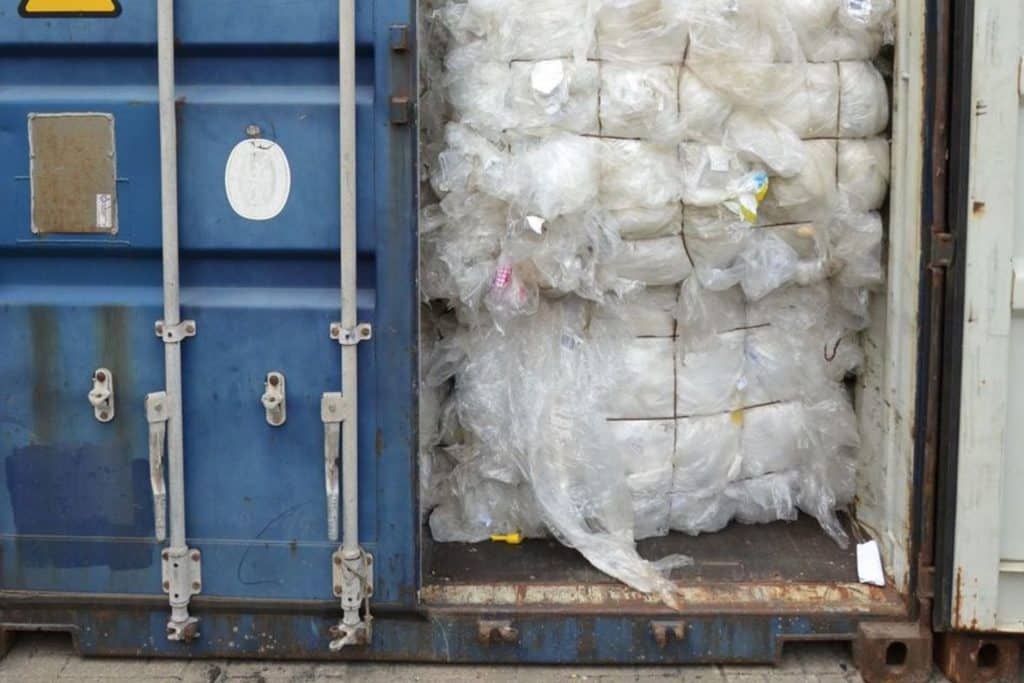
One of the 22 containers of waste investigated (courtesy of the Environment Agency)
Other contaminants included numerous items of clothing, textiles and rags, unopened plastic bags, glass, wood, golf balls, toys, a used toilet brush and contaminated food and drink cartons.
Mr McCann told the court that the defendant was the sole director of Berry Polymer Limited, a company which was dissolved on 24 August 2021, at the time of the offending.
Wang had agreed to sell some 500 tonnes of plastic bottle waste to a broker at £270 per tonne. A purchase order confirmed the load site of the waste as “Berry Polymer Limited, 20 The Furlong Droitwich WR9 9AH.” Berry Polymer invoiced the broker £103,210.20 for 382.26 tonnes of “plastic bottles.”
The offence was discovered by Environment Agency officers who conducted initial inspections of some of the 22 containers at the ports of Southampton (17 containers) and Felixstowe (5) on 4 July 2019.
These inspections recorded significant evidence of contamination, flies and, in some containers, a rotting decomposing smell. The containers were deemed unfit for export at that stage and prevented from onward shipment to Indonesia.
Five of the containers were transported to the Environment Agency’s inspection facility at Felixstowe for full examination, one of the bales examined was so bad that an officer was physically sick. Ultimately all the containers were returned to the site in Droitwich for reprocessing.
When interviewed, Wang, who was abroad at the time, said the material supplied was not as described because his company’s usual bale inspection had either not happened or was sub-standard.
In sentencing, District Judge Strongman said this was a “blunder” by Wang, which had cost him his business and his reputation.
This prosecution sends out a strong message that we will investigate and where necessary prosecute anyone found to be involved in illegally exporting waste.
Waste crime can have a serious environmental impact and puts communities at risk. It undermines legitimate business and the investment and economic growth that goes with it.
We support legitimate businesses and are proactively supporting them by disrupting and stopping the illegal waste exports.
In this case the defendant was charged with offences under the Transfrontier Shipment of Waste Regulations 2007 (TFS). The export of waste collected from households to non-OECD (Organisation for Economic and Development) countries is prohibited by Article 36 of the Waste Shipment Regulations. The offence of transporting waste to a non-OECD country in breach of the prohibition is created by Regulation 23 and the directors’ offence by regulation 55(1) of the TFS Regulations 2007. The offence is one of strict liability – strict liability offences are crimes which require no proof of intent. Strict liability offences are primarily regulatory offences aimed at businesses in relation to environment, health and safety.
A shipment of waste starts at the point of loading in the country of dispatch and continues until the waste has been recovered at the facility in the country of destination. This is why the export is not regarded as an attempt, despite the containers being prevented from leaving Felixstowe and Southampton.
For waste to be categorised as green list such as plastic waste, it must have been collected separately or been properly sorted.
Properly sorted means that the sorting is sufficient to remove contaminants to the point where any contamination that remains is so small as to be minimal and does not prevent the waste from becoming green list waste. If you require environmental advice or support for your business, please contact one of the Ashbrooke team.
The Environment Agency has published the results of a consultation on TCM attendance changes. The Environment Agency consulted with stakeholders to hear their views on proposed options and changes to the attendance requirements for technically competent managers (TCMs).
The consultation explained:
how the current technical competence attendance requirements work
options for proposed changes to the methods of calculating TCM attendance and other proposed changes to the attendance requirements
proposed implementation timescales
The responses to the TCM attendance changes consultation will help shape a second, more detailed consultation. This will provide further details for option 1: attendance linked to charge bands, and other rules associated with the attendance requirements for technically competent managers. The EA aim to publish the next consultation in summer 2023.
The EA received a broad range of views which will help develop guidance on the attendance requirements for technically competent managers. The EA received 75 responses to the consultation:
32 from site operators and companies with permits
18 from trade associations and other organisations and groups
12 from consultants
5 from local authorities
8 from individuals and members of the public
Those responding generally agreed that new guidance was needed to explain the attendance requirements for TCMs and provided views on the 3 options preferred for calculating the attendance requirements:
option 1: attendance linked to charge bands – 36%
option 2: standard baseline attendance for all waste facilities – 16%
option 3: tailored baseline attendance for waste operations and waste installations – 30.67%
no preference – 14.67%
Two respondents (2.67%) did not provide an answer to this question.
Many of those responding highlighted the potential for environmental benefits should TCM attendance increase at poor performing sites. However, the extent of this benefit would depend on the specific circumstances. Approximately 75% of those responding supported the adjustment of the attendance requirement based on operator performance, with those in deteriorating or poor compliance bands requiring increased TCM attendance.
Changes proposed to TCM attendance requirements at waste sites
Some of those responding stated that applying attendance requirements for the Environmental Services Association (ESA)/Energy & Utility (EU) Skills technical competence scheme would undermine the purpose of this scheme, but there was general support for other proposals on the 48 hour attendance cap, 24 hour operations, multiple regulated facilities and mothballed sites.
For permit transfers, some respondents highlighted situations where transfers were ‘administrative’ and in those instances they did not support previously agreed TCM attendance requirements reverting back to those required by the guidance.
For closed landfills nearly 40% of respondents agreed with the proposals, whilst 50% did not have a view. The Environment Agency concluded that it anticipate the majority of the 50% who did not have a view do not operate activities involving closed landfills.
Most of those who responded did not have a view on the proposals for mobile plant attendance requirements. Around one third supported the proposals on mobile plant and less than 10% disagreed.
Nearly half of respondents supported a 12 month implementation period for the new guidance. Because, for example, this would give operators time to understand the new guidance and train or recruit additional TCMs if required.
The Agency received a broad range of views which will help develop the attendance requirements for TCMs guidance and it intends to launch the next consultation in summer 2023. It will include further details of the favoured option and other proposed changes to the attendance requirements.
Operators who apply for an environmental permit for a waste operation must be members of (and comply with) a government approved technical competency scheme. Most existing waste environmental permit holders must also comply with a government approved technical competency scheme through the conditions in their permits.
The Environment Agency used to calculate attendance requirements using the OPRA risk appraisal guidance. However, except for the sections relating to attendance levels for technically competent managers, this guidance has been withdrawn.
The Agency is now considering changes to the requirements for attendance by TCMs at environmental permit sites. If you require environmental advice or support for your business, please contact one of the Ashbrooke team.
In June, a roadmap for flood and climate-resilience was published. The Environment Agency (EA) launched the roadmap setting out practical actions to be taken over the next four years to tackle the growing threat of flooding from rivers, the sea, and surface water as well as coastal erosion.
The FCERM Strategy Roadmap builds on existing progress and sets out how we can be better prepared for the unavoidable impacts of climate change by ensuring the country is resilient and ready to respond and adapt to flooding and coastal change. The Environment Agency will be delivering the Roadmap with many partners including local authorities, local drainage boards, farmers, environmental groups, infrastructure providers and the insurance sector.
Delivery of the actions in the Roadmap will improve climate-resilience and will:
Ensure that new homes will be safe from flooding.
Maximise the use of nature to enhance flood and coastal resilience while aiding nature recovery.
Improve the flood resilience of our roads, railways, and other vital national infrastructure.
Ensure the delivery of environmental improvements and sustainable growth as part of flood and coastal projects.
Enhance our flood forecasting and warning services to help people be better prepared to respond to flood events.
Support building back better to reduce the damage and disruption caused by flooding.
Work with communities and local partners to develop long term plans to manage future flooding and coastal change and adapt to future hazards.
Climate-resilience
The Roadmap was launched by the Environment Agency’s Chief Executive, Sir James Bevan, and Floods Minister, Rebecca Pow, at the Flood and Coast Conference. It directly supports the implementation of the £5.2 billion capital investment programme which will better protect many hundreds of thousands of properties from flooding and coastal erosion by 2027.
“This roadmap sets out how we can build a more resilient nation. It will work alongside our record investment of £5.2 billion in flood and coastal defences between 2021 and 2027 to help better protect communities.
Climate change will only bring more extreme weather and this roadmap will spur on the timely action required to manage flood and coastal risk, help reduce the costly impacts and manage the risks to people’s homes and businesses across the country.”
Floods Minister, Rebecca Pow
flood and climate-resilience will impact all sectors
“Climate change is happening now, and its impacts will continue to worsen. Rainfall patterns are changing, causing more frequent flooding, and while we continue to protect and prepare coastal communities from rising sea levels, it is inevitable that at some point some of our communities will have to move back from the coast.
We all need to adapt and become more resilient to these challenges, and this roadmap sets out actions that will be taken to do this over the next four years.
It will ensure that we make our communities more resilient to flooding and coastal change, so that when it does happen, it causes much less harm to people, does much less damage, and ensures life can get back to normal much quicker.”
Developing a new national assessment of flood risk from rivers, the sea and surface water that will provide better data and mapping to inform future risk and investment decisions.
Working with coastal groups to update the policies and actions in Shoreline Management Plans so they reflect adaptation to a changing climate.
Working with national infrastructure providers, including National Highways and Network Rail, on joint investment opportunities to ensure national infrastructure is resilient to future flooding and coastal change.
Working with Ofwat to ensure that water company assets are resilient and contribute to better flood risk outcomes.
Working with Natural England, the Wildfowl & Wetlands Trust, and other partners to collate evidence and case studies to help mainstream nature-based solutions that enhance flood and coastal resilience and nature recovery.
Working with Flood Re and the insurance sector to develop a communications programme for homeowners to signpost advice and support on the benefits of property flood resilience.
Developing new training materials with the Town and Country Planning Association to help improve skills and capabilities on flood risk and development planning.
Working with the Environment Agency’s supply chain to ensure all flood and coastal projects adopt low carbon technologies that contribute to zero carbon targets.
Continuing to improve the Environment Agency’s digital tools for people to check their flood risk and sign up to flood warnings.
Working with Department for Education, schools, and children’s charities to improve young people’s knowledge of flood risk and climate change.
The publication of the Roadmap comes after the Environment Agency announced that it had exceeded its target in delivering the government’s £2.6 billion investment in flood and coastal defence schemes since 2015, better protecting more than 314,000 homes.
The Environment Agency is now working alongside partners to deliver on the government’s record investment of £5.2 billion in flood and coastal defences between 2021 and 2027, which will better protect hundreds of thousands more properties as well as avoid £32 billion of wider economic damages.
An Environment Agency report highlights an urgent need to work with nature and lays bare the scale of change needed to halt England’s biodiversity and climate crisis.
Published in July, the report sets out how significant changes will be needed to how land is used in England, with the need for significant landscape scale interventions and the use of nature-based solutions to help wildlife recover, and for humans to mitigate and adapt to the effects of climate change.
The ‘Working with Nature’ report compiled by Environment Agency scientists sets out the global challenges facing the basics for life on Earth – clean water, climate regulation and food. It describes the potential loss of complex natural ecosystems that provide such essentials as an existential risk to human survival.
Referencing Rachel Carson’s 1962 book Silent Spring, considered by many to be the most important piece of environmental writing of the 20th century, Environment Agency chief executive, Sir James Bevan, spoke about the ‘silent spring’ that awaits humanity unless action is taken by businesses, government and individuals to prevent further damage and rebuild the natural environment. The report was unveiled at an event hosted by the Green Alliance, ahead of the COP15 Biodiversity Conference taking place later this year. Internationally, the G7 leaders have committed to the global mission to halt and reverse biodiversity loss by 2030. The COP 15 meeting of the UN Convention on Biological Diversity (CBD) in 2022 will review the progress towards previously agreed Biodiversity targets.
“The biodiversity crisis joins the climate crisis as an existential risk to our survival, but as this report sets out the solution is not to retreat but to work together to build a nature-positive response.
Nature provides the basics for life – clean water, clean air and food. With major pressures on land use across England, nature-based solutions must be a major part in our response to protect these essentials whilst rebuilding our natural world.”
England is one of the most nature-depleted countries in the world due to its long history of industrialisation and land use changes over millennia. There is an urgent need to work with nature as large areas of habitats have been lost with 99.7% of fens, 97% of species-rich grasslands, 80% of lowland heathlands, up to 70% of ancient woodlands and up to 85% of saltmarshes destroyed or degraded.
The impacts on species have also been severe, with a quarter of mammals in England and almost a fifth of UK plants threatened with extinction.
Nature in England has also been impacted by pressures on land use. The report sets out the impact of the last 50 years of agricultural production and points to the likelihood of a need of further intensification and increased yields from agricultural land. It also charts the impacts of urbanisation, forestry and the need for large areas of land for climate change mitigation.
To address the major declines in biodiversity that will only be accelerated by a changing climate, the report sets out a need for more land to be dedicated to nature conservation to act as refuges for nature and to mitigate against climate change – such as coastal wetlands to combat flood risks. However, with such demand on land, it will need to provide multiple benefits to people and nature.
The Environment Agency has a leading role to play in restoring or recreating new wildlife-rich habitat in England. Recent projects include peat restoration at Great Fen, Cambridgeshire, which will save 325,000 tonnes of CO2 from being released each year while restoring habitats for threatened fenland species and protecting surrounding towns, villages and farmland from the risk of flooding after heavy rainfall.
The report identifies such nature-based solutions as a crucial tool in restoring nature and achieving multiple other benefits. By working with nature, including tree planting, peat restoration, species reintroductions and natural flood management, it suggests there are opportunities to restore biodiversity, whilst providing other benefits such as carbon sequestration, flood protection and clean and plentiful water.
The report also says action will also be required to address the levels of consumption in wealthy countries, which contribute to the loss of biodiversity, and that sustained effort will be required from many people and organisations at forums like the COP 15 meeting of the UN Convention on Biological Diversity to tackle the effects of global consumption, production and supply chains. If you require advice on environmental issues, please contact one of the Ashbrooke team.
Manage Cookie Consent
To provide the best experiences, we use technologies like cookies to store and/or access device information. Consenting to these technologies will allow us to process data such as browsing behaviour or unique IDs on this site. Not consenting or withdrawing consent, may adversely affect certain features and functions.
Functional
Always active
The technical storage or access is strictly necessary for the legitimate purpose of enabling the use of a specific service explicitly requested by the subscriber or user, or for the sole purpose of carrying out the transmission of a communication over an electronic communications network.
Preferences
The technical storage or access is necessary for the legitimate purpose of storing preferences that are not requested by the subscriber or user.
Statistics
The technical storage or access that is used exclusively for statistical purposes.The technical storage or access that is used exclusively for anonymous statistical purposes. Without a subpoena, voluntary compliance on the part of your Internet Service Provider, or additional records from a third party, information stored or retrieved for this purpose alone cannot usually be used to identify you.
Marketing
The technical storage or access is required to create user profiles to send advertising, or to track the user on a website or across several websites for similar marketing purposes.