
A clear look at environmental obligations, business size, and why proportionate compliance matters.
It is a question we hear often from small business owners: “Do I really need an environmental legal register? Surely that’s something only for large industrial companies with dedicated environmental teams.” It’s an understandable assumption, but it is not correct. Environmental legal obligations are not switched on by company size — they are triggered by what a business actually does, what it produces, discharges, or stores, and where it operates. A small print shop and a large logistics depot may face entirely different environmental duties, regardless of which one employs more people.
In this article, we look at why the size of a business is the wrong starting point for thinking about environmental compliance, and why a well-designed environmental legal register — far from being a burden reserved for large organisations — can be one of the most practical and cost-effective tools a small business ever puts in place.
What Is an Environmental Legal Register?
An environmental legal register is a structured record of the environmental legislation, regulations, permits, and approved codes of practice that apply to a specific organisation. Rather than listing every environmental law in existence, it identifies the ones that are actually relevant to that business’s operations, sites, and activities, and sets out what needs to be done to remain compliant with each one.
Done properly, an environmental legal register becomes a single point of reference that tells a business owner or manager, at a glance: which environmental laws apply to us, what each one requires, how we currently meet that requirement, and where any gaps exist.
Environmental Obligations Depend on Circumstances, Not Company Size
This is the point worth dwelling on, because it is the one most often misunderstood. UK environmental legislation is largely activity-based and impact-based rather than headcount-based. Duties under legislation such as the Environmental Protection Act 1990, the Environmental Permitting (England and Wales) Regulations, and waste, water, and packaging regulations apply to any business whose activities create the relevant impact — regardless of size. The specific duties that follow are shaped by factors such as:
- The nature of the business’s processes (for example, use of chemicals, fuel storage, vehicle fleets, or manufacturing by-products)
- The waste the business produces and how it’s stored, transported, and disposed of
- Whether emissions to air, land, or water are involved, even at a small scale
- Sector-specific rules that apply regardless of business size, such as packaging producer responsibility, WEEE, or discharge consents
A single-van courier business has duties around fuel storage and vehicle emissions. A small print shop has duties under waste and hazardous substances regulations for inks and solvents. A two-person mobile car valeting business has duties around wastewater discharge. None of these obligations disappear because the business is small — in some cases, a smaller business with fewer resources to manage environmental risk may need to pay closer attention, not less.
In other words, the question is never really “is my business big enough for this to matter?” The question is “what do we actually do, and what does environmental law say about doing it responsibly?” An environmental legal register is simply the tool that answers that question clearly and keeps the answer up to date as legislation changes.
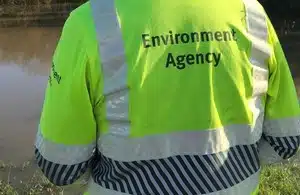
An environmental legal register for small business should be proportionate.
Why Small Businesses Benefit from a Concise, Proportionate Register
Recognising that environmental duties apply regardless of size is only half the picture. The other half is that how a small business meets those duties can, and should, look very different from how a large organisation meets them. A 200-page environmental legal register modelled on a multinational’s compliance framework is not only unnecessary for a small business — it’s actively counterproductive. It gets opened once, filed away, and forgotten.
A register that is built specifically for a small business, scaled to its real activities and environmental impacts, tends to work far better in practice. This is why:
1. It Stays Usable
A concise register lists only the environmental legislation that genuinely applies to that business’s operations. Instead of an overwhelming, generic checklist, the owner or manager is left with a short, relevant list they can actually refer to — and act on — day to day.
2. It Reflects the Business as It Really Operates
A bespoke register is built around the specific sites, processes, substances, and waste streams involved, rather than a one-size-fits-all industry template. This means it captures the obligations that matter and doesn’t waste time on ones that don’t.
3. It Makes Gaps Visible
Because it is proportionate rather than padded out, a well-built register makes it far easier to spot where compliance is solid and where attention is needed — an expired waste carrier’s licence, a missing duty of care record, a permit due for renewal — without those gaps being buried in irrelevant detail.
4. It Demonstrates Due Diligence
In the event of an environmental incident, a regulator visit, or a client, landlord, or insurer asking about environmental compliance arrangements, a maintained legal register is tangible evidence that the business has identified its obligations and is actively managing them. For a small business without a dedicated environmental function, this matters a great deal.
5. It Supports Growth Without Starting from Scratch
As a small business takes on new processes, new premises, or new materials, an environmental legal register built with the right structure can be updated and expanded rather than rebuilt. This means compliance grows alongside the business instead of becoming a sudden, overwhelming project further down the line.
Building a Register That Fits Your Business
The most effective environmental legal registers for small businesses share a few common features: they are reviewed and updated regularly to reflect legislative change, they are written in plain language rather than legal jargon, they link each legal requirement to a clear action or evidence of compliance, and they are proportionate — covering what applies, in appropriate detail, without unnecessary bulk.
This is where working with a health and safety and environmental consultancy adds real value. Rather than adapting a generic template, a consultancy can assess your specific activities and premises, identify the environmental legislation that genuinely applies, and build a register that is both legally sound and genuinely usable by your team.
The Bottom Line
Environmental law does not ask how many people are on your payroll before it applies to you — it asks what impact your work creates. That means every business, regardless of size, has environmental obligations worth identifying and managing properly. For small businesses, the smart response is not to ignore this reality, nor to adopt a compliance framework built for a much larger organisation. It is to build an environmental legal register that is concise, proportionate, and tailored to how the business actually operates — one that gets used, kept current, and genuinely supports safer, more compliant, more sustainable day-to-day operations.
If you are unsure which environmental requirements apply to your business, or you would like help building a legal register that is proportionate to your size and sector, our team can help you get a clear, practical picture of your obligations.

