Our consultants consider a recent radiation breach prosecution by the Health and Safety Executive (HSE). A company which provides diagnostic imaging services, and its radiopharmaceutical subsidiary company, have been given six-figure fines following incidents at two sites in which employees were exposed to radiation levels in excess of the legal annual dose limit.
Radiation Exposure
On 25 March 2019, a vial of a radioactive substance (FDG) leaked after it was installed into a shielded dispensing pot in the dispensing laboratory of Alliance Medical Limited’s (AML) Positron emission tomography-computed tomography (PET-CT) facility at St James’s University Hospital in Leeds.
Stock image
This resulted in two members of staff becoming contaminated with skin doses in excess of the annual dose limit as defined by the Ionising Radiations Regulations 2017.
In a second incident, on 15 November 2019, the same radioactive substance was unknowingly handled during the production process at the Alliance Medical Radiopharmacy Limited (AMRL) facility at Keele University Science Park in Staffordshire.
Consequently, a member of staff was contaminated with a skin dose in excess of the annual dose limit as defined by the Ionising Radiations Regulations 2017.
An investigation by Health and Safety Executive (HSE) into the incident at the AML Leeds PET-CT centre found that training and instruction was inadequate and supervision below an acceptable standard.
Staff were not made fully aware of the localised instructions and were using personal protective equipment (PPE) unsuitable for work with radioactive material.
Further radiation incident
A separate investigation by HSE found that at AMRL’s facility at Keele University Science Park, the radiation warning system associated with the particular production equipment was not operational at the time of the incident and had not undergone routine maintenance and testing at suitable intervals.
Radiation prosecution
Alliance Medical Limited, based at Iceni Centre, Warwick Technology Park, Warwick, Warwickshire pleaded guilty to breaches of the Ionising Radiations Regulations 2017, Regulations 12, 18(3), 18(4) and 18(5)a, and were fined £300,000 and ordered to pay costs of £11,382 at Leeds Magistrates’ Court on 29 September 2022.
Alliance Medical Radiopharmacy Limited, also based at Iceni Centre, Warwick Technology Park, Warwick, Warwickshire pleaded guilty to breaches of the Ionising Radiations Regulations 2017, Regulations 9(2)a, 11(1) and 12, and were fined £120,000 and ordered to pay costs of £11,382 in the same court on the same date.
“The workers in both these incidents were exposed to levels of radiation which could potentially impact on their health in the future.
“Employers in the nuclear medicine sector must properly assess the risks to their employees and others and ensure all radiation doses are as low as reasonably practicable.
“Both these incidents could so easily have been avoided by simply carrying out the correct control measures and ensuring safe working practices were followed. Companies should be aware that HSE will not hesitate to take appropriate enforcement actions against those that fall below the required standards.”
HSE specialist inspector Elizabeth Reeves
The HSE has published an approved code of practice and guidance for Working with ionising radiation (L121) which is free to download.
Waste offences in Darlington have resulted in a Darlington man been given a two-year community order to incorporate 20 rehabilitation activity days and 300 hours unpaid work after magistrates in Middlesbrough sentenced him for serious waste offences. He was also disqualified from acting as a company director for three years and ordered to pay £490 costs.
John Burnside Jones (26), of Coniscliffe Road, Darlington was sentenced at Teesside Magistrates’ Court on Friday 2 September 2022 having previously pleaded guilty to involvement in illegally misdescribing waste for financial gain.
Courtesy of the Environment Agency
Environment Agency officers visited Jones’ waste operation at the Trinity Works site in Haverton Hill, Billingham in January 2019. They found the business to be processing large volumes of waste types which the site’s environmental permit did not allow. The site was also found to lack the required management systems to deal with the environmental risks. Jones was served with notices requiring details of the site’s waste but failed to respond to these in full.
Further investigations by the Environment Agency revealed that between September 2018 and February 2019, over 6,000 tonnes of unpermitted, combustible waste had been transported to the site from as far away as Bristol. Jones had then transported more than 11,000 tonnes of inert waste soils to a nearby landfill site during the same period. The discrepancy between the volumes of incoming and outgoing waste was a result of Jones mixing incoming waste with soil and stones left from previous site operations and falsely describing this resulting mixture as inert waste.
Inert waste incurs significantly lower landfill tax per tonne and may also be disposed of at a much-reduced rate at landfill facilities without the same level of safeguards and protections as would otherwise be required. By fraudulently misdescribing the waste, Jones was able to make large sums of money by flouting his environmental obligations.
In mitigation, Jones stated that although his company had operated the site, he had limited direct involvement and had been very naïve in relying upon others to run the site for him. He had never previously been in trouble and fully co-operated with the investigation. He admitted that he had never seen the site’s environmental permit and was oblivious to its requirements.
The court ruled that the offending was deliberate and committed for financial gain. At an earlier hearing the permit holder James William Mason, 64, of Camden Street, Stockton-on-Tees had pleaded guilty to allowing the illegal waste activities to be undertaken on his site and was ordered to pay a total of £2,528 in fines and costs.
The conditions of an environmental permit are designed to protect people and the environment. Failure to comply with these legal requirements is a serious offence that can damage the environment, undermine local legitimate environmental permit holders, put jobs at risk and cause misery for local communities.
We welcome sentencing by the Court, which should act as a deterrent to others considering flouting the law.
In most situations waste can only be kept on land if there is an environmental permit in place. The permit will contain a number of conditions which must be observed in order to protect the environment. Failure to comply with the conditions of an environmental permit is a criminal offence which can be committed by the permit holder as well as the person conducting the activities if they are different. Any transfer of waste from one party to another must be accompanied by a controlled waste transfer note which accurately describes the waste and contains the relevant six-digit waste category code.
The OEP was established by the Environment Act 2021. It is an independent public body, with powers to advise ministers and government departments and to hold them and other public authorities to account against their environmental responsibilities and the law. The new body’s independence is protected in law.
The OEP’s work covers England and Northern Ireland, and environmental matters reserved to the UK government. This includes matters in the marine environment where these are dealt with in environmental law or government targets and EIPs.
The body will publish a corporate plan each business year, setting out the resources it has available, and how it plans to make the best use of them through its activities and programmes. Whilst the OEP is a new organisation and relatively small, it intends to act strategically and make hard choices about how it will make the most difference for the environment.
The organisation will publish an annual report to demonstrate how it has used its resources, and what it has achieved during the year. This will include an assessment of whether it has been provided with sufficient sums to carry out its functions effectively.
The New Environmental Strategy
The new environmental strategy sets out how its work will contribute to improvement in the natural environment and environmental protection, including the protection of people from the effects of human activity on the environment. This is the OEP’s first strategy, and the organisation has committed to reviewing it within the first 18 months of its adoption.
The strategy sets out how the OEP will pursue its strategic objectives, ambitions, and the approaches it will take to achieve them. It sets out four objectives:
Government is held to account for delivery of environmental goals and targets, and its plans for environmental improvement
The environment is protected and improved, and people are protected from the effects of human activity on the natural environment, through better design and implementation of environmental laws
Government and other public authorities abide by environmental law so it can protect people and protect and improve the environment as intended
We are effective and efficient, with the authority, relationships, expertise, and voice to play our full part in national environmental governance
The strategy document sets out how the OEP will work, how it will deliver each of its four main functions, prioritise its activities, and work with others. The publication also sets out the organisation’s approach towards acting objectively, impartially, proportionately, and transparently.
The strategy also includes the body’s enforcement policy and provides detailed information about the way it will exercise this function.
The full strategy is available on the OEP’s website.
Recent incidents involving cattle have underlined the potential dangers they pose to walkers, and the Health and Safety Executive (HSE) has issued a reminder on staying safe near cattle.
The HSE, however, is stressing that serious incidents involving cattle and walkers are rare, while reminding both farmers and walkers to do all they can to keep everyone safe.
Farmers have a legal responsibility to manage their herds to reduce risk to people using footpaths and other rights of way.
The HSE regularly investigates incidents involving cattle and the public. A proportion of these incidents involve serious injury and sometimes death. Incidents often involve cows with calves or bulls, and the person injured often has a dog.
Members of the public can find out about steps they can take to safely enjoy the countryside and respect farming activities by following HM Government advice in The Countryside Code.
The advice includes:
Give livestock plenty of space. Their behaviour can be unpredictable, especially when they are with their young.
Keep your dog under effective control to make sure it stays away from livestock. It is good practice wherever you are to keep your dog on a lead around livestock.
Let your dog off the lead if you feel threatened by livestock. Releasing your dog will make it easier for you both to reach safety.
While many thousands of people enjoy the countryside and use the extensive network of footpaths, bridleways, and public access land every day, activities such as walking through or near cattle can be hazardous.
“All large animals can be a risk to people. Even a gentle knock from a cow can result in people being crushed or falling. All cattle should be treated with respect.
“Farmers should carefully consider the animals put into fields with footpaths, for example cows and calves are best kept in alternative fields. Even docile cattle, when under stress, perhaps because of the weather, illness, unusual disturbance, or when maternal or other instincts are aroused, can become aggressive.
“Follow farming industry and HSE guidance to reduce the risk from animals and help people to enjoy your land and pass through smoothly.”
HSE inspector Wayne Owen
Cattle safety advice for farmers and landowners
The HSE has published guidance to promote safety and the Cattle and public access in England and Wales: Advice for farmers, landowners and other livestock keepers (AIS 17EW) is available for free download. A risk assessment can help you identify the hazards and put controls in place to protect yourself, farm staff and the public. You should record the significant findings of your risk assessment and review these regularly and when there are changes.
The NFU has also published guidance to help farmers stay safe around cattle which is available on its website.
Key considerations for farmers and landowners include:
No dairy bulls should be kept in fields with a public right of way (PROW) at any time.
Where possible avoid putting cattle, especially cows with calves, in fields with PROW.
Where there is a need to keep cattle with calves or a bull in a field with PROW do all that you can to keep animals and people separated. Consider the use of fencing (permanent or temporary e.g. electric fencing). This is particularly important at busy times or where PROW are heavily used.
Assess the temperament of any cattle before putting them into a field with PROW.
If cattle, especially cows with calves, do need to be put into fields with PROW, keep this period to a minimum.
Position feed and water troughs away from the PROW and away from PROW entrances and exists to the field.
Put in place a system to monitor any cattle in fields with PROW at least on a daily basis. It may be worth recording this.
Consider culling any animal that shows signs of aggression.
Any animal that has shown any sign of aggression must not be kept in a field with PROW.
Clearly sign post all PROW across the farm. Display signage at all entrances to the field stating what is in the field (cows with calves / bulls).
If you operate a waste management facility your environmental permit requires you to have a written management system in place and in this article all you need to know about permit management systems, we explain what you need. A management system is simply a set of procedures describing what you will do to minimise the risk of pollution from the activities covered by your environmental permit.
If you have a waste permit that was granted before 6 April 2008 that does not require you to have a working plan or management system, you will still need to manage and operate your waste activity in line with a written management system. If you are applying for:
a standard rules permit, the risks are identified in the generic risk assessment
a bespoke permit, you will have identified the risks by carrying out your risk assessment
ISO 14001, BS 8555, EMAS: Which system is best for your business?
All you need to know about permit management systems
Your risk assessment will be part of your management system. You must submit a summary of your management system as part of your application if you are applying for a bespoke permit. You do not need to do this if you submit a B6.5 or B6.6 application form for a standalone water discharge or a groundwater activity, but you must have your management system in place before you start operating.
You do not have to submit a summary of your management system if you are applying for standard rules permits, but you must have your management system in place before you start operating. Your management system will normally be reviewed on the pre-operation site visit by an officer from the Environment Agency.
Where you are applying for a standard rules permit for waste activities and plan to store combustible waste, you will need to submit a fire prevention plan as part of your application. Our consultants can provide advice and support in developing a fire prevention plan and have successfully submitted many plans on behalf of clients which have been approved by the Environment Agency. If you require advice and support with your fire prevention plan, please contact one of the Ashbrooke team.
Once you are operating you must implement your management system, or you will be in breach of your permit.
What to put in your permit management system and how to organise it
The amount of information you will need in your management system will depend on how complicated and risky your activities are. If your permit is for low-risk activities, for example a small sewage treatment works, your management system can be simple. If you have a number of permits they may be covered by an overall management system. You may carry out certain things in the same way at different permitted sites and you may also have site specific procedures.
You need to be able to explain to the regulator what happens at each site and which parts of the overall management system apply to each facility. For example, at some sites you may need to show you are carrying out additional measures to prevent pollution because they are nearer to sensitive locations than others. Our consultants recently supported a client who was near to a site of special scientific interest (SSSI) which required additional measures in both the management system and the fire prevention plan.
How to develop your permit management system
You can develop and maintain your own management system or use an environmental management system scheme or standard.
If you have a larger site or carry out a more complex activity (like installations and waste operations dealing with hazardous waste), the Environment Agency prefers management systems based on a recognised standard and independently checked by an accredited body.
An environmental management system may be certified against a standard such as ISO 14001. The organisation or individual carrying out certification may be accredited by a National Accreditation Body such as the UK Accreditation Service (UKAS).
Using an accredited certified management system is not a guarantee that you will meet all of your permit conditions. You are still responsible for implementing your system effectively and making sure you comply with each permit condition. This is where our consultants can provide value to your operations in ensuring that any system is relevant to your permit operation and is efficient and effective.
However, the independent checks carried out for an accredited certified scheme or standard should result in greater confidence in your management system, and in your management of compliance. This may lead to fewer checks from the Environment Agency under the operator and performance risk assessment methodology (OPRA). Independent inspections and audits will also provide some assurance to the company board and senior managers that procedures are implemented and being followed in practice.
When applying for an environmental permit you will need to detail on the application form if you are using any of the following as the basis for your management system:
If you are applying for a permit for a standalone water discharge activity or a point source standalone groundwater activity, you only need to read the section on ‘Water discharge and groundwater activity’.
Your management system must include a plan of your site, drawn to scale. The plan must highlight where you do the activities covered by your permits (and any exemptions you have registered). The plan can become incredibly detailed as the regulator lists all the features which must be included. Often you may need to produce a number of plans in order to include all the features that are required.
Waste, installations and mining waste permits
So far in this article, all you need to know about permit management systems, we have looks at the general requirements of a system. However, there are some specific requirements for waste installations and mining permits. In these cases your plan must also show any:
buildings, and other main constructions, like treatment plants, incinerators, storage silos and security fences
storage facilities for hazardous materials like oil and fuel tanks, chemical stores, waste materials
location of items for use in accidents and emergencies, like absorbants for chemical spills
entrances and exits that can be used by emergency services
points designed to control pollution, for example inspection or monitoring points
trade effluent or sewage effluent treatment plants
effluent discharge points
land that you believe is contaminated, for example areas of your site that have previously been used for industrial purposes
Permit sites near vulnerable locations
Your plan must also show areas particularly vulnerable to pollution that are on or near to your site, for example:
rivers or streams
groundwater used for drinking water
residential, commercial or industrial premises
areas where wildlife is vulnerable or protected
Use the Environment Agency’s risk assessment guide to help you think about areas that are vulnerable to pollution. If having read this all you need to know about permit management systems article you are unsure what to include, our consultants can provide further advice and support.
Drainage
The plan must show your foul and combined drainage facilities marked in red and your surface water drainage, facilities marked in blue.
It must also show:
the direction of flow of the water in the drain
the location of discharge points to the sewer, watercourse or soakaway
the location of manhole covers and drains
the location of stop and diverter valves and interceptors
Water, gas, electricity
Your plan must show the location of mains water, gas and electricity supplies on your site, including:
the mains water stop tap
gas and electric isolating valves and switches
the routes for gas, electricity and water supplies around your site – electric wiring and gas and water pipes must be labelled on the plan
Water discharge and groundwater activity
If you are applying for a permit for a standalone water discharge activity or a point source standalone groundwater activity your site plan must show:
your wastewater treatment plant
monitoring points – the locations from which you will take samples to check for contaminants or pollutant substances as required by your permit
the location of emergency equipment
the location of any mitigation measures referred to in your management system
the outlet to surface water (standalone water discharges only)
the infiltration system (standalone groundwater activity only)
If you are applying for a permit for a standalone groundwater activity where you are land spreading, your site plan must show:
the field locations for spreading
monitoring points – the locations from which you will check your discharge for contaminants or pollutant substances as required by your permit
the location of emergency equipment
the locations of any pollutant storage areas linked to your permit
Permit site operations
As a permit holder, you must break down the operations that will be carried out on your site during start up, normal operation and shut down, into a list of activities and processes, for example unloading waste, storing waste, incinerating waste.
For waste, mining waste, and installations, you should list the wastes that will be produced by each activity or process.
Finally, list the steps you will take to prevent or minimise risks to the environment from each activity or process and type of waste. Be specific about the actions you will carry out to do this.
For water discharge and point source groundwater activities, this will normally be the operation of a wastewater treatment works or effluent treatment equipment that is part of your activity and included in the permit.
If you manage, treat or dispose of waste
If you are a waste operator you must include a waste storage plan that states:
the longest amount of time that you will store each type of waste
how you will make sure you will not exceed these time limits – you need to consider your emissions when deciding how long you can store types of waste for
the maximum amount of each type of waste you will store in terms of volume
the maximum height of each storage pile on site
how you will identify the specific types of waste you are storing
how you will separate different types of waste if required, for example how far apart you will keep waste types that cannot be mixed
how you will make sure your site only takes waste that your permit allows you to store
Fire prevention plans
If you need a permit for waste activities and you plan to store combustible waste, you will need to write a fire prevention plan and submit it with your application. This must explain how you would prevent fire at your site or manage risks from fire if one occurs. You should note that following the increase in waste facility fires in recent years, the Environment Agency has significantly strengthened its guidance on fire prevention plans and any plan submitted for approval must be robust.
The regulator also charged an assessment fee per hour where existing permit operators need to produce a fire prevention plan. If plans are not approved on the first submission, the costs can increase significantly as the regulator re-assesses each version submitted for approval.
Our consultants can provide advice and support in developing a fire prevention plan and have successfully submitted many plans on behalf of clients which have been approved by the Environment Agency. If you require advice and support with your fire prevention plan please contact one of the Ashbrooke team.
Site and equipment maintenance plan
You need a plan for how you will maintain the infrastructure of your site and any machinery.
You must maintain any machinery according to the manufacturers’ or suppliers’ recommendations (for example, following the instructions and guidelines of any manuals that came with your equipment). The maintenance plan is also referred to as a maintenance schedule.
You will need to record each time you carry out maintenance, for example, each time you check the calibration of monitoring equipment to make sure it meets the manufacturer’s recommendations. Records can be specific to the equipment, on a daily or weekly checklist or for very small operations, you could record maintenance tasks in a site diary.
Contingency plans
You need a plan for how you will minimise the impact on the environment of any:
breakdowns
enforced shutdowns
any other changes in normal operations, for example due to extreme weather
Accident prevention and management plan
You need a plan for dealing with any incidents or events that could result in a pollution or where you are not able to comply with your permit. The plan must identify potential accidents, for example:
equipment breakdowns
enforced shutdowns
fires
vandalism
flooding
any other incident which causes an unexpected change to normal operations, such as extreme weather
For each potential incident, it must also state the:
likelihood of the accident happening
consequences of the accident happening
measures you’ll take to avoid the accident happening
measures you’ll take to minimise the impact if the accident does happen
Your accident plan must also say how you will record, investigate and respond to accidents or breaches of your permit.
Your accident plan must also include:
the date it was reviewed
when it will next be reviewed
a list of emergency contacts and how to reach them
a list of substances stored at your site, and your storage facilities
forms to record accidents on
Consider taking the following actions, if you think they are relevant to the operations you carry out at your site:
make emergency services aware of your activities
take out insurance to cover the cost of clean-up following an accident
develop a system to allow access to important information away from your site
Online security: protect your business
You can take some simple steps to protect your business against online security threats. Good online security will help make sure your business does not cause pollution. Any pollution that does occur is your responsibility as the permit holder.
See the National Cyber Security Centre website for guidance about online security which is becoming an increased risk for many businesses. This will be particularly important where you have waste processing or environmental monitoring equipment controlled by computers.
Contact information for the public
If you have a waste or an installation permit, you must display a notice board at or near the site entrance telling the public about the site. It must include:
Environment Agency telephone number 03708 506506 and the incident hotline 0800 807060 (or another number we subsequently tell you about in writing)
A notice board is optional for other permits and will depend on whether you consider that the public will need to see emergency contact information at your site.
higher average temperatures – particularly in summer and winter
more heat waves and hot days
rising sea levels
changes in rainfall patterns and intensity
more storms
It is important you consider if a changing climate could affect your operations, including how this might affect your ability to comply with your permit.
Plan for negative climate impacts on how you operate now, during and after any transition to net zero. Include the associated risks to local communities and the environment. These impacts and risks may change over the lifetime of the activity.
Plan for the impacts of multiple events, such as supply chain failure and extreme weather, happening at the same time.
Plan to complete changes to ensure your operations remain resilient at stages along a climate projection of at least a 2°C global mean temperature rise by 2050. Do this by following and regularly updating your climate change risk assessment. Also, assess what further requirements may be necessary along a projected 4°C rise by 2100. You do not need to assess risks or plan actions beyond the end of the life of your activity.
To anticipate and prevent risks to local communities and to the environment, plan to test the effectiveness of your:
any complaints you receive in relation to activities covered by your permit (for example complaints from neighbours about noise, odour or dust from your site)
how you investigate those complaints
any actions taken as a result of complaints
Managing staff competence and training records
You need to have enough staff and resources to make sure the site is run effectively in order to comply with your permit. Your management system needs to explain who is responsible for what procedures and who is technically competent.
For each of your managers, staff and contractors make a list of any roles they carry out that relate to activities covered by your permit. You will also need a procedure to:
check your staff and contractors have taken the training or qualifications required for the work they do
record any training, refresher training or qualifications taken by your staff or contractors
You must keep any records required by your permit. In some cases, the permit will tell you how long to keep a record for. Otherwise, you must consider how long you’ll need to keep different records for (and write this in your management system). You must keep records to show how your management system is being implemented in line with the requirements of your permit and this guide. You need to keep:
permits issued to the site
other legal requirements
your risk assessment
all management system plans
any plans required by the application or permit depending on your type of activity (for example odour management plan at waste sites)
all operating procedures
staff competence and training (for example qualifications, courses attended)
emissions and any other monitoring undertaken (for example water samples)
compliance checks, findings of investigation and actions taken
complaints made, findings of investigation and actions taken
audits of management system, findings (reports) and actions taken
management reviews and changes made to the management system
where applicable, certification audit reports and any actions carried out
You also need to include copies of your plans with your management system if:
your permit requires you to implement an approved plan
you have been asked to do this because there’s a problem at your site
If you manage, treat or dispose of waste
If you are a waste operator you must record the following for each delivery of waste to your site:
If you have a permit for waste, mining waste or installations you will need to have a site condition report to record the condition of land or quality of groundwater on your site.
Keep this up to date through the life of your permit and include the following information:
details of any historic spills or contamination (incidents that took place before you began operating) and what was done in response to those incidents
evidence of the effectiveness of any measures you have taken to protect land or groundwater since you started operating
If you want to cancel (surrender) your permit, you will need to show you have taken the necessary measures to avoid any pollution risk from your activities.
You also need to show that you have returned the site to a satisfactory state. This means that the condition of land and groundwater has not deteriorated as a result of your activities. Our consultants can provide advice and support drafting site condition plans for permit applications as well as updating condition plans for site permit surrenders. If you require site condition plan advice and support, please contact one of our team.
Individual subject management plans
Sites for waste, mining waste or installations may have to include the following plans:
It is also worth noting that the Environment Agency when assessing the above plans, may use different officers to assess each individual plan. Therefore, the Agency will require odour, emissions, noise and pest plans to be separate standalone documents. Unfortunately, this does result in duplication and additional work.
Agency permit application assessment officers could be based anywhere in England and will often not be familiar with the local area around your site, so it is important to include all relevant details.
Jacksons can provide advice and support in drafting these types of management plans for permit applications and permit modifications. If you require advice and support, please contact one of our team.
Review your permit management system
You must have a procedure for checking you are complying with your permit, procedures and management system. Record what checks are carried out, who did them and what action was taken.
You must review and update your management system:
when you make changes to your site, operations or equipment that affect the activities covered by your permit, for example if you install a new boiler
whenever you apply to change (‘vary’) your permit
after any accident, complaint or breach of your permit
if you encounter a new environmental problem or issue, and have implemented new control measures to control it
If you have ISO 14001, then it is a requirement to carry out a management review at set periods, often annually, in order to review your environmental objectives, the results of internal and external audits, etc.
You must keep a record of changes to your management system, particularly major changes such as:
a change to the maximum amount of waste stored on your site
a new noise screen
new waste treatment equipment, for example a Trommel
implementation of new control measures
The Environment Agency may also review your management system and make recommendations for improvements after any accident, permit breach or other incident. It may also ask you to improve your management system if it thinks you have not identified or minimised risks from pollution. Our consultants have considerable experience in liaising with the Environment Agency on behalf of clients regarding environmental permit issues.
Site closure
It is no longer possible to simply hand your environmental permit back when you stop operating. You must submit an application to surrender your permit to the Environment Agency. You will have a period of site closure from when you stop operating until you are able to cancel (surrender) your permit if you have a permit for a:
landfill
category A mining waste facility
During this time, you will need to continue to monitor emissions from your site.
You will need to submit the site closure parts of the site condition report when you stop operating.
Make sure people understand what you do
Your staff must have access to and understand any sections of the management system that deal with activities they carry out. It is up to you how you do this, for example whether you print the system out, or provide electronic copies.
You must be able to show the Environment Agency your management system if asked. If you have an overarching management system for a number of sites, you can provide both:
an overview or summary of the whole system
copies of the sections that relate to the activity type or aspect of the management system that the Environment Agency has asked about
Consider whether you need to provide information to interested parties such as neighbours and your local community to explain how you manage your activities to comply with your permit.
Conclusion
If you operate a waste management facility your environmental permit requires you to have a written management system in place and in this article all you need to know about permit management systems, we explain what you need. A management system is simply a set of procedures describing what you will do to minimise the risk of pollution from the activities covered by your environmental permit.
If you are applying for an environmental permit, you will need to detail on the application form if you are using any of the recognised standards as the basis for your management system. If you have a larger site or carry out a more complex activity (like installations and waste operations dealing with hazardous waste), the Environment Agency prefers management systems based on a recognised standard and independently checked by an accredited body.
The management system must include all the elements detailed in the Environment Agency’s guidance as well as separate plans and drawings to support the permit application. If you require advice and support with your permit application or modification, please contact one of the Ashbrooke team.
A waste management company has been fined £190,000 after a contractor died when he fell seven metres while carrying out maintenance work and our ultimate safety guide to working at height will help avoid similar accidents in your business.
The experienced maintenance contractor was part of a team under the control and direction of Wiltshire-based Hills Waste Solutions Limited. He sustained fatal injuries in the fall on 18 November 2020, while working on a mechanical screening and separating plant on the Hills Waste Solutions site in Stephenson Road, Westbury.
An investigation by the Health and Safety Executive (HSE) found that Hills Waste Solutions Limited failed to ensure that work at height was properly assessed and planned. The company failed to consider and identify how the necessary work at height could be carried out safely to ensure that the risk of falls was controlled.
Hills Waste Solutions Limited, of Swindon pleaded guilty to breaching Regulation 4(1) of the Work at Height Regulations 2005. The company was fined £190,000 and ordered to pay costs of £14,816, with a victim surcharge of £190 at Aldershot Magistrates’ Court on 17 August 2022.
“Those in control of work have a duty to assess the risks and devise safe methods of working and to provide the necessary information, instruction and training to those undertaking the work”.
“This incident could have been prevented had the work been adequately planned.”
HSE inspector Matt Tyler
Ultimate safety guide to working at height
The purpose of The Work at Height Regulations 2005 is to prevent death and injury caused by a fall from height. If you are an employer or you control work at height (for example facilities managers or building owners who may contract others to work at height) the Regulations apply to you, and you must take steps to eliminate or reduce the risks as far as reasonably practicable.
Employers and those in control of any work at height activity must make sure work is properly planned, supervised and carried out by competent people. This includes using the right type of equipment for working at height. Low-risk, relatively straightforward tasks will require less effort when it comes to planning.
Employers and those in control must first assess the risks.
Employees have general legal duties to take reasonable care of themselves and others who may be affected by their actions, and to co-operate with their employer to enable their health and safety duties and requirements to be complied with.
Step by step guide to working at height
Considering the risks associated with work at height and putting in place sensible and proportionate measures to manage them is an important part of working safely. Follow this simple step-by-step guide to help you control risks when working at height.
Can you avoid working at height in the first place?
Do as much work as possible from the ground. A health and safety manager who I worked with for many years always used to say, “the safest place to be when doing work at height is on the ground!” Some practical examples of this include:
using extendable tools from ground level to remove the need to climb a ladder
installing cables at ground level
lowering a lighting mast to ground level
ground level assembly of edge protection
If you cannot avoid working at height by the above measures, then you should put in place measures to prevent a fall.
Can you prevent a fall from occurring?
Falls can be prevented by taking measures such as (i) using an existing place of work that is already safe, e.g. a non-fragile roof with a permanent perimeter guardrail or, if not, using work equipment to prevent people from falling.
Some practical examples of collective protection when using an existing place of work such as a concrete flat roof with existing edge protection, or guarded mezzanine floor, or plant or machinery with fixed guard rails around it.
Some practical examples of collective protection using work equipment to prevent a fall:
mobile elevating work platforms (MEWPs) such as scissor lifts
tower scaffolds
scaffolds
An example of personal protection using work equipment to prevent a fall would be using a work restraint (travel restriction) system that prevents a worker getting into a fall position.
Can you minimise the distance and or consequences of a fall?
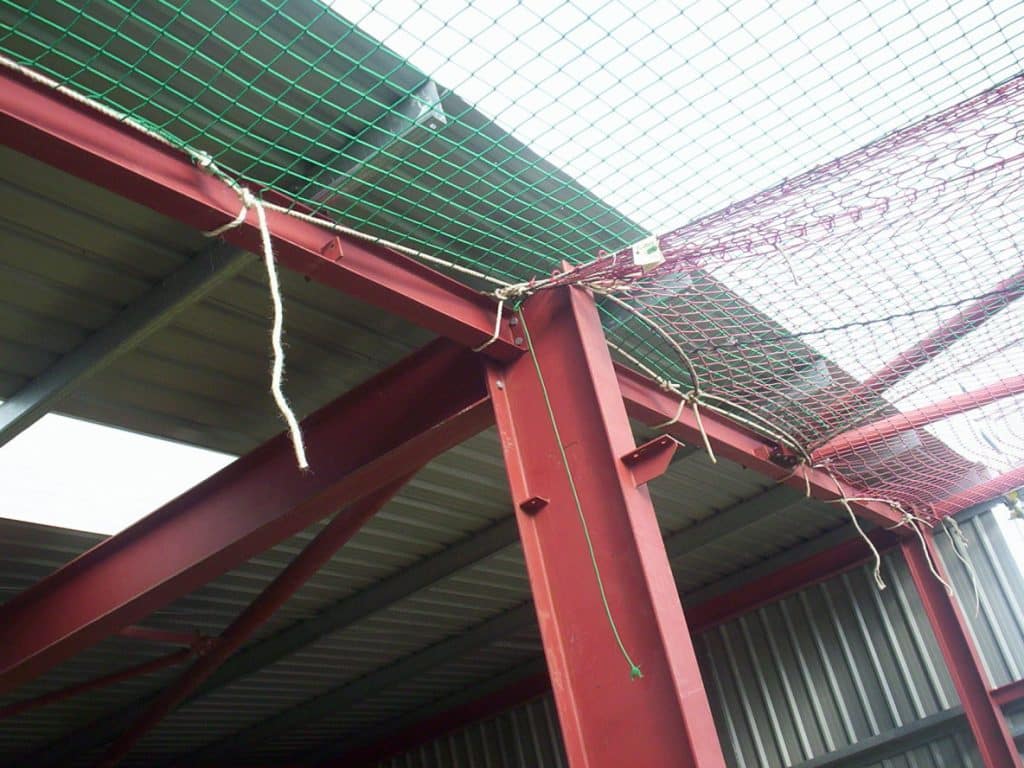
If the risk of a person falling remains, you must take sufficient measures to minimise the distance and/or consequences of a fall. Practical examples of collective protection using work equipment to minimise the distance and consequences of a fall include safety nets and soft-landing systems, e.g. air bags, installed close to the level of the work.
An example of personal protection used to minimise the distance and consequences of a fall would be industrial rope access, e.g. working on a building façade, or a fall arrest system using a high anchor point.
Can I use ladders when working at height?
For tasks of low risk and short duration, ladders and stepladders can be a sensible and practical option. However, ladders should not automatically be your first choice. If your risk assessment determines it is correct to use a ladder, you should further minimise the risk by making sure workers:
use the right type of ladder for the job
are competent (you can provide adequate training and/or supervision to help)
use the equipment provided safely and follow a safe system of work
are fully aware of the risks and measures to help control them
There are simple, sensible precautions you should take to stay safe when using portable leaning ladders and stepladders in the workplace. Employers must make sure that workers use the right type of ladder and that they know how to use it safely.
Netting to prevent falls
When to use a ladder at work
Ladders can be used for work at height when an assessment of the risk for carrying out a task has shown that using equipment that offers a higher level of fall protection is not justified. This is because of the low risk and short duration of use, or there are existing workplace features which cannot be altered.
Short duration is not the deciding factor in establishing whether use of a ladder is acceptable – employers must have first considered risk. As a guide, if your task would require staying up a leaning ladder or stepladder for more than 30 minutes at a time, it is recommended you use alternative equipment.
You should only use ladders in situations where they can be used safely, e.g. where the ladder will be level and stable, and can be secured (where it is reasonably practicable to do so).
Know how to use a ladder safely when working at height
To use a ladder, workers must be competent or, if they are being trained, they should be working under the supervision of a competent person. Competence can be demonstrated through a combination of training, practical and theoretical knowledge, and experience. In addition, training should be appropriate for the task, and this includes knowing:
how to assess the risks of using a ladder for a particular task
when it is right to use a ladder (and when it is not)
which type of ladder to use and how to use it
How to check your ladder is safe before you use it
Employers must have procedures in place to ensure that before using a ladder, employees have access to user instructions from the manufacturer in case they need to refer to them and that workers always carry out a ‘pre-use’ check to spot any obvious visual defects to make sure the ladder is safe to use.
A pre-use check should be carried out:
by the person using the ladder
at the beginning of the working day
after something has changed, e.g., a ladder has been dropped or moved from a dirty area to a clean area (check the state or condition of the feet)
The check should include:
the stiles – make sure they are not bent or damaged, as the ladder could buckle or collapse
the feet – if they are missing, worn or damaged the ladder could slip. Also check the ladder feet when moving from soft/dirty ground (e.g. dug soil, loose sand/stone, a dirty workshop) to a smooth, solid surface (e.g. paving slabs), to make sure the actual feet and not the dirt (e.g. soil, chippings or embedded stones) are making contact with the ground
the rungs – if they are bent, worn, missing or loose, the ladder could fail
any locking mechanism – does the mechanism work properly? Are components or fixings bent, worn or damaged? If so, the ladder could collapse. Ensure any locking bars are fully engaged
the stepladder platform – if it is split or buckled, the ladder could become unstable or collapse
the steps or treads on stepladders – if they are contaminated, they could be slippery; if the fixings are loose on the steps, they could collapse
If employees identify any of the above defects, they should not use the ladders and should report the faults to the person in charge of the work.
Types of ladder and how to use them safely
Ultimate safety guide to working at height: Leaning ladders
When using a leaning ladder to carry out a task:
Only carry light materials and tools – read the manufacturer’s labels on the ladder and assess the risks
Do not overreach – make sure your belt buckle (or navel) stays within the stiles
Make sure the ladder is long enough or high enough for the task
Do not overload the ladder – consider your weight and the equipment or materials you are carrying before working at height
Check the pictogram or label on the ladder for any advisory information
To help make sure the ladder angle is at the safest position to work from- you should use the 1-in-4 rule. This is where the ladder should be one space or unit of measurement out for every four spaces or units up (a 75° angle)
Always grip the ladder and face the ladder rungs while climbing or descending – do not slide down the stiles
Do not try to move or extend the ladder while standing on the rungs
Do not work off the top three rungs. Try to make sure that the ladder extends at least 1 metre or three rungs above where you are working
Do not stand ladders on movable objects, such as pallets, bricks, lift trucks, tower scaffolds, excavator buckets, vans or mobile elevating work platforms
Avoid holding items when climbing (consider using a tool belt)
Do not work within 6 m horizontally of any overhead power line, unless it has been made dead or it is protected with insulation. Use a non-conductive ladder (e.g. fibreglass or timber) for any electrical work
Maintain three points of contact when climbing and wherever possible at the work position.
Where you cannot maintain a handhold, other than for a brief period (e.g. to hold a nail while starting to knock it in, start a screw etc), you will need to take other measures to prevent a fall or mitigate the consequences if one happened
Secure the ladder (e.g. by tying the ladder to prevent it from slipping either outwards or sideways) and have a strong upper resting point (i.e. do not rest it against weak upper surfaces such as glazing or plastic gutters)
Consider using an effective stability device (a device which, if used correctly, prevents the ladder from slipping, some types of ladders come with these)
Ultimate safety guide to working at height: Telescopic ladders
Telescopic ladders are a variation of leaning ladders but remember that they do not all work in the same way. They should always be used, stored and transported with care and kept clean. In addition to following this guidance, it is important you read and follow the user instructions provided by the manufacturer.
Before every use – in addition to the normal ladder checks – make sure they are operating correctly and that the mechanisms that lock each section are working properly.
Always follow the user instructions regarding the opening and closing procedure. Be aware of the potential for trapping fingers between the closing sections. Remember some of the important parts are inside where they cannot be seen. If you are in any doubt, do not use them.
Ultimate safety guide to working at height: Stepladders
Our ultimate safety guide to working at height would not be complete without mentioning stepladders. When using a stepladder to carry out a task:
Check all four stepladder feet are in contact with the ground and the steps are level
Only carry light materials and tools
Do not overreach
Do not stand and work on the top three steps (including a step forming the very top of the stepladder) unless there is a suitable handhold
Ensure any locking devices are engaged
Try to position the stepladder to face the work activity and not side on. However, there are occasions when a risk assessment may show it is safer to work side on, e.g. in a retail stock room when you cannot engage the stepladder locks to work face on because of space restraints in narrow aisles, but you can fully lock it to work side on
Try to avoid work that imposes a side loading, such as side-on drilling through solid materials (e.g. bricks or concrete)
Where side loadings cannot be avoided, you should prevent the steps from tipping over, e.g., by tying the steps. Otherwise, use a more suitable type of access equipment
Maintain three points of contact at the working position. This means two feet and one hand, or when both hands need to be free for a brief period, two feet and the body supported by the stepladder.
When deciding whether it is safe to carry out a particular task on a stepladder where you cannot maintain a handhold (e.g. to put a box on a shelf, hang wallpaper, or install a smoke detector on a ceiling), the decision needs to be justified, taking into account:
the height of the task
whether a handhold is still available to steady yourself before and after the task
whether it is light work
whether it avoids side loading
whether it avoids overreaching
whether the stepladder can be tied (e.g. when side-on working)
Ultimate safety guide to working at height: Combination and multi-purpose ladders
Combination and multi-purpose ladders can be used as stepladders, a variation of stepladders or leaning ladders. Combination ladders are sometimes referred to as ‘A’ frame ladders and these types of ladders can be used in a variety of different configurations. You should:
check to ensure that any locking mechanism is properly engaged before use
always recheck the locking mechanism if the setup of the ladder is changed
on three-part combination ladders, never extend the top section (the section extending above the A frame) beyond the limit marked on the ladder and specified in the user manual
Where ladders should be used
As a guide, only use a ladder:
on firm ground
on level ground – refer to the manufacturer’s pictograms on the side of the ladder. Use proprietary levelling devices, not ad-hoc packing such as bricks, blocks, timbers etc
on clean, solid surfaces (paving slabs, floors etc). These need to be clean (no oil, moss or leaf litter) and free of loose material (sand, packaging materials etc) so the feet can grip. Shiny floor surfaces can be slippery even without contamination
where it will not be struck by vehicles (protect the area using suitable barriers or cones)
where it will not be pushed over by other hazards such as doors or windows, i.e., secure the doors (not fire exits) and windows where possible
where the general public are prevented from using it, walking underneath it or being at risk because they are too near (use barriers, cones or, as a last resort, a person standing guard at the base)
where it has been secured
Securing ladders and ladders used for access
There are various options available for securing ladders:
Tie the ladder to a suitable point, making sure both stiles are tied
Where this is not practical, secure the ladder with an effective ladder stability device
If this is not possible, securely wedge the ladder (e.g. wedge the stiles against a wall)
If you cannot achieve any of these options, foot the ladder – footing is the last resort.
Ladders used for access
In general:
Ladders used to access another level should be tied and extend at least 1 m above the landing point to provide a secure handhold
At ladder access points, a self-closing gate is recommended
Stepladders should not be used to access another level unless they have been specifically designed for this.
Inspecting the condition of ladders
An important element in our ultimate safety guide for working at height is inspections. Employers need to make sure that any ladder or stepladder is both suitable for the work task and in a safe condition before use. As a guide, only use ladders or stepladders that:
have no visible defects – they should have a pre-use check each working day
have an up-to-date record of the detailed visual inspections carried out regularly by a competent person. These should be done in accordance with the manufacturer’s instructions. Ladders that are part of a scaffold system still have to be inspected every seven days as part of the scaffold inspection requirements
are suitable for the intended use, i.e. are strong and robust enough for the job
have been maintained and stored in accordance with the manufacturer’s instructions
A detailed visual inspection is similar to pre-use checks, in that it is used to spot defects and can be done on site by a competent employee. Pre-use checks make sure that a ladder is safe to use and are for the immediate benefit of the ladder user. These checks do not need to be recorded. Any problems or issues should be reported to a manager.
Detailed visual inspections are the responsibility of the employer. They should be carried out at fixed intervals and recorded. Records of these inspections provide a snapshot of the state of the ladders over time. When doing an inspection, look for:
damaged or worn ladder feet
twisted, bent or dented stiles
cracked, worn, bent or loose rungs
missing or damaged tie rods
cracked or damaged welded joints, loose rivets or damaged stays
Pre-use checks and inspections of ladder stability devices and other accessories should be performed in accordance with the manufacturer’s instructions.
Consider any trends in defect reporting which may suggest that they ladders are not being maintained or are not suitable for the work task being conducted.
While BS2037 and BS1129 have been withdrawn, ladders originally made to these standards prior to their withdrawal may still be used (subject to following user instructions and guidance on safe use).
Conclusion
The success to any working at height activity is in the planning. As an employer you should ensure that all working at height tasks are carefully planned, use the correct equipment and that workers are competent to carry out the activity. This ultimate safety guide to working at height should help you plan for such work activities and, if you require advice or support for your business, please contact one of the Ashbrooke team.
A lack of safe systems of work resulted in a cargo handling company being fined after the employee was fatally crushed at a container park in Portsmouth.
On 25 August 2017, Mr Mieczyslaw Tadeusz Siwak, a 34-year-old father-of-one, was working for Portico Shipping Limited (formerly MMD (Shipping Services) Limited) on the night shift in the container park. His job was to connect refrigerated container units to electrical supplies, which his colleague had lifted into position for him using a container stacker vehicle. It was during one of these manoeuvres that Mr Siwak was fatally crushed between two containers.
An investigation by the Health and Safety Executive (HSE) found that the company routinely failed to provide adequate supervision of operatives and drivers working on the night shift to ensure safe systems of work were followed. This included failure to use safe walkways to segregate pedestrians from vehicles and the safe operation of container stackers by driving with shipping containers in the raised position to allow visibility.
Portico Shipping Limited of Guildhall Square, Portsmouth, Hampshire pleaded guilty to breaching Section 2(1) of the Health & Safety at Work etc. Act 1974. At Portsmouth Magistrates’ Court the company was fined £200,000 and ordered to pay costs of £15,631.61.
“Safe systems of work should be in place on sites with moving vehicles to prevent pedestrians coming into contact with traffic or moving machinery. When moving containers by container stacker, the load should be transported as low as possible whilst maintaining full line of sight.
“Supervisors must be given the necessary instruction and training to implement the safe systems of work and manage hazards during operation processes.
“This tragic incident was entirely preventable had the correct safety management procedures and supervision been in place at the site.”
HSE inspector Rebecca Lumb
Safe Systems of Work
A formal management system or framework can help you manage health and safety and ensure that you have safe systems of work in place – the decision whether to use a recognised management system is up to employers and it is not a requirement of the HSE. Examples include:
National and international standards such as:
ISO 45001:2018 Occupational health and safety management systems – Requirements with guidance for use
ISO 45001 is an international standard for health and safety at work developed by national and international standards committees independent of government. Introduced in March 2018, it replaced the current standard (BS OHSAS 18001) which will be withdrawn. Businesses had a three-year period to move from the old standard to the new one.
Businesses are not required by law to implement ISO 45001 or other similar management standards, but they can help provide a structured framework for ensuring a safe and healthy workplace.
Implementing ISO 45001 may help your organisation demonstrate compliance with health and safety law. But, in some respects, it goes beyond what the law requires, so consider carefully whether to adopt it.
If your organisation already has a developed health and safety management structure, or you are familiar with other management standards, it may be straightforward for you to adopt ISO 45001. However, if your organisation is small, with less formal management processes, you may find it difficult to interpret what the standard asks for or gauge what proportionate implementation looks like. This may particularly be the case if you are adopting management standards to meet supply chain requirements of customers or contracting bodies.
The HSE has expressed concern about the practical implementation of the standard, including audit and certification, and whether it can be easily tailored to work effectively for organisations of all sizes and levels of complexity in a way that’s in proportion to the risks they must control.
Contracting bodies and customers should therefore ask themselves whether the supplier really needs certification to 45001, or whether they can demonstrate competence in managing health and safety using other means.
HSE inspectors continue to rely on a wide range of evidence and observations when assessing an organisation’s compliance with health and safety law, not just whether they claim to meet the ISO 45001 standard or not. The HSE’s guide on managing for health and safety (HSG 65) may help your organisation as it provides a clear process-based approach to risk management. However, adopting a formalised management system approach, whether HSG65 or ISO 45001, may not be the most appropriate model for your businesses, particularly if it is small or low-risk.
Certification
Your organisation can apply the standard to your activities (in full, or in part) to help provide evidence of good health and safety management, and improvements made, without getting certification. However, you can only claim to conform to the standard if it is implemented fully.
Audit
To implement ISO 45001 in a proportionate way, auditors or certifiers should understand that it needs to be (i) tailored to an organisation’s size and level of complexity, and (ii) in proportion to the risks. You should ensure that any auditor or certifier you use has evidence that they are competent to a recognised standard. The certification body should be accredited by either the United Kingdom Accreditation Service (UKAS) for ISO 45001 or an equivalent accretion body that is member of the European Cooperation for Accreditation (EA) or the International Accreditation Forum (IAF).
Documentation
Businesses should try to keep health and safety documents functional and concise, with the emphasis on their effectiveness rather than sheer volume of paperwork. Focusing too much on the formal documentation of a health and safety management system will distract you from addressing the human elements of its implementation – the focus becomes the process of the system itself rather than actually controlling risks.
Attitudes and behaviours
Effectively managing for health and safety and having safe systems of work is not just about having a management or safety management system. The success of whatever process or system is in place still hinges on the attitudes and behaviours of people in the organisation (this is sometimes referred to as the ‘safety culture’).
The HSE has published Are you doing what you need to do? Which provides examples of what positive health and safety attitudes and behaviours will look like in the workplace. On the other hand, the examples provided of ‘What it looks like when done badly or not at all’ could indicate underlying cultural issues which employers should address.
Our health, safety and environmental consultants have experience in implementing management systems into client operations including ISO 9001, ISO 14001 and ISO 45001. If your business needs advice and support with your management system, please contact one of the Ashbrooke team.
Unsafe working at height activity has resulted in a carpentry and joinery company being fined after a man working unsecured on the forks of a fork-lift truck fell 3.5 metres to the ground.
On 14 June 2021, the man was working for Staircraft Group Limited at their head office site at Bayton Road Industrial Estate, Exhall, Coventry.
The employee was working from an unsecured stillage on the forks of a fork-lift truck in order to clean office windows at height. The stillage tipped and the employee fell 3.5 metres to the ground. As a result of the incident, he sustained a broken leg and an injury to his elbow.
An investigation by the Health and Safety Executive (HSE) found the company failed to identify that using a stillage to lift someone on the forks of a forklift truck, a method that they had used before, was unsafe. There was a lack of training for employees on the dangers of working at height without the proper equipment and there were no systems of work or risk assessments in place.
At Redditch Magistrates’ Court Staircraft Group Limited, of Bayton Road Industrial Estate, Exhall, Coventry pleaded guilty to breaching Section 2(1) of the Health and Safety at Work etc Regulations 1974 and was fined £200,000 and ordered to pay costs of £6,477.93.
“The employee’s injuries were very serious, and he could have easily been killed.
“This serious incident could so easily have been avoided by simply carrying out correct control measures and safe working practices.
“Companies should be aware that HSE will not hesitate to take appropriate enforcement action against those that fall below the required standards.”
HSE inspector Rebecca Whiley
Employers have a duty to assess the risks of working at height and to eliminate or reduce risks as far as reasonably practicable. The Work at Height Regulations 2005 impose duties on employers to ensure that activities which are required to take place at height are conducted safely.
Work at height means work in any place where, if precautions were not taken, a person could fall a distance liable to cause personal injury. This includes work above ground/floor level, locations where you could fall from an edge, through an opening or fragile surface or could fall from ground level into an opening in a floor or a hole in the ground
Work at height does not include a slip or a trip on the level, as a fall from height has to involve a fall from one level to a lower level, nor does it include walking up and down a permanent staircase in a building.
Unsafe working at height can occur when tasks are not properly planned. The Regulations apply to all work at height, where there is risk of a fall liable to cause personal injury. They place duties on employers, and those who control any work at height activity (such as facilities managers or building owners who may contract others to work at height). As part of the Regulations, you must ensure:
all work at height is properly planned and organised
those involved in work at height are competent
the risks from work at height are assessed, and appropriate work equipment is selected and used
the risks of working on or near fragile surfaces are properly managed
the equipment used for work at height is properly inspected and maintained
Before working at height, you must follow these simple steps:
avoid work at height where it is reasonably practicable to do so
where work at height cannot be easily avoided, prevent falls using either an existing place of work that is already safe or the right type of equipment
minimise the distance and consequences of a fall, by using the right type of equipment where the risk cannot be eliminated
Unsafe working at height can occur when tasks are not properly planned. In planning a work at height task, you should:
do as much work as possible from the ground
ensure workers can get safely to and from where they work at height
ensure equipment is suitable, stable and strong enough for the job, maintained and checked regularly
not overload or overreach when working at height
take precautions when working on or near fragile surfaces
provide protection from falling objects
consider emergency evacuation and rescue procedures
What about ladders?
Unsafe working can occur if ladders are used inappropriately. The law says that ladders can be used for work at height when a risk assessment has shown that using equipment offering a higher level of fall protection is not justified because of the low risk and short duration of use; or there are existing workplace features which cannot be altered.
Short duration is not the deciding factor in establishing whether an activity is acceptable or not – you should have first considered the risk. As a guide, if your task would require staying up a leaning ladder or stepladder for more than 30 minutes at a time, it is recommended that you consider alternative equipment.
You should only use ladders in situations where they can be used safely, e.g. where the ladder will be level and stable, and where its reasonably practicable to do so, the ladder can be secured.
Transport safety failures resulted in a company being fined £380,000 after a bus caused life-changing injuries to one of its employees when they were between a reversing bus and a stationary vehicle.
The employee of Stagecoach Devon Limited was working at the company’s Torquay depot on the morning of 3 October 2019. Due to space limitations, buses often had to reverse to be able to leave the depot in readiness for the day’s work. The sole banksman, who would direct vehicles, was occupied at the top of the depot where most buses were parked.
As a result, it became custom and practice for the bus drivers at the front of the depot to reverse without a banksman, or to assist each other when reversing, despite not being trained as banksmen.
The injured employee, who was caught between a reversing bus and a stationary vehicle, suffered compound multiple fractures of his arm requiring six titanium plates and 65 metal staples between his wrist and elbow.
An investigation by the Health and Safety Executive (HSE) found that Stagecoach failed to put a suitable and sufficient risk assessment in place.
This should have identified the risks inherent in the bus parking layout and action could have been taken to remove the need to reverse or mitigate the risks from reversing. For example, changing the parking layout, providing a sufficient number of trained banksmen for peak times, and improved segregation of vehicles and pedestrians.
At Plymouth Magistrates Court Stagecoach Devon Limited of Stockport, pleaded guilty to breaching Section 2(1) of the Health and Safety at Work etc. Act 1974. The company was fined £380,000 and ordered to pay costs of £18,000.
“If a suitable safe system of work had been in place prior to the incident, the life changing injuries sustained by the employee could have been prevented.”
HSE Inspector James Collins
Employers who operate depots must ensure that a suitable and sufficient risk assessment is undertaken covering the transport risks to ensure transport safety failures do not occur. When considering the risks from vehicle manoeuvring, employers must ensure that vehicles have large enough windscreens (with wipers where necessary) and external mirrors to provide an all-round field of vision. It is often worthwhile adding extra mirrors to reduce blind spots for drivers. Side mirrors can allow drivers of larger vehicles to see cyclists and pedestrians alongside their vehicles and can be effective in improving visibility around the vehicle from the driving position. These mirrors are fitted to larger road-going vehicles as standard.
Drivers should not place items in the windscreen area or in the way of mirrors or monitors, where they might impede visibility from the driving position. The area of the windscreen that is kept clear by the wipers should not be obscured, and nor should the side windows. Windows and mirrors will also normally need to be kept clean and in good repair. Dirt or cracks can make windows or mirrors less effective.
Some types of vehicles (such as straddle carriers, large shovel loaders and some large quarry vehicles) often have poor visibility from the cab. Visibility can be poor to the side or front of a vehicle as well as behind and loads on vehicles can severely limit the visibility from the driving position.
Lift trucks and compact dumper vehicles in particular can have difficulty with forward visibility when they are transporting bulky loads. Employers should recognise these risks in their risk assessment and think about ways to minimise them.
Closed-circuit television (CCTV) may help drivers to see clearly behind or around the vehicle. CCTV can cover most blind spots and the cost of fitting CCTV systems has fallen since the technology was first developed. Companies who have fitted CCTV have found that it can reduce the number of reversing accidents, so the systems usually pay for themselves in a few years.
Colour systems can provide a clearer image where there is little contrast (for example, outside on an overcast day). However, black-and-white systems normally provide a better image in lower light or darkness, and usually come with infra-red, which can be more effective than standard cameras at night.
Monitors should have adjustable contrast, brightness and resolution controls to make them useful in the different light conditions in which they will be used. Drivers may need to use a hood to shield any monitor from glare.
If possible, fit the camera for a CCTV system high up in the middle of the vehicle’s rear (one camera), or in the upper corners (two cameras). This will provide a greater field of vision and a better angle for the driver to judge distance and provide. It also keeps the camera clear of dust and spray, and out of the reach of thieves or vandals.
However, CCTV systems do have some limitations which employers should consider:
If the vehicle leaves a darker area to a more strongly lit area (for example, driving out of a building) the system may need time to adjust to the brightness.
A dirty lens will make a camera much less effective.
Drivers may find it difficult to judge heights and distances.
Drivers should not be complacent about safety even with CCTV systems installed as this can result in transport safety failures. They should be trained in proper use of the equipment and employers have a duty to provide such training and instruction.
Reversing alarms may be drowned out by other noise or may be so common on a busy site that pedestrians do not take any notice. It can also be hard to know exactly where an alarm is coming from, and people who are less able to hear are also at greater risk. Alarms can also disturb nearby residents. However, reversing alarms may be appropriate (based on the risk assessment) but might be most effectively used with other measures, such as warning lights.
The Health and Safety Executive (HSE) has successfully undertaken a prosecution following the death of a seven-year-old child over construction site safety. The civil engineering firm involved has been fined £600K for safety breaches after the child became trapped and suffocated.
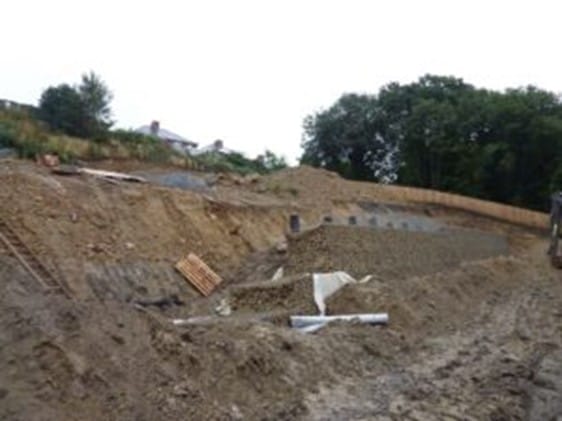
The seven-year-old went missing from home on the morning of 26 July 2015 and was found the next morning by workers at the construction site at Bank End Road, Worsborough, in South Yorkshire.
An investigation by the HSE found that the child had become trapped in a drainage pipe, which had been fixed into the ground in preparation for the installation of fencing posts. Tragically, he had suffocated before being found the next morning when work restarted on site.
The construction site was a new-build housing development next to an existing housing estate and adjacent to busy pedestrian footpaths and roads. The HSE investigation found that there was insufficient fencing in place to prevent unauthorised persons from accessing the construction site due to a combination of poor planning, management and monitoring of the site and its perimeter.
HSE photograph
“Conley should never have been able to be on that site. He should have been kept out. The construction industry should be aware of the dangers of construction sites to members of the public and any other unauthorised persons.
“The dangers to children gaining access to construction sites and treating them like a playground is an ongoing problem which must be addressed at all types of sites no matter what their complexity or size.
“The industry must do all it can to ensure children can’t access construction sites and be exposed to the inherent risks they present to prevent further tragedies like this from occurring.”
HSE inspector Paul Yeadon
Construction site safety is vital as such sites are dangerous work environments but are also interesting places for children. All construction sites require measures to manage access across defined boundaries; and steps to exclude unauthorised people.
While the numbers of children being killed or injured on construction sites has reduced, there is no room for complacency. Each year, two or three children die after gaining access to building sites, and many more are injured. Also, members of the public are seriously injured by materials or tools falling outside the site boundary, falling into trenches or being struck by moving plant and vehicles.
Some children are drawn to construction sites as exciting places to play. Those managing construction sites must do everything they can to keep children out of the site and away from danger. The following specific steps are particularly relevant to child safety:
Secure sites adequately when finishing work for the day.
Barrier off or cover over excavations and pits.
Isolate and immobilise vehicles and plant and if possible, lock them in a compound.
Store building materials (such as pipes, manhole rings, and cement bags) so that they cannot topple or roll over.
Remove access ladders from excavations and scaffolds.
To provide the best experiences, we use technologies like cookies to store and/or access device information. Consenting to these technologies will allow us to process data such as browsing behaviour or unique IDs on this site. Not consenting or withdrawing consent, may adversely affect certain features and functions.
Functional
Always active
The technical storage or access is strictly necessary for the legitimate purpose of enabling the use of a specific service explicitly requested by the subscriber or user, or for the sole purpose of carrying out the transmission of a communication over an electronic communications network.
Preferences
The technical storage or access is necessary for the legitimate purpose of storing preferences that are not requested by the subscriber or user.
Statistics
The technical storage or access that is used exclusively for statistical purposes.The technical storage or access that is used exclusively for anonymous statistical purposes. Without a subpoena, voluntary compliance on the part of your Internet Service Provider, or additional records from a third party, information stored or retrieved for this purpose alone cannot usually be used to identify you.
Marketing
The technical storage or access is required to create user profiles to send advertising, or to track the user on a website or across several websites for similar marketing purposes.