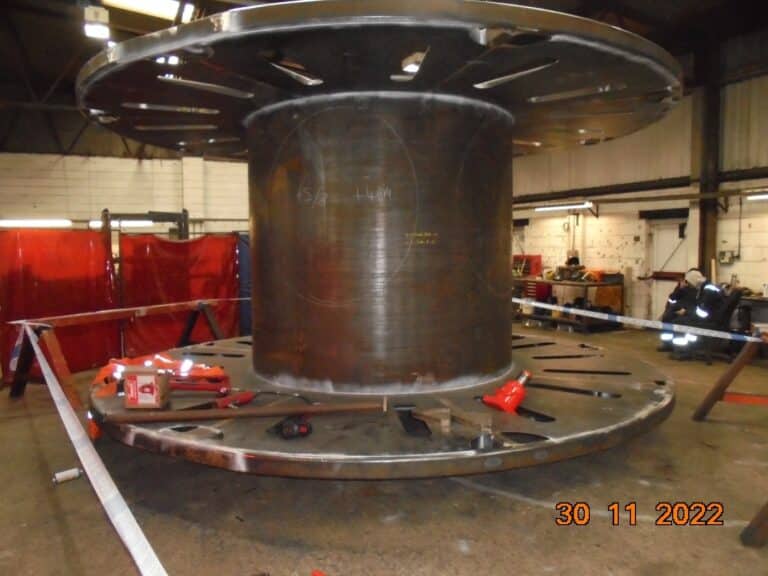
A company director fined after an employee was struck by an object while manufacturing large steel cable drums for the offshore industry.
The man, who is now 54, had been working for Code-A-Weld (Great Yarmouth) Limited when the incident happened on 19 November 2022. Although the company had manufactured steel drums previously, they had never manufactured drums of this size – with these ones weighing in excess of seven tonnes.
However, during the process, the jacking set-up failed at the company’s site in Harfreys Industrial Estate in Great Yarmouth which resulted in a catalogue of serious injuries including fractures to the man’s face and skull, and him losing the sight in one eye.
He was airlifted to hospital, placed into an induced coma and spent just under three weeks in hospital whereby he needed facial reconstruction surgery.
A Health and Safety Executive (HSE) investigation found that Code-A-Weld (Great Yarmouth) Limited failed (i) to carry out a suitable and sufficient risk assessment; (ii) control risks from welding in confined spaces; and (iii) to provide the full training required.
The investigation also found that company director, David Fowler, failed to provide safe systems of work in relation to metal fabrication work, despite previous HSE interventions regarding failure to risk assess activities in the fabrication workshop.
Had the company put in place correct measures, such as suitable risk assessment, safe systems of work and planning for jacking activity, the incident could have been prevented.
The HSE publication, Health and safety in engineering workshops provides valuable practical advice and can be downloaded free at: Health and Safety in engineering workshops.
Following a sentencing hearing at Chelmsford Magistrates’ Court on 20 June 2024, DJ Williams issued their written judgment on 5 July as follows:
Company Fined
Code-A-Weld (Great Yarmouth) Limited, of Harfreys Industrial Estate, Bessemer Way, Great Yarmouth, pleaded guilty to breaching Section 2(1) of the Health and Safety at Work etc. Act 1974. The company was fined £24,000 and ordered to pay £3,500 in costs.
Director Fined
David Fowler, of Harfreys Industrial Estate, Bessemer Way, Great Yarmouth, pleaded guilty to breaching Section 37(1) of the Health and Safety at Work etc. Act 1974. He was fined £2,000 and ordered to pay £1,500 in costs.
HSE Statement
Those in control of work have a responsibility to devise safe methods of working and to provide the necessary information, instruction and training to their workers in the safe system of working. If a suitable safe system of work had been in place prior to the incident, the life-threatening injuries sustained by the employee could have been prevented.
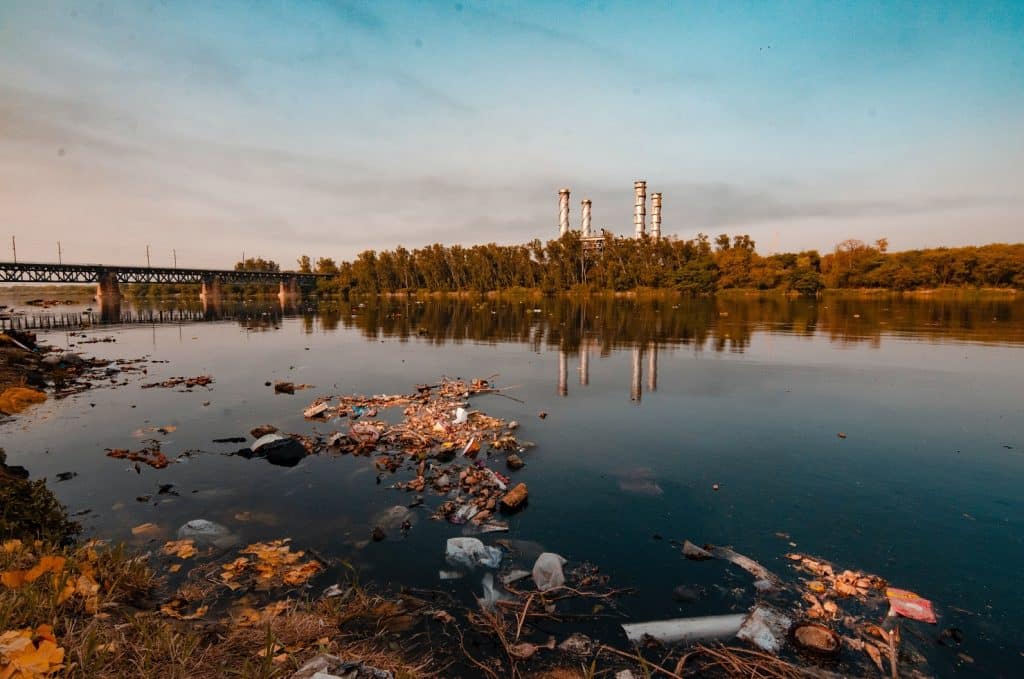
This appeal forms part of long-running litigation about discharges of foul water contaminated with untreated sewage into the Manchester Ship Canal. The Supreme Court is asked to decide whether the owner of the beds and banks of the canal, the Manchester Ship Canal Company Ltd (“the Canal Company”), can bring a claim in nuisance or trespass when the canal is polluted by discharges of foul water from outfalls maintained by the statutory sewerage undertaker, United Utilities Water Ltd (“United Utilities”).
United Utilities is the statutory sewerage undertaker for the North West of England. Its sewerage network includes around 100 outfalls from which material emanating from sewers, sewage treatment works and pumping stations is discharged into the canal. When it is operating within its hydraulic capacity, the discharges are of surface water or treated effluent, but when the system’s hydraulic capacity is exceeded at least some of the outfalls discharge foul water into the canal. There is no suggestion that these polluting discharges are caused by negligence or deliberate wrongdoing on the part of United Utilities. However, they could be avoided if United Utilities invested in improved infrastructure and treatment processes.
The Canal Company threatened to bring a claim against United Utilities for trespass and nuisance. In response, United Utilities asked the court to make a declaration that the Canal Company had no right of action. The court was not asked to decide whether the Canal Company’s claim would be successful on the relevant facts. Rather, the question was whether the claim would be inconsistent with and therefore barred by the statutory scheme for regulating sewerage established by the Water Industry Act 1991 (“the 1991 Act”).
The High Court judge agreed to make the declaration requested by United Utilities. His decision was upheld by the Court of Appeal. The implication of these judgments is that no owner of a canal (or other watercourse or body of water) can bring a claim based on nuisance or trespass against a sewerage undertaker in respect of polluting discharges into the water, unless the sewerage undertaker is guilty of negligence or deliberate wrongdoing. A claim of this kind would be prevented even if the polluting discharges were frequent and had significant and damaging effects on the owner’s commercial or other interests, or on its ability to enjoy its property. The Canal Company appeals to the Supreme Court.
Court Judgment
The Supreme Court unanimously allowed the Canal Company’s appeal. The Court held that the 1991 Act does not prevent the Canal Company from bringing a claim in nuisance or trespass when the canal is polluted by discharges of foul water from United Utilities’ outfalls, even if there has been no negligence or deliberate misconduct. Lord Reed and Lord Hodge give a joint judgment with which the other members of the Court agree.
Reasons for the Decision
The starting point is that the owner of a canal or other watercourse has a property right in the watercourse, including a right to preserve the quality of the water. That right is protected by the common law. The discharge of polluting effluent into a privately-owned watercourse is an actionable nuisance at common law if the pollution interferes with the owner’s use or enjoyment of its property. The Supreme Court was, therefore, asked to decide whether the 1991 Act excludes common law rights of action in nuisance and trespass. This is a question of statutory interpretation.
Statutory Powers
A body which exercises statutory powers, such as a sewerage undertaker, is liable in the same way as any other person if it is responsible for a nuisance, trespass or other tort, unless either it: (i) is acting within its statutory powers, or (ii) has been granted some statutory immunity from suit. If a sewerage undertaker interferes with a person’s rights, it is therefore necessary to distinguish between interferences which Parliament has authorised, which are lawful, and interferences which Parliament has not authorised, which are unlawful. When drawing this distinction, two principles are relevant. First, a person’s rights to the peaceful enjoyment of its property and to access the courts are protected by both the common law and the Human Rights Act 1998.
The principle of legality holds that fundamental rights cannot be overridden by general or ambiguous words. A statute will, therefore, only authorise what would otherwise be an unlawful interference with property rights or deprive a person of the right to bring a legal claim, if this is clear from or a necessary implication of the express language used by Parliament. Secondly, Parliament will not be taken to have intended that statutory powers should be exercised, or duties performed, in a way which interferes with private rights, unless the interference is inevitable.
The 1991 Act does not expressly authorise United Utilities to cause a nuisance or to trespass by discharging foul water through the outfalls into the canal. United Utilities’ entitlement to use the outfalls derives from section 116 of the 1991 Act. However, this entitlement is subject to a number of statutory protections for watercourses. Section 117(5) provides that nothing in section 116 (or the other relevant sewerage provisions of the 1991 Act) authorises a sewerage undertaker to use a sewer, drain or outfall to convey foul water into a watercourse. Sewerage undertakers therefore do not have statutory authority to discharge untreated sewage into watercourses. Section 117(6) prevents a sewerage undertaker from carrying out its functions under the relevant sewerage provisions so as to create a nuisance. Section 94(4) makes it clear that the common law remedies for nuisance – such as an injunction or damages – are available in addition to any remedy available by virtue of section 94. Section 186(3) further protects the owners of watercourses, and other rights-holders, by stating that nothing in the relevant sewerage provisions authorises a sewerage undertaker to damage a watercourse, or the quality of the water in it, without consent.
Unauthorised Pollution
The Court judgment concludes that the polluting discharges similarly cannot be regarded as having been impliedly authorised by Parliament, since they are not an inevitable consequence of a sewerage undertaker’s performance of its statutory powers and duties. In the present case, the discharges could be avoided if United Utilities invested in improved infrastructure and treatment processes.
If Parliament has not authorised an interference with private law rights, it would normally follow that a claimant can enforce those rights at common law. Furthermore, since sections 117(5) and 186(3) limit the authority conferred on sewerage undertakers by the 1991 Act, there must be a common law remedy where those limits are exceeded: otherwise, the sections would have no purpose.
Marcic Case
United Utilities argues that the Canal Company has no cause of action because the only way to avoid the discharges of foul water into the canal would be to construct new sewerage infrastructure. It relies on the House of Lords’ decision in Marcic v Thames Water Utilities Ltd [2003] UKHL 66 (“Marcic”), which it says established that Parliament’s intention was that the construction of new sewerage infrastructure should be a matter for the Secretary of State or the regulator, the Water Services Regulation Authority (known as “Ofwat”), not the courts.
In the Court judgment, the Supreme Court rejects this argument. There are a number of indications that Parliament did not intend the 1991 Act to exclude a claimant’s right to enforce its private property right in a watercourse. First, section 186(7) provides for arbitration where water quality has been damaged without consent, at the option of the party complaining. This strongly suggests that the complainant could alternatively choose to pursue a common law claim.
Statutory Compensation
Secondly, section 180 of the 1991 Act gives effect to Schedule 12, which makes provision for statutory compensation. Compensation is available for damage caused by the authorised acts of sewerage undertakers, but not for damage caused by acts which are unauthorised, such as the discharges of foul water into the canal. This indicates that the victims of unauthorised damage retain their common law rights of action. Otherwise, they would be left without any remedy for the damage they have suffered, which would be anomalous. They would also be treated less favourably than the victims of authorised damage, which would be perverse.
Thirdly, the Court judgment states that depriving the victims of a nuisance or trespass of their common law rights of action would be a substantial change to the law as it stood before the 1991 Act was enacted. It is unlikely that a change of this kind would have been made in a consolidation statute.
Consolidation acts are not designed to make substantive changes to the law, but rather to reorganise and restate the existing law so that it is clearer and easier to understand. Moreover, the Court judgment notes that since the 1991 Act is detailed and elaborate, it would be surprising if Parliament had left an important change in the law to be implied rather than stated expressly. In addition, the principle of legality holds that fundamental common law rights, such as a right of action to protect private property, are not to be taken to be overridden in the absence of express language or necessary implication.
In the Court judgment, the Justices noted that United Utilities relied on section 18, which empowers the Secretary of State and Ofwat to make enforcement orders for the purpose of securing compliance by sewerage undertakers with statutory and certain other requirements. These include the general duty in section 94, which requires sewerage undertakers to provide a sewerage system. Section 18(8) makes it clear that it is not possible to enforce these statutory and other requirements by bringing a claim at common law; an order under section 18 provides the only available remedy. However, this ouster only applies to causes of action that are based on a breach of a statutory or other requirement that is enforceable under section 18. If a sewerage undertaker does something (or fails to do something) which gives rise to an independent common law cause of action, for example, for nuisance or trespass, the 1991 Act does not prevent the courts from enforcing the claimant’s common law rights and awarding any available common law remedies.
The Supreme Court accepted that the regulatory scheme established by the 1991 Act, including the making of enforcement orders under section 18, might be disrupted if the court were to grant injunctions which required a sewerage undertaker to spend large sums on new infrastructure as a remedy for interferences with private property rights. The Court judgement goes on to say that might be so if such an injunction conflicted with the arrangements in the Act for the regulatory approval of capital expenditure and the charges imposed on the sewerage undertaker’s customers.
The Court judgment states however, this does not mean that common law rights of action are excluded in such a case. Instead, the courts may make an award in damages, both for past invasions of property rights and for future or repeated invasions of those rights. This would vindicate property rights in relation to watercourses until the sewerage undertaker is in a position, with Ofwat’s approval, to invest in a long-term solution.
Court Judgment Distinguishes Marcic
The Supreme Court’s conclusion that the 1991 Act does not prevent the Canal Company from bringing a claim in nuisance or trespass when the canal is polluted by discharges of foul water from United Utilities’ outfalls can be reconciled with the decision in Marcic. That case can be distinguished, first, because it did not concern the limits on the authority conferred on sewerage undertakers by the 1991 Act set out in sections 117(5) and 186(3).
Secondly, the Court judgment states that the defendant sewerage undertaker had not created or adopted the relevant nuisance, as it has in the present case. Instead, it was said to be liable for continuing the nuisance by failing to take reasonable steps to avert it by constructing a new public sewer. An essential ingredient of the cause of action was therefore that the defendant was under a duty to build a new sewer, in accordance with section 94(1) of the 1991 Act. That duty could only be enforced by the Secretary of State or Ofwat under section 18, not by the courts.
In contrast, the Canal Company’s proposed claim against United Utilities is not based on a breach of section 94(1), or any other requirement enforceable under section 18, but rather on independent common law causes of action in trespass and nuisance.
Conclusion
The Court judgment is likely to encourage other groups and individuals to consider claims against water companies following pollution incidents. The increased focus on pollution incidents involving water companies has resulted in a number of investigations by the regulator, the Environment Agency, responding to public concerns. Campaign and pressure groups will also be pleased with the Court’s decision.
Risk management is a critical aspect of any business or organisation, and in the UK, it is taken very seriously. The UK has a robust framework for risk management, guided by various institutions and regulations that ensure businesses can identify, assess, and mitigate risks effectively.
The Institute of Risk Management (IRM) is a leading body in the UK that provides internationally recognised qualifications, training, and research in risk management. Their commitment to developing risk management professionals is evident through their extensive resources and events that cater to enhancing skills and knowledge in the field.
The UK government also plays a significant role in establishing risk management principles. The “Orange Book” is a guidance document published by the Government Finance Function and HM Treasury, which lays out the concepts and processes for risk management in government organizations. It complements other publications, such as the “Green Book”, which offers advice on appraisal and evaluation.
Moreover, the Management of Health and Safety at Work Regulations 1999 outlines the minimum requirements for risk assessment in the workplace. It mandates the identification of potential hazards, the evaluation of the likelihood and severity of harm, and the implementation of measures to control or eliminate risks.
The private sector in the UK is also bustling with companies specialising in risk management. These organisations offer a range of services, from consultancy to software solutions, helping businesses navigate the complexities of risk in various industries.
In conclusion, risk management in the UK is a multifaceted discipline supported by a strong institutional framework, government regulations, and a dynamic private sector. Whether it’s for public or private entities, the resources and expertise available within the UK provide a solid foundation for managing risks and safeguarding the interests of stakeholders. With the right approach and tools, organisations can turn risks into opportunities for growth and resilience.
Risk Management Top 10 for 2024
Common Risks Faced by UK Businesses: Navigating the Challenges of 2024
In the ever-evolving landscape of the business world, UK companies face a myriad of risks that can impact their operations and bottom line. As we delve into 2024, it is crucial for businesses to stay informed about the potential challenges they may encounter. Here’s an overview of the common risks that UK businesses are currently facing:
Cyber Incidents
Cybersecurity remains a top concern for UK businesses, with cyber incidents such as cybercrime, IT network disruptions, malware, ransomware, and data breaches leading the list of risks. The sophistication of cyber threats continues to grow, with hackers leveraging new technologies to exploit vulnerabilities. The rise of artificial intelligence (AI)-powered attacks has made it imperative for businesses to bolster their cyber defences and remain vigilant against these evolving threats
Business Interruption
Business interruption, including supply chain disruptions, holds the second spot on the risk list. The UK’s recent history with Brexit and the COVID-19 pandemic has highlighted the importance of business resilience. Companies must navigate import/export costs, cash-flow challenges, staff shortages, and the ripple effects of global events on their supply chains.
Natural Catastrophes
Climbing up the risk ladder, natural catastrophes such as storms, floods, earthquakes, and wildfires pose significant threats. Extreme weather events underscore the need for robust disaster recovery plans and insurance coverage to mitigate the financial and operational impacts of such incidents.
Shortage of Skilled Workforce
The scarcity of skilled professionals is a growing concern, affecting businesses’ ability to maintain productivity and innovation. This risk calls for strategic workforce planning and investment in training and development to bridge the skills gap.
Climate Change
The physical, operational, and financial risks associated with global warming continue to be a pressing issue. With climate change moving up the risk rankings, businesses must integrate sustainability into their core strategies and adapt to the changing regulatory landscape.
Political Risks and Violence
Political instability, terrorism, and civil unrest can disrupt business operations and pose security challenges. Companies must be prepared to respond to political risks and ensure the safety of their assets and personnel.
Legislative and Regulatory Changes
Changes in legislation and regulation, such as tariffs, economic sanctions, and protectionism, can have far-reaching effects on businesses. Staying abreast of legal developments and maintaining compliance is essential for operating within the law.
Macro-economic Developments
Economic shifts, including inflation, deflation, and monetary policies, can alter the business landscape. Organizations must be agile and ready to adjust their strategies in response to macro-economic changes.
New Technologies
The advent of new technologies brings both opportunities and risks. Innovations like AI, autonomous vehicles, and the Metaverse can transform industries, but they also introduce new challenges that businesses must navigate.
Market Developments
Lastly, market developments such as intensified competition, mergers and acquisitions, and market fluctuations require businesses to be competitive and adaptable to sustain growth and success.
In conclusion, UK businesses must adopt a proactive approach to risk management, staying informed and prepared for the diverse range of risks they face. By understanding these common risks and implementing effective strategies to address them, businesses can enhance their resilience and secure a competitive edge in the marketplace.
Risk Management in practice
Managing risk is a critical aspect of business strategy, especially in a dynamic and interconnected global economy. In the UK, businesses face a variety of risks that can impact their operations, reputation, and bottom line. Understanding these risks and implementing strategies to manage them is essential for business resilience and success.
Cyber Incidents
Cyber incidents top the list of risks for UK businesses in 2024, as they did in the previous year. The digital landscape is constantly evolving, and with it, the nature of cyber threats. Businesses must stay vigilant against cybercrime, IT network disruptions, malware, ransomware, and data breaches. Investing in robust cybersecurity measures, employee training, and incident response plans is crucial. Regularly updating IT infrastructure and adopting best practices for data protection can mitigate the risk of cyber incidents.
Business Interruption
Business interruption, including supply chain disruptions, remains a significant concern. The UK’s recent history with Brexit and the COVID-19 pandemic has highlighted the importance of business continuity planning. Companies should assess their supply chain vulnerabilities and develop strategies to ensure operational resilience. This may include diversifying suppliers, stockpiling critical inventory, and establishing alternative logistics arrangements.
Natural Catastrophes
The emergence of natural catastrophes as a top risk reflects the increasing frequency and severity of extreme weather events. Businesses should evaluate their exposure to natural disasters and consider insurance coverage as part of their risk management strategy. Additionally, developing disaster recovery plans and investing in infrastructure that can withstand extreme conditions are proactive steps businesses can take.
Shortage of Skilled Workforce
A shortage of skilled workers can hinder a business’s ability to grow and compete. To address this risk, companies should invest in training and development programs, foster a culture of continuous learning, and explore new recruitment channels. Building partnerships with educational institutions and offering apprenticeships or internships can also help bridge the skills gap.
Climate Change
The risks associated with climate change, such as physical, operational, and financial impacts, are increasingly recognized by UK businesses. Adopting sustainable practices, reducing carbon footprint, and integrating Environmental Social Governance (ESG) criteria into business operations can not only manage risk but also create opportunities for innovation and growth.
Political Risks and Violence
Political instability, terrorism, and other forms of political risk can have sudden and profound effects on businesses. Companies should monitor political developments and have contingency plans in place. Risk transfer mechanisms, such as political risk insurance, can provide financial protection against such uncertainties.
Legislative and Regulatory Changes
Changes in legislation and regulation, including tariffs and economic sanctions, can disrupt business activities. Staying informed about regulatory changes and engaging with policymakers can help businesses anticipate and adapt to new requirements. Compliance programs and legal counsel can ensure that businesses navigate these changes effectively.
Macro-economic Developments
Economic conditions such as inflation, deflation, and monetary policies can impact business performance. Businesses should conduct regular economic analyses and scenario planning to prepare for macro-economic shifts. Diversifying revenue streams and maintaining financial flexibility can provide a buffer against economic turbulence.
New Technologies
The advent of new technologies, including AI and the Metaverse, presents both opportunities and risks. Businesses should evaluate the potential impact of emerging technologies on their operations and industry. Investing in research and development and staying ahead of technological trends can turn these risks into competitive advantages.
Market Developments
Finally, market developments such as intensified competition and market fluctuations require businesses to be agile and responsive. Conducting market research, fostering innovation, and maintaining strong customer relationships can help businesses stay competitive in a changing market landscape.
Conclusion
In conclusion, managing risk is an ongoing process that requires attention, resources, and strategic thinking. By understanding the top risks facing UK businesses and taking proactive steps to address them, companies can build resilience and position themselves for long-term success.
Environmental permitting is a crucial aspect of environmental governance in England, ensuring that activities which could potentially impact the environment are regulated and monitored. The process is overseen by the Environment Agency and local authorities, depending on the scale and nature of the operation.
Permits are required for a wide range of activities, from industrial installations and waste operations to water discharge and groundwater activities. Environmental permitting aims to prevent pollution of the air, water, and land, manage flood risks, and protect land drainage. Operating without a permit when one is required is illegal and can result in significant penalties.
For businesses and individuals looking to understand whether they need an environmental permit, the UK government provides comprehensive guidance. This includes detailed information on what activities require a permit, how to apply, and the responsibilities of permit holders. The guidance is designed to help navigate the complexities of environmental regulation and ensure compliance with the law.
The environmental permitting process reflects the UK’s commitment to maintaining high environmental standards. It is a key part of the country’s efforts to reduce pollution, protect natural habitats, and promote sustainable development. For anyone involved in activities that could affect the environment, understanding and adhering to the permitting process is not just a legal obligation but also a step towards a more sustainable future.
For more detailed information on environmental permitting in England, resources are available on the Environment Agency’s official website, including core guidance documents and access to the public register for environmental information. These resources provide valuable insights into the regulatory framework and practical advice for compliance. Whether you are operating a large industrial facility or a small business, staying informed about environmental permits is essential for legal and environmental stewardship.
Steps to Environmental Permitting
Applying for an environmental permit in England is a structured process designed to ensure that businesses and activities comply with environmental regulations. Here’s a step-by-step guide to help you understand how to apply for an environmental permit:
Determine the Type of Permit Required: First check if your activity is covered by a regulatory position statement (RPS), which may not require a permit if certain conditions are met. If your activity is exempt, you must still register your exemption with the Environment Agency. For non-exempt activities, determine whether you need a standard rules permit or a bespoke permit tailored to your specific business activities.
Pre-Application Advice: Utilise the Environment Agency’s pre-application advice service for basic guidance on the type of permit needed, application forms, and the correct application charge. For more complex requests, consider the enhanced (paid-for) advice service which can provide in-depth assistance on various aspects of the application process.
Prepare Your Application: Gather all necessary information and complete the required risk assessments. Develop a written management system that outlines how you will comply with the permit conditions.
Submit Your Application: Apply online for most standard rules environmental permits. Ensure your site meets the standard rules location criteria before submitting your application. For bespoke permits, follow the specific guidance provided by the Environment Agency to ensure your application addresses all necessary details.
Consultation Process: Be prepared for consultations on your permit application, which may involve public engagement or assessments of the potential impact on heritage and nature conservation sites.
After Application Submission: Once submitted, your application will be reviewed by the Environment Agency. This process may include inspections and further information requests.
Receiving Your Permit: If your application is successful, you will receive your permit, which will outline the conditions you must adhere to. It is crucial to understand and comply with these conditions to operate legally.
Ongoing Compliance: Adhere to the permit conditions and be aware of any reporting or monitoring requirements. Failure to comply can result in enforcement action or revocation of the permit.
Permit Changes or Transfers: If you need to change, transfer, or cancel your permit, follow the Environment Agency’s procedures to ensure continued compliance.
By following these steps and utilising the resources provided by the Environment Agency, applicants can navigate the environmental permitting process with greater ease and confidence. It is essential to approach this process with thorough preparation and a commitment to environmental stewardship.
Common Mistakes in Applying for an Environmental Permit
When applying for an environmental permit in England, it’s crucial to be aware of common pitfalls that can complicate or delay the process. Here are some mistakes to avoid:
Incomplete Applications: Submitting an application without all the necessary information can lead to delays. Ensure that every section is completed accurately.
Incorrect Permit Category: Applying for the wrong type of permit can result in rejection. Verify whether you need a standard rules permit or a bespoke permit based on your activity.
Overlooking Pre-Application Advice: Not taking advantage of the Environment Agency’s pre-application advice can lead to errors. This service can provide valuable guidance on the type of permit needed and the application process.
Poor Risk Assessments: Failing to conduct thorough risk assessments can result in an inadequate understanding of the potential environmental impacts, which is critical for the application.
Inadequate Management Systems: Not having a robust written management system that outlines how you will comply with permit conditions is a common oversight. This system is essential for demonstrating your commitment to environmental protection.
Delay in Responding to Requests: If the Environment Agency requests additional information, respond promptly. Delays can extend the processing time of your application.
Non-Compliance with Conditions: Not adhering to the conditions of your permit once granted can lead to enforcement action. It’s important to understand and comply with all conditions to avoid penalties.
Failure to Update Permit Details: If there are changes to your business that affect your permit, such as a change in processes or ownership, you must update your permit details accordingly.
Neglecting Public Consultation: Ignoring the consultation process can lead to opposition from the public or other stakeholders, which can impact the outcome of your application.
Lack of Preparation for Inspections: Unpreparedness for inspections by the Environment Agency can reveal non-compliance issues. Ensure your site is always compliant and ready for unannounced visits.
By avoiding these common mistakes and carefully preparing your application, you can streamline the permitting process and contribute to the protection of England’s environment. Remember, the key to a successful application is attention to detail, thorough preparation, and adherence to regulatory requirements.
How to ensure compliance with your environmental permit
Ensuring ongoing compliance with environmental permit conditions is a critical aspect of operating responsibly and legally in England. Here are some strategies to help maintain compliance:
Develop a Robust Management System
Your management system should detail how you will meet your permit conditions, including the management of risks and the implementation of pollution prevention measures. It should be a living document, regularly reviewed and updated to reflect any changes in operations or legislation.
Assign Responsibility
Clearly assign compliance tasks to specific team members. This ensures accountability and that everyone knows their role in maintaining compliance. Regular training and updates can keep the team informed and competent.
Conduct Regular Audits and Inspections
Self-audits and inspections can help identify potential compliance issues before they become problematic. Use these to check that operations align with permit conditions and to verify that control measures are effective.
Maintain Accurate Records
Keep detailed records of all activities related to your permit conditions. This includes monitoring data, training logs, incident reports, and any changes to operations or equipment that may affect compliance.
Stay Informed on Legal Updates
Environmental regulations can change. Stay informed by reviewing legal updates, participating in industry forums, and consulting with environmental professionals. This proactive approach can help you anticipate and adapt to new requirements.
Utilise Technology for Monitoring
Implementing environmental management software can help track compliance metrics, manage documentation, and alert you to upcoming deadlines or required reporting.
Engage with Regulators
Maintain open communication with the Environment Agency. They can provide guidance and help you understand your obligations. Engaging with regulators can also demonstrate your commitment to compliance.
Prepare for Environment Agency Inspections
The Environment Agency conducts assessments and inspections to ensure compliance. Be prepared for both announced and unannounced visits by maintaining your site in accordance with permit conditions at all times.
Respond Promptly to Non-Compliance
If you identify any non-compliance issues, address them immediately. Document your actions and notify the Environment Agency if required. Prompt action can mitigate environmental impacts and may reduce potential penalties.
Review and Update Emergency Plans
Have an up-to-date emergency plan for dealing with incidents that could impact the environment. Regularly test the plan and train staff to ensure an effective response if an incident occurs.
By implementing these strategies, businesses can not only comply with their environmental permit conditions but also contribute positively to environmental protection and sustainability. It’s not just about adhering to the law; it’s about being a responsible part of the community and protecting the natural resources that we all rely on.
Penalties for failing to comply with your environmental permit
Non-compliance with environmental permit conditions in England can lead to serious consequences, reflecting the importance of adhering to regulations designed to protect the environment. The environment Agency, responsible for enforcing these laws, aims to ensure compliance and address any illegal activities that could harm the environment or public health.
Here are some of the potential consequences of non-compliance:
In cases of non-compliance, civil sanctions such as fixed or variable monetary penalties, compliance notices, restoration notices, stop notices, and enforcement undertakings may be imposed.
Criminal Prosecution
Serious breaches of permit conditions could lead to criminal prosecution, resulting in fines or imprisonment. This is reserved for the most severe cases of non-compliance.
Restoration or Remediation
The permit holder may be required to restore or remediate the environmental harm caused by the non-compliance, which can be costly and time-consuming.
Reputational Damage
Non-compliance can lead to negative publicity, affecting the public’s perception of the business and potentially leading to a loss of customer trust and revenue.
Operational Restrictions
The Environment Agency may impose restrictions on operations until compliance is achieved, which could limit business activities and impact profitability.
Revocation of Permit
In extreme cases, non-compliance can result in the revocation of the environmental permit, effectively ceasing the legal operation of the activity or facility.
Increased Scrutiny
Businesses that have been non-compliant may face increased scrutiny and more frequent inspections from the Environment Agency, adding to operational burdens.
Legal Costs
Non-compliance can lead to legal disputes and challenges, resulting in significant legal costs for the business involved.
Impact on Investment
Investors are increasingly considering environmental, social, and governance (ESG) factors. Non-compliance can make it difficult to secure investment or increase the cost of capital.
The Environment Agency’s enforcement and sanctions policy is designed to be outcome-focused, aiming to stop illegal activities, restore environmental harm, bring activities under regulatory control, and deter future offending. It is crucial for businesses to understand their environmental responsibilities and strive for full compliance to avoid these consequences and contribute positively to environmental protection and sustainability.
How to improve your environmental performance
In the pursuit of environmental excellence, going beyond mere compliance with regulations is a commendable goal that can yield significant benefits for businesses, society, and the planet. In England, where environmental stewardship is increasingly valued, companies have the opportunity to lead the way in sustainability and innovation. Here’s a comprehensive guide on how businesses can enhance their environmental performance beyond the basic requirements.
Embrace a Sustainability Mindset
Adopting a sustainability mindset involves integrating environmental considerations into every aspect of your business operations. This means going beyond the minimum standards set by regulations and seeking ways to reduce your environmental footprint. It’s about making sustainability a core value and driving force behind your business decisions.
Set Ambitious Environmental Targets
Setting ambitious environmental targets can motivate your organization to strive for greater improvements. These targets should be specific, measurable, achievable, relevant, and time-bound (SMART), pushing the boundaries of what is required by law. They should also align with broader environmental goals, such as the UK’s commitment to net-zero emissions by 2050.
Implement Best Practices and Innovations
Research and adopt industry best practices and innovations that can reduce environmental impacts. This could include energy-efficient technologies, waste reduction techniques, or sustainable supply chain initiatives. Collaborating with other businesses and organizations can also lead to shared insights and advancements.
Engage in Environmental Reporting and Disclosure
Transparently reporting on your environmental performance can build trust with stakeholders and demonstrate your commitment to sustainability. Consider participating in voluntary reporting frameworks, such as the Carbon Disclosure Project (CDP) or the Global Reporting Initiative (GRI), to showcase your environmental achievements and challenges.
Foster a Culture of Continuous Improvement
A culture of continuous improvement encourages employees at all levels to contribute ideas and take action to enhance environmental performance. Regular training, employee engagement initiatives, and recognition programs can support this culture, driving innovation and commitment from within.
Participate in Environmental Certification Programs
Environmental certification programs, like ISO 14001, provide a structured approach to managing environmental impacts. Certification can help businesses identify areas for improvement, streamline operations, and gain a competitive edge in the marketplace.
Invest in Community and Ecosystem Projects
Investing in community and ecosystem projects can enhance your company’s reputation and contribute to local environmental conservation efforts. Projects could include habitat restoration, biodiversity initiatives, or educational programs that raise environmental awareness.
Advocate for Stronger Environmental Policies
Businesses can play a crucial role in advocating for stronger environmental policies and regulations. By engaging with policymakers and industry groups, companies can help shape a regulatory environment that supports sustainability and innovation.
Monitor and Evaluate Performance Regularly
Regular monitoring and evaluation of environmental performance ensure that businesses can track progress, identify areas for improvement, and make data-driven decisions. Utilizing environmental management systems and software can aid in this process.
Seek External Recognition and Awards
Applying for external recognition and awards can validate your environmental efforts and inspire further action. Awards can also raise your profile as a leader in environmental performance, attracting customers, investors, and talent.
By implementing these strategies, businesses in England can not only meet but exceed environmental regulations, setting a standard for others to follow. Improving environmental performance is an ongoing journey that requires dedication, innovation, and a proactive approach. The rewards, however, are substantial, including cost savings, enhanced brand value, and a positive impact on the planet.
Some examples of excellence in environmental performance
Showcasing Excellence in Environmental Performance: Inspirational Companies Leading the Way
In the realm of environmental stewardship, certain companies stand out for their exceptional commitment to sustainability and their innovative approaches to reducing their ecological footprint. These organizations not only comply with environmental regulations but also go above and beyond to ensure that their operations contribute positively to the planet. Here are some exemplary companies that have made significant strides in environmental performance:
The BT Group
Headquartered in London, The BT Group is a communications services giant with a clear purpose: to use the power of technology to create a better world. The company has accelerated its rollout of full-fibre networks, aiming to reach 25 million premises by the end of 2026, thus fuelling economic recovery and enhancing connectivity. With EE, the UK’s fastest mobile network under its wing, The BT Group is committed to providing reliable and swift connections, all while maintaining a focus on environmental sustainability.
Reckitt
Reckitt, the British multinational consumer goods company, is on a transformative journey towards sustainable growth. With a portfolio of well-known brands like Durex, Dettol, and Gaviscon, Reckitt designs its products with the highest quality hygiene and wellness in mind. The company’s global community of over 43,000 individuals is dedicated to having a positive impact on communities worldwide, promoting a healthier planet and fostering a fairer society.
Barclays
As a leading British universal bank, Barclays has a rich history spanning over 325 years. The bank operates across more than 40 countries and employs approximately 83,500 people. Barclays is committed to sustainability, evident in its consumer banking and payments operations, as well as its full-service global corporate and investment banking. The company supports service companies that provide technology, operations, and functional services across the Group, all while upholding rigorous sustainability standards.
Schneider Electric
Schneider Electric, the European multinational energy and automation provider, has been recognized for its sustained commitment to environmental, social, and governance issues. The company’s strategy revolves around building a sustainable business that focuses on digital and renewable disruptors. Schneider Electric is actively working to reduce CO2 emissions and slow the rise of Earth’s temperature by focusing on protecting the planet and ensuring greater access to energy.
Ørsted
The Danish power company Ørsted has pledged to fight climate change through renewable energy. Rated as one of the most sustainable companies globally, Ørsted has been recognized as the most sustainable energy company in the world for three consecutive years. The company’s commitment to renewable energy is a testament to its dedication to combating climate change and leading the industry towards a greener future.
Tesla
Tesla is renowned for producing zero-emission electric vehicles and powering its facilities using solar technology. The company’s mission to accelerate the world’s transition to sustainable energy is reflected in its innovative electric cars and renewable energy products.
IKEA
IKEA runs nearly 100% of its operations on renewable energy. The global furniture retailer is known for its commitment to sustainability, from sourcing sustainable raw materials to minimizing packaging waste with recyclable alternatives.
Patagonia
Patagonia, the outdoor clothing and gear company, is deeply engaged in environmental activism. It sources sustainable raw materials, limits packaging waste, repairs customer products for reuse, and actively participates in environmental conservation efforts.
These companies serve as beacons of environmental responsibility, demonstrating that it is possible to achieve commercial success while prioritizing the health of our planet. They inspire other businesses to follow suit, proving that sustainable practices can lead to a more resilient and prosperous future for all.
Small business can also play a part
Emulating Sustainability Practices: A Guide for Small Businesses
Small businesses play a vital role in the global economy and have the unique ability to implement and influence sustainable practices within their communities. While they may not have the same resources as larger corporations, small businesses can still make a significant impact on environmental stewardship. Here’s a guide on how small businesses can emulate the sustainability practices of leading companies:
Understand Your Environmental Impact
The first step is to understand your current environmental footprint. This involves assessing all aspects of your business operations, from energy usage to waste management. Tools like carbon calculators can help quantify your impact and identify areas for improvement.
Set Clear Sustainability Goals
Define clear, achievable sustainability goals for your business. Whether it’s reducing energy consumption by a certain percentage or achieving zero waste, having specific targets will provide direction and motivation for your sustainability efforts.
Embrace Energy Efficiency
Invest in energy-efficient appliances and equipment and consider renewable energy sources such as solar or wind power. Simple actions like switching to LED lighting can also reduce energy consumption and costs.
Reduce, Reuse, Recycle
Adopt a circular economy approach by minimizing waste. Encourage recycling and composting and consider how you can reuse materials within your business operations. Reducing packaging or using recyclable materials can also contribute to waste reduction.
Sustainable Supply Chains
Evaluate your supply chain and partner with suppliers who prioritize sustainability. This can include sourcing locally to reduce transportation emissions or choosing suppliers who use sustainable materials and practices.
Engage Your Customers
Educate your customers about your sustainability initiatives and encourage them to participate. This could involve offering incentives for returning packaging or providing information on how to recycle products at the end of their life cycle.
Foster a Green Workplace Culture
Create a workplace culture that values sustainability. Encourage employees to contribute ideas for improving environmental performance and provide training on sustainable practices.
Monitor and Report Progress
Regularly monitor your progress towards your sustainability goals and report on your achievements. This transparency can build trust with customers and stakeholders and can help you stay accountable.
Seek Continuous Improvement
Sustainability is an ongoing journey. Continuously seek ways to improve your environmental performance, stay informed about new technologies and practices, and be willing to adapt and innovate.
Collaborate and Share Knowledge
Collaborate with other businesses and organizations to share knowledge and best practices. Joining local business groups or sustainability networks can provide support and inspiration.
By following these steps, small businesses can make meaningful contributions to environmental sustainability. It’s not only about reducing negative impacts but also about creating positive change and setting an example for others to follow. Sustainability can lead to cost savings, improved brand reputation, and a better future for our planet.
For more detailed guidance and examples of how small businesses can introduce sustainable business strategies, explore the resources provided by GreenBiz, the World Economic Forum, and Inside Small Business. These platforms offer valuable insights and practical tips to help small businesses on their sustainability journey. Remember, every step towards sustainability, no matter how small, counts towards a larger impact on our environment.
Examples of small business excellence
Sustainability Success Stories: Small Businesses Making a Big Impact
The journey towards sustainability is not exclusive to large corporations; small businesses around the world are also making remarkable strides in implementing sustainable practices. These case studies highlight how small businesses have embraced sustainability, showcasing the innovative approaches and positive outcomes of their efforts.
UPS ORION: Enhancing Transportation Efficiency
UPS, a global leader in logistics, has implemented an AI system called ORION to optimize delivery routes, thereby reducing fuel consumption and carbon emissions. Although UPS is a large company, its ORION system serves as an inspiration for small businesses looking to improve their transportation efficiency. Small businesses can utilize public cloud route optimizer systems available as software services to achieve similar sustainability goals.
IKEA IWAY: Partnering with Sustainable Suppliers
IKEA’s supplier code of conduct, IWAY, ensures that its suppliers adhere to strict environmental and humanitarian standards. Small businesses can emulate this approach by establishing their own supplier guidelines that prioritize sustainability, thereby influencing their supply chain to adopt greener practices.
Lyft: Commitment to Carbon Neutrality
Lyft, the ride-hailing service, has made a commitment to carbon neutrality through various initiatives, including carbon offset programs. Small businesses can take a cue from Lyft by investing in carbon offset projects or by implementing policies that reduce their overall carbon footprint.
Patagonia: Environmental Activism and Ethical Practices
Patagonia, known for its outdoor clothing, integrates environmental activism into its business model. Small businesses can follow suit by engaging in environmental advocacy and adopting ethical practices that resonate with their customers and community.
Danone: Focusing on Health and Sustainability
Danone, the food products corporation, has placed a strong emphasis on health and sustainability. Small businesses in the food industry can look to Danone’s practices, such as sourcing ingredients sustainably and promoting healthy products, as a model for their own sustainability efforts.
Gusto: Promoting Social Sustainability
Gusto, a software firm, has made significant progress in addressing gender inequality within its workforce. Small businesses can implement similar social sustainability initiatives by focusing on diversity and inclusion in their hiring and workplace policies.
Swire Properties: Sustainable Construction Practices
Swire Properties has embraced green building practices in its construction projects, such as One Taikoo Place. Small businesses in the construction industry can incorporate sustainable materials and energy-efficient designs into their projects to reduce environmental impact.
These case studies demonstrate that sustainability is achievable and beneficial for businesses of all sizes. By adopting sustainable practices, small businesses not only contribute to environmental protection but also enhance their competitiveness and reputation. The key is to identify the sustainability strategies that align with the business’s values and capabilities and to implement them with commitment and creativity.
For small businesses seeking to embark on a sustainability journey, these examples serve as a source of inspiration and a blueprint for action. By learning from the successes of others, small businesses can navigate the path to sustainability with confidence and purpose.
The importance of Corporate governance in the United Kingdom has undergone significant evolution and refinement, especially in recent years. The UK Corporate Governance Code, which sets the standards of good practice in relation to board leadership and effectiveness, remuneration, accountability, and relations with shareholders, is a testament to the UK’s commitment to maintaining the highest standards of corporate governance.
The 2018 Corporate Governance Code was updated in January 2024, following a limited consultation that focused on a number of changes. This updated 2024 Code, which applies to financial years beginning on or after 1 January 2025, reflects the UK’s adaptive approach to corporate governance, ensuring that the framework remains relevant and continues to foster an environment of trust, transparency, and accountability.
The 2024 Code is separated into five sections: Board Leadership and Company Purpose; Division of Responsibilities; Composition, Succession and Evaluation; Audit, Risk and Internal Control; and Remuneration, and it operates on a ‘comply or explain’ basis. This edition of the Code includes a small number of changes from the 2018 Code. Provision 29 now asks boards to make a declaration in relation to the effectiveness of their material internal controls. A new Principle has been included to encourage companies to report on outcomes and activities. A number of provisions have been removed related to Audit Committees as these provisions are now within the Audit Committees and the External Audit: Minimum Standard.
One of the key aspects of the UK’s corporate governance model is the ‘comply or explain’ approach. This principle requires companies to either comply with the code or explain why they have not, which allows for flexibility and acknowledges that there may be legitimate reasons for non-compliance in certain circumstances. This approach has been influential and is considered a hallmark of the UK’s corporate governance system.
The Financial Reporting Council (FRC) plays a pivotal role in maintaining and updating the UK Corporate Governance Code. The FRC’s efforts to strengthen the code, particularly in response to the government’s consultation on Restoring Trust in Audit and Corporate Governance in 2022, demonstrate a proactive stance in enhancing the quality of risk management, internal controls, and the board’s consideration of corporate governance activities to achieve strategic objectives.
The latest revisions to the code include a new principle encouraging companies to report on outcomes and activities, and a provision asking boards to make a declaration regarding the effectiveness of their material internal controls. These changes underscore the importance of not just having a set of rules but also ensuring that these rules lead to tangible outcomes that enhance corporate governance practices.
Corporate governance is not just a concern for large, publicly traded companies; it is relevant for all businesses. While the UK Corporate Governance Code is specifically applicable to companies with a premium listing on the London Stock Exchange, many other companies choose to follow the code voluntarily. Moreover, large private companies are required to disclose their corporate governance arrangements under The Companies (Miscellaneous Reporting) Regulations 2018.
The focus on the importance of corporate governance in the UK reflects a broader global trend towards greater transparency, accountability, and sustainability in business practices. As companies face increasing scrutiny from investors, regulators, and the public, the UK’s corporate governance framework serves as a model for balancing the interests of various stakeholders and ensuring long-term, sustainable success.
For more detailed information on the UK Corporate Governance Code and its application, readers can refer to the resources provided by the FRC. The evolution of corporate governance in the UK is a clear indicator of the country’s dedication to fostering robust business practices that not only promote financial stability but also contribute to more inclusive societies.
The UK Corporate Governance Code serves as a benchmark for corporate governance standards in the UK, emphasizing the importance of good practices in board leadership and company purpose, division of responsibilities, composition, succession and evaluation, audit, risk and internal control, and remuneration. The Code operates on a ‘comply or explain’ basis, which allows companies the flexibility to deviate from the Code’s provisions, provided they offer a transparent explanation for doing so.
Key principles of the UK Corporate Governance Code
Board Leadership and Company Purpose: The board should promote the purpose of the company, ensure that the company’s values and strategy are aligned with its culture, and meet its responsibilities to shareholders and stakeholders alike.
Division of Responsibilities: There should be a clear division of responsibilities at the head of the company, ensuring a balance of authority and no individual has unfettered powers.
Composition, Succession, and Evaluation: Boards should be composed of an effective combination of skills, experience, independence, and knowledge of the company to enable them to discharge their duties and responsibilities effectively.
Audit, Risk, and Internal Control: The board should present a fair, balanced, and understandable assessment of the company’s position and prospects and maintain a sound system of risk management and internal control.
Remuneration: Executive remuneration should be aligned to the long-term success of the company and its values, and should be designed to promote effective risk management.
These principles are designed to foster trust and transparency between companies and their stakeholders, ensuring the long-term sustainability and success of businesses within the UK’s market economy. For a more comprehensive understanding of the Code and its provisions, the Financial Reporting Council’s official documentation provides detailed guidance.
The ‘comply or explain’ approach is a cornerstone of the UK Corporate Governance Code, offering flexibility and promoting transparency in how companies apply the principles of the code. This approach allows companies to either adhere to the code’s provisions or, if they do not, to provide a clear explanation for their non-compliance.
How companies typically comply with the code
This is how companies typically comply with the code:
Adherence to Provisions: Companies start by striving to comply with the provisions of the code as closely as possible. This involves aligning their corporate governance practices with the recommendations set out in the code.
Disclosure: If a company chooses not to follow a specific provision, it must disclose this fact in its annual report and accounts. The disclosure is not merely a statement of non-compliance but should include a reasoned explanation.
Explanation of Non-Compliance: The explanation should provide shareholders with a clear understanding of why the company has chosen a different path. This might include describing the context, the specific circumstances of the company, and how alternative measures are consistent with the overarching principles of the code.
Engagement with Shareholders: Companies often engage with their shareholders to discuss governance arrangements, especially when deviating from the code’s provisions. This engagement is crucial for maintaining shareholder trust and support.
Review and Monitoring: Companies regularly review their governance practices against the code’s provisions. This ongoing process helps ensure that their practices remain appropriate and effective over time.
Reporting Outcomes: The updated 2024 Code encourages companies to report on outcomes and activities, which means that companies are expected to provide insights into how their governance practices have impacted their performance and strategy.
The ‘comply or explain’ approach is not about rigidly following rules but about ensuring that companies have governance frameworks that are most effective for their particular circumstances. It recognizes that one size does not fit all and that companies can be successful with different governance models, provided they are transparent about their practices and the reasons for any deviations from the standard code.
For more detailed insights into how companies apply the ‘comply or explain’ approach, the Financial Reporting Council’s website offers a wealth of information and guidance.
Example
An ‘explain’ statement is a key feature of the UK Corporate Governance Code’s ‘comply or explain’ approach. It allows a company to articulate its reasons for deviating from a specific provision of the Code. Here is a hypothetical example of what such a statement might look like:
To our shareholders,
In accordance with the UK Corporate Governance Code, we present our ‘explain’ statement concerning our deviation from Provision 18, which relates to the composition of the Audit Committee.
As per the Code, the Audit Committee should comprise at least three independent non-executive directors. However, our company has appointed only two independent non-executive directors to this committee during the reported period.
The decision to operate with a smaller Audit Committee was made in the context of our company’s current stage of development and the specific challenges we faced over the past year. Given the specialized nature of our industry and the scarcity of individuals with the requisite expertise, we found it challenging to recruit additional directors who met the independence criteria without compromising the necessary industry experience.
We believe that the current members of the Audit Committee possess a deep understanding of the sector and the complex financial mechanisms relevant to our business. Their expertise has been invaluable in navigating the intricate issues we encountered, which were exacerbated by the unique economic pressures of the past year.
We have taken measures to mitigate the risks associated with having fewer members on the Audit Committee. These include the implementation of additional oversight mechanisms and the engagement of external advisors to assist the committee in its duties.
Our commitment to good corporate governance remains steadfast, and we continue to seek qualified candidates to expand the Audit Committee. We anticipate resolving this deviation from the Code’s provisions in the upcoming financial year.
We appreciate our shareholders’ understanding and are open to engaging further on this matter.
This example illustrates how a company might explain its reasons for not complying with a particular provision of the Code. The statement provides context, justifies the company’s decision, outlines the mitigating actions taken, and indicates a commitment to aligning with the Code’s provisions in the future. It’s important to note that each ‘explain’ statement will be unique to the company’s circumstances and should be crafted to provide shareholders with a clear and comprehensive understanding of the situation.
Importance of Corporate Governance and the Shareholders’ Response
Shareholders’ responses to ‘explain’ statements in the context of the UK Corporate Governance Code can vary, but they generally expect clear and rational explanations for any deviations from the code. The ‘comply or explain’ approach is designed to foster an environment of transparency and accountability, allowing shareholders to understand the reasons behind a company’s governance choices.
When a company provides an ‘explain’ statement, shareholders typically:
Evaluate the Explanation: Shareholders assess the explanation provided to determine if it is reasonable and justifiable given the company’s specific circumstances.
Engage in Constructive Dialogue: Investors may engage in discussions with the company to better understand their governance practices and the rationale behind not complying with certain provisions of the code
Consider Company’s Individual Circumstances: Shareholders and their advisors are encouraged to consider the company’s unique situation when evaluating ‘explain’ statements, rather than adopting a one-size-fits-all approach to corporate governance.
Exercise Voting Rights: Shareholders may use their voting rights at annual general meetings to express their approval or disapproval of the company’s governance practices.
Seek Additional Information: If the explanation is not satisfactory, shareholders may request further information or clarification from the company’s board.
Monitor Company’s Performance: Shareholders often monitor the company’s performance to ensure that the alternative governance arrangements are effective and do not adversely affect the company’s long-term success.
Use Stewardship Code as a Guide: In line with the UK Stewardship Code, investors should engage constructively and discuss any departures from recommended practice with the company.
It’s important to note that while some investors may accept well-reasoned explanations, others may view deviations from the code more critically, especially if they believe it could negatively impact the company’s performance or governance standards. In some cases, persistent non-compliance without satisfactory explanations can lead to shareholder activism or a loss of investor confidence.
Ultimately, the effectiveness of the ‘comply or explain’ approach hinges on the quality of the explanations provided and the active engagement of shareholders in the governance process. Companies are encouraged to be as transparent and detailed as possible in their explanations to maintain trust and support from their investors.
Multiple people involved in large scale illegal waste crime in Staffordshire are facing prison following a successful prosecution by the Environment Agency.
The sentencing, which led to the conviction of 5 of the defendants, took place on 2 April 2024, at Shrewsbury Crown Court sitting at Telford Magistrates, following an 8-week trial in September and October 2023.
The prosecution concerned a large-scale illegal dumping of waste at Bonnie Braes Farm in Staffordshire, with offences taking place between 1 March 2014 and 30 June 2015.
At least 100,000 tonnes of waste was brought onto the site during the charge period, when there was no legal right to do so. This activity included a significant amount waste from excavation, alongside other mixed refuse and some asbestos.
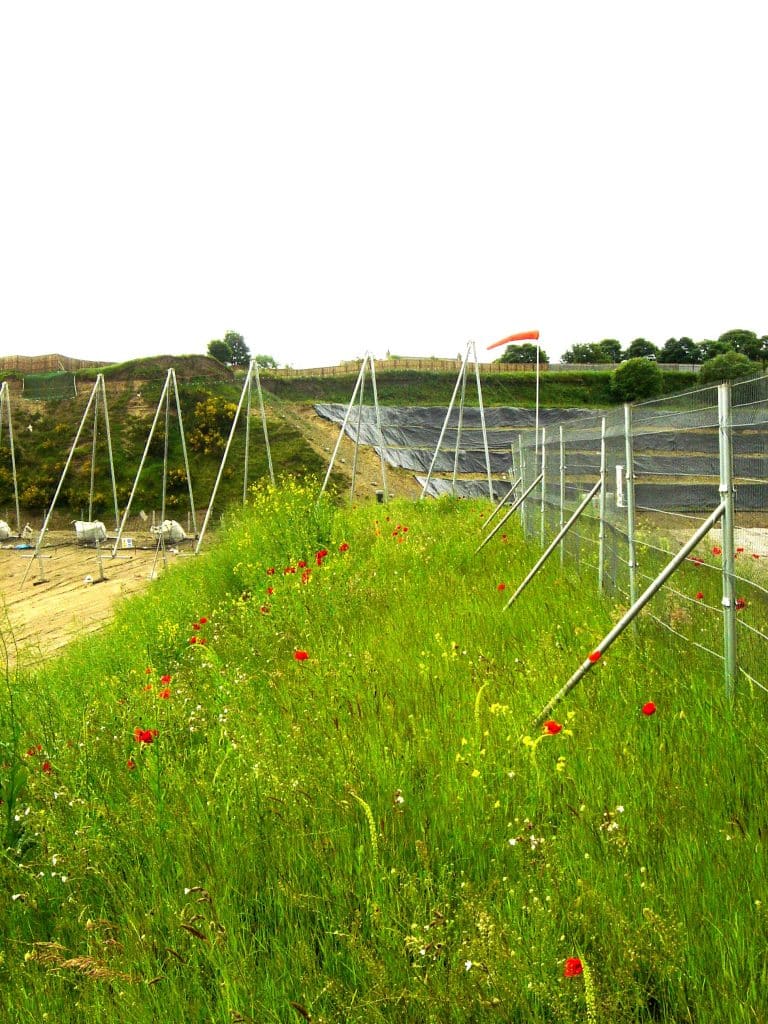
The volume of waste added to the site meant that the land was raised by 6 – 7 metres in height. Additional concern was created by the crucial gas distribution pipeline which passes underneath Bonnie Braes Farm, one of two that supplies Stoke-on-Trent. A fracture of the pipeline would have had devastating consequences, causing disruption to the supply of gas as well as the potential closure of the busy A500 road for a significant period.
Mr Recorder Nicholls, found that the offending caused Category 1 harm to the environment due to the eyesore that the deposits caused. In considering the large scale illegal waste crime in Staffordshire, he stated the impact that the weight had on the site, created negative effects not only to the gas pipeline but also to a culvert on the site, which was found to have collapsed, causing significant flooding to the land in heavy rain. The operation of the site also caused significant disruption on lanes that were unsuitable for large vehicles and the tracking of mud from the site across the roads.
We are glad to see the outcome of these prosecutions and will continue to work tirelessly to tackle environmental crime. Illegal waste sites like this, undermine legitimate businesses, undercut their prices, and blight the environment. We would urge everyone to check that a waste site is licenced before using them by checking the public register online at GOV.UK. If people suspect criminal activity, they should report it to our 24-hour incident hotline 0800 807060 or anonymously through CrimeStoppers on 0800 555111.
Mr Recorder Nicholls imposed the sentences as follows:
Raymond Bowden,64 of Liverpool Road, Church Lawton, was sentenced to 30 months immediate custody. He was also disqualified from holding the position of a director for a period of 8 years and 3 months. A Proceeds of Crime Application is outstanding and will be determined at a future date.
Joe Frizell, 48 of Crewe Road, Shavington, was sentenced to 2 years immediate custody. He was also disqualified from holding the position of a director for a period of 6 years. A Proceeds of Crime Application is outstanding and will be determined at a future date.
James Bowden, 44 of Bignall Hill, Bignall End was sentenced to 15 months imprisonment that was immediately suspended for 18 months. He must undertake 240 hours of unpaid work. He was also disqualified from holding the position of a director for a period of 5 years. A Proceeds of Crime Application is outstanding and will be determined at a future date.
Victoria Webb-Johnson, 47 of Sydney Road, Crewe was sentenced to 10 weeks imprisonment suspended for 12 months. She was also ordered to pay a contribution towards the costs of the prosecution of £8000 and the victim surcharge.
Stefan Paraszko, 66 of High Street Silverdale, was sentenced to 11 months imprisonment that was immediately suspended for 18 months and the victim surcharge.
VWJ Earth Moving Limited was fined £11,000 and ordered to pay a contribution towards the costs of the prosecution of £8000 and the victim surcharge
Jumbo Waste and Metal Limited was fined £1, as the company is in liquidation, and the victim surcharge.
TW Frizell (Haulage & Plant Hire) Ltd was fined £1, as the company is in liquidation, and the victim surcharge.
Joe Frizell was also sentenced alongside RJC Regeneration Limited in respect of a matter that occurred at Elms Farm, Betley, Crewe. In that case waste was deposited without the benefit of an Environmental Permit and exceeded the allowances of any waste exemptions.
In respect of the Elms Farm case, Mr Recorder Nicholls imposed the following sentences:
Joe Frizell was sentenced to 2 months immediate custody to run concurrently with his other sentence – this means he received a total of 2 years immediate custody overall.
RJC Regeneration Limited was fined £8000 and the victim surcharge
Further information
In the matter large scale illegal waste crime in Staffordshire from Chester Crown Court, Joe Frizell, RJC Regeneration Ltd and Mark Oulton pleaded guilty on 18 July 2023 to offences relating to the depositing of illegal waste at Doddlespool Farm and Elms Farm, Crewe at Chester Crown Court on 18 July 2023.
Mark Oulton, 53 of Main Road, Betley, was sentenced by Chester Crown Court on 8 September 2023 to 9 months custody suspended for 18 months. In addition, he was sentenced to 130 hours unpaid work, a £5000 fine and ordered to pay a contribution towards the prosecution costs of £27,000. Mr Oulton was also made subject to a court order requiring him to remove waste illegally deposited and stored on Doddlespool Farm by 8 September 2024.
Large Scale Illegal Waste Crime Charges
Jumbo Waste & Metals Ltd
Jumbo Waste & Metals Ltd did between the 1st March 2014 and the 30th June 2015, contravened regulation 12(1) of the Environmental Permitting (England and Wales) Regulations 2010 operate a regulated facility on land known as Bonnie Braes Farm, Bignall End, without the authorisation of an environmental permit, contrary to Regulation 38(1)(a) of the Environmental Permitting (England and Wales) Regulations 2010.
Raymond Bowden
Raymond Bowden did between the 1st March 2014 and the 30th June 2015, contravened regulation 12(1) of the Environmental Permitting (England and Wales) Regulations 2010 operate a regulated facility on land known as Bonnie Braes Farm, Bignall End, without the authorisation of an environmental permit, contrary to Regulation 38(1)(a) of the Environmental Permitting (England and Wales) Regulations 2010.
James Bowden
Between the 12th January 2015 and the 30th June 2015, Jumbo Waste & Metals Ltd contravened regulation 12 of the environmental permitting (England and Wales) Regulations 2010 by operating a regulated facility at Bonnie Braes Farm, Bignall End outside the terms of authorisation of an environmental permit and this offence was committed with the consent or connivance or was attributable to the neglect of James Bowden, being a director of the said company, contrary to Regulation 38(1) and Regulation 41(1) of the Environmental Permitting (England and Wales) Regulations 2010.
Stefan Paraszko
Stefan Paraszko pleaded guilty to between the 1st March 2014 and the 30th June 2015, contravened regulation 12(1) of the Environmental Permitting (England and Wales) Regulations 2010 operating a regulated facility on land known as Bonnie Braes Farm, Bignall End, without the authorisation of an environmental permit, contrary to Regulation 38(1)(a) of the Environmental Permitting (England and Wales) Regulations 2010.
TW Frizell (Haulage & Plant Hire) Ltd
TW Frizell (Haulage & Plant Hire) Ltd, between the 1st March 2014 and the 30th June 2015, deposited controlled waste on land at Bonnie Braes Farm, Bignall End when there was no environmental permit in force authorising the deposits, contrary to sections 33(1)(a) and 33(6) of the Environmental Protection Act 1990.
Joe Frizell
Between the 1st March 2014 and the 30th June 2015, TW Frizell (Haulage & Plant Hire) Ltd deposited controlled waste on land at Bonnie Braes Farm, Bignall End when there was no environmental permit in force authorising the deposits and this offence was committed with the consent or connivance or was attributable to the neglect of Joe Frizell, being a director of the said company, contrary to sections 33(1)(a), 33(6) and 157(1) of the Environmental Protection Act 1990.
VWJ Earthmoving Ltd
VWJ Earthmoving Ltd pleaded guilty to between the 1st March 2014 and the 30th June 2015, depositing controlled waste on land at Bonnie Braes Farm, Bignall End when there was no environmental permit in force authorising the deposits, contrary to sections 33(1)(a) and 33(6) of the Environmental Protection Act 1990.
Victoria Webb-Johnson
Victoria Webb-Johnson pleaded guilty to between the 1st March 2014 and the 30th June 2015, VWJ Earthmoving Ltd deposited controlled waste on land at Bonnie Braes Farm, Bignall End when there was no environmental permit in force authorising the deposits and this offence was committed with the consent or connivance or was attributable to the neglect of Victoria Webb-Johnson, being the director of the said company, contrary to sections 33(1)(a), 33(6) and 157(1) of the Environmental Protection Act 1990.
Chester Court Charges
Mark Oulton
Between 16 February 2018 to 22 March 2021 at Doddlespool Farm, Main Road, Betley, Crewe, CW3 9AE, Mark Oulton did operate a regulated facility, namely a waste operation for storage of waste, except under and to the extent authorised by an environmental permit, contrary to Regulations 12 and 38(1)(a) of the Environmental Permitting (England and Wales) Regulations 2016.
Between 3 October 2017 to 22 March 2021 at Elms Farm, Betley Road, Betley, Crewe, Mark Oulton did operate a regulated facility, namely a waste operation for storage of waste, except under and to the extent authorised by an environmental permit, contrary to Regulations 12 and 38(1)(a) of the Environmental Permitting (England and Wales) Regulations 2016.
RJC Regeneration Ltd
Between 3 October 2017 to 23 March 2018 at Elms Farm, Betley Road, Betley, Crewe, RJC Regeneration Ltd did deposit waste on land without the benefit of an environmental permit contrary to Section 33(1)(a) of the Environmental Protection Act 1990.
Joe Frizell
Between 3 October 2017 to 23 March 2018 at Elms Farm, Betley Road, Betley, Crewe, RJC Regeneration Ltd did deposit waste on land without the benefit of an environmental permit and that offence was committed with the consent, connivance or was attributable to the neglect of Joe Frizell contrary to Sections 33(1)(a) and 157 of the Environmental Protection Act 1990.
Openreach Limited has been fined £1.34 million in a prosecution brought by the Health and Safety Executive (HSE) after an engineer tragically died working near river whilst trying to repair a telephone line.
Alun Owen, from Bethesda, died after he slipped and fell into the River Aber in Abergwyngregyn and was swept away on 6 October 2020. The 32-year-old has been described by his family as a ‘loving and selfless character’.
An investigation by the HSE and North Wales Police, found that a number of Openreach engineers had been attempting to repair the telephone lines, which ran across the river, over a period of two months. They had been working both near and in the river. At the time of the incident, there had been flooding in the area which meant the river was much higher and faster flowing than usual.
Mr Owen entered the water and made his way to an island in the middle of the river in order to try and throw a new telephone cable across to the other side by taping it to a hammer and then throwing the hammer. Whilst attempting to cross the remaining section of the river, he slipped in a deeper part and the force of the river swept him away.
The investigation found that there was no safe system of work in place for work on or near water, nor had Mr Owen – and others working by the river – received training, information or instruction on safe working on or near water.
Openreach Limited pleaded guilty to breaching Section 2 (1) of the Health and Safety at work etc. Act 1974. The company was fined £1.34 million and ordered to pay costs of £15,858.35 at Llandudno Magistrates’ Court on 5 June 2024.
“This was a tragic incident that resulted in the death of a much loved young man. Mr Owen’s family, friends and colleagues have always remained in our thoughts. His death would have been preventable had an effective system for working on or near water been in place. Mr Owen should not have been put in the unsafe working situation. Companies should learn the lessons from this incident if they have staff who may work on or near water and be aware that HSE will not hesitate to take appropriate enforcement action against those that fall below the required standards.”
North Wales Police Detective Chief Inspector Andy Gibson said:
“Our thoughts remain with Alun’s family at this difficult time. North Wales Police worked closely with HSE and whilst it was a protracted and lengthy investigation, it was critical that any failings were identified and acted upon.”
identify what could cause injury or illness in your business (hazards)
decide how likely it is that someone could be harmed and how seriously (the risk)
take action to eliminate the hazard, or if this isn’t possible, control the risk
Assessing risk is just one part of the overall process used to control risks in the workplace. For most small, low-risk businesses the steps that employers need to take are straightforward. Risk management is a step-by-step process for controlling health and safety risks caused by hazards in the workplace. An employer can undertake the risk assessment themselves or appoint a competent person to help. The five steps of a risk assessment are:
Identify hazards
Assess the risks
Control the risks
Record your findings
Review the controls
Identify Hazards
Look around your workplace and think about what may cause harm (these are called hazards). Think about:
how people work and how plant and equipment are used
Look back at previous accident and ill health records as these can help you identify less obvious hazards. Take account of non-routine operations, such as maintenance, cleaning or changes in production cycles. Think about hazards to health, such as manual handling, use of chemicals and causes of work-related stress. For each hazard, think about how employees, contractors, visitors or members of the public might be harmed.
Some workers have particular requirements, for example young workers, migrant workers, new or expectant mothers and people with disabilities. Ensure that you involve your employees as they will usually have good ideas.
Assess the risks
Once you have identified the hazards, decide how likely it is that someone could be harmed and how serious it could be – this is assessing the level of risk. In assessing the level of risk, decide:
Who might be harmed and how
What you’re already doing to control the risks
What further action you need to take to control the risks
Who needs to carry out the action
When the action is needed by
Control the risks
Look at what you are already doing, and the controls you already have in place to ensure the safety of workers and others. Consider:
Can I get rid of the hazard altogether?
If not, how can I control the risks so that harm is unlikely?
If you need further controls, consider:
redesigning the job
replacing the materials, machinery or process
organising your work to reduce exposure to the materials, machinery or process
identifying and implementing practical measures needed to work safely
providing personal protective equipment and making sure workers wear it
Put the controls you have identified in place. It is important to remember that you are not expected to eliminate all risks but you need to do everything ‘reasonably practicable’ to protect people from harm. This means balancing the level of risk against the measures needed to control the real risk in terms of money, time or trouble.
Record your findings
If you employ 5 or more people, you must record your significant findings, including:
the hazards (things that may cause harm)
who might be harmed and how
what you are doing to control the risks
The HSE has a number of example risk assessments on its website as a guide for employers. Employers should not rely purely on paperwork, as the main priority should be to control the risks in practice.
Review the controls
You must review the controls you have put in place to make sure they are working. You should also review them if:
they may no longer be effective
there are changes in the workplace that could lead to new risks such as changes to:
staff
a process
the substances or equipment used
Also consider a review if your workers have spotted any problems or there have been any accidents or near misses. You should then update your risk assessment record with any changes you make.
An employee died loading a lorry at a landscaping company which resulted in the company being fined following a prosecution brought by the Health and Safety Executive.
An East Yorkshire garden landscaping supply company has been fined £600,000 after an employee died while loading a lorry.
Brian White, 59, was working for Kelkay Limited when he was operating a forklift truck at the company’s site on Heck and Pollington Lane, Pollington, East Yorkshire, on 15 June 2018.
Brian was fatally injured when the lorry he was loading was moved by the driver, pulling the forklift truck over and trapping him underneath.
An investigation by the Health and Safety Executive (HSE) found Kelkay Limited’s risk assessment failed to take into account the possibility of lorries moving while they are being loaded. HSE also found that the systems of work provided for ensuring that vehicles were not moved during loading activities were inadequate.
Kelkay Limited, of Heck and Pollington Lane, Pollington, East Yorkshire, pleaded guilty to breaching Section 2(1) of the Health and Safety at Work etc. Act 1974. The company was fined £600,000 and ordered to pay £20,848.71 in costs at Grimsby Magistrates’ Court on 30 March 2023.
HSE inspector John Boyle commented: “This incident could have been avoided by implementing the correct control measures and safe working practices.”
“Companies should be aware that HSE will not hesitate to take appropriate enforcement action against those that fall below the required standards.”
Loading Guidance
Loading and unloading can be dangerous. Machinery can seriously hurt people. Heavy loads, moving or overturning vehicles and working at height can all lead to injuries or death.
Loading and unloading areas should be:
Clear of other traffic, pedestrians and people not involved in loading or unloading.
Clear of overhead electric cables so there is no chance touching them, or of electricity jumping to ‘earth’ through machinery, loads or people.
Level. To maintain stability, trailers should be parked on firm level ground,
Loads should be spread as evenly as possible, during both loading and unloading. Uneven loads can make the vehicle or trailer unstable.
Loads should be secured or arranged so that they do not slide around. Racking may help stability.
Safety equipment must be considered. Mechanical equipment and heavy moving loads are dangerous. Guards or skirting plates may be necessary if there is a risk of anything being caught in machinery (for example dock levellers or vehicle tail lifts). There may be other mechanical dangers and safety procedures to be considered.
Ensure the vehicle or trailer has its brakes applied and all stabilisers are used. The vehicle should be as stable as possible.
In some workplaces it may be possible to install a harness system to protect people working at height. Provide a safe place where drivers can wait if they are not involved. Drivers should not remain in their cabs if this can be avoided. No-one should be in the loading/unloading area if they are not needed.
Vehicles must never be overloaded. Overloaded vehicles can become unstable, difficult to steer or be less able to brake.
Always check the floor or deck of the loading area before loading to make sure it is safe. Look out for debris, broken boarding, etc.
Loading should allow for safe unloading.
Loads must be suitably packaged. When pallets are used, the driver needs to check that they are in good condition and loads are properly secured to them. Employers must ensure that loads are safe on the vehicle. They may need to be securely attached to make sure they cannot fall off.
Tailgates and sideboards must be closed when possible. If over-hang cannot be avoided, it must be kept to a minimum. The over-hanging part of the load must be clearly marked.
If more than one company is involved, they should agree in advance how loading and unloading will happen. For example, if visiting drivers unload their vehicles themselves, they must receive the necessary instructions, equipment and co-operation for safe unloading. Arrangements will need to be agreed in advance between the haulier and the recipient.
Some goods are difficult to secure during transport. Hauliers and recipients will need to exchange information about loads in advance so that they can agree safe unloading procedures.
Checks must be made before unloading to make sure loads have not shifted during transit and are not likely to move or fall when restraints are removed.
There must be safeguards against drivers accidentally driving away too early. This does happen and is extremely dangerous. Measures could include:
Traffic lights.
The use of vehicle or trailer restraints.
The person in charge of loading or unloading could keep hold of the vehicle keys or paperwork until it is safe for the vehicle to be moved.
These safeguards would be especially effective where there could be communication problems, for example where foreign drivers are involved.
A corporate manslaughter prosecution by Dorset Police has resulted in convictions for a waste management company and its director.
A waste and recycling company has been sentenced for corporate manslaughter and other health and safety offences following the death of a man at a site in Poole. A company director has also been sentenced in connection with the incident.
Detectives from Dorset Police have been working with the Health and Safety Executive (HSE) to conduct investigations into two incidents that occurred at the FDS Waste Services in Mannings Heath Road.
The first incident occurred on Thursday 13 December 2018 when an employee at the site was injured following a collision with a vehicle and very sadly died as a result of the injuries he sustained. The man was sorting recycling materials by hand in the yard when he was struck and killed by a reversing wheeled loader vehicle, which was being used to sort materials.
A further incident occurred on Monday 1 June 2020, in which an employee sustained injuries after becoming trapped in a large mechanical conveyor after he had climbed in to remove a blockage. The man sustained broken ribs and other injuries.
The joint investigation focused on allegations that the company had failed to put in place sufficient working practices to safeguard its employees, including failing to ensure employees were segregated from moving vehicles during waste sorting. It was also found that the company failed to provide its employees with adequate training, monitoring and supervision to prevent vehicle collisions in the yard.
A separate investigation by the HSE found that FDS Waste Services failed to ensure that the workforce was provided with the padlocks required for locking the power source of the machinery in the ‘off’ position and did not offer adequate training for dealing with blockages and other maintenance tasks, which required access behind the machinery guards.
Detectives from Dorset Police’s Major Crime Investigation Team (MCIT) worked jointly with the HSE to conduct detailed enquiries into the operations at the facility and liaised with a number of experts to compile evidence. Following engagement with specialists at the Crown Prosecution Service, charges were approved and the matter was brought before the court.
At a sentencing hearing on Wednesday 22 February 2023, the company was ordered to pay fines totalling £640,000, as well as costs of £60,000. Also, the company director, Philip Pidgley, was also convicted of an offence of failing to discharge his duty under the Health and Safety at Work Act 1974. He was sentenced to six months in prison, suspended for 12 months.
“Our thoughts remain with the family and loved ones of Mr Mohamed, who sadly died as a result of the incident on Thursday 13 December 2018.
“Nothing will ever make up for their loss, but we owe it to them to ensure those who put him and other employees at risk by failing to instil safe working practices are held to account.
“We have carried out a detailed investigation in conjunction with the HSE and other experts in order to demonstrate how the company fell below the standards required of them.”
Detective Superintendent Rich Dixey, of Dorset Police
After the prosecution, HSE inspector Berenice Ray said:
“Both of these incidents, including the tragic death of Mr Mohamed, could have been avoided had well-established measures been taken to ensure workers’ health and safety.
“Those in control of work must ensure that their workplace is organised in such a way that pedestrians and vehicles can circulate in a safe manner.
“They must also ensure that the power source of relevant machinery is isolated and physically ‘locked off’ whenever the guards are removed or access within the machinery is necessary.
“Those in control of work have a duty to assess the risks; devise safe methods of working and provide the necessary information, instruction and training to their workforce.
“They must also adequately supervise work activities to check the effectiveness of the training provided and ensure safe systems of work are followed.
“There is clear, freely available guidance on how to manage these risks available on HSE’s website.”
Guidance
Employers who operate waste management sites must ensure that a suitable and sufficient risk assessment is undertaken covering the plant movement risks. When considering the risks from vehicle manoeuvring, employers must ensure that vehicles have large enough windscreens (with wipers where necessary) and external mirrors to provide an all-round field of vision. It is often worthwhile adding extra mirrors to reduce blind spots for drivers. Side mirrors can allow drivers of larger vehicles to see cyclists and pedestrians alongside their vehicles and can be effective in improving visibility around the vehicle from the driving position. These mirrors are fitted to larger road-going vehicles as standard.
Drivers should not place items in the windscreen area or in the way of mirrors or monitors, where they might impede visibility from the driving position. The area of the windscreen that is kept clear by the wipers should not be obscured, and nor should the side windows. Windows and mirrors will also normally need to be kept clean and in good repair. Dirt or cracks can make windows or mirrors less effective.
Some types of vehicles (such as straddle carriers, large shovel loaders and some large quarry vehicles) often have poor visibility from the cab. Visibility can be poor to the side or front of a vehicle as well as behind and loads on vehicles can severely limit the visibility from the driving position.
Lift trucks and compact dumper vehicles in particular can have difficulty with forward visibility when they are transporting bulky loads. Employers should recognise these risks in their risk assessment and think about ways to minimise them.
Closed-circuit television (CCTV) may help drivers to see clearly behind or around the vehicle. CCTV can cover most blind spots and the cost of fitting CCTV systems has fallen since the technology was first developed. Companies who have fitted CCTV have found that it can reduce the number of reversing accidents, so the systems usually pay for themselves in a few years.
Colour systems can provide a clearer image where there is little contrast (for example, outside on an overcast day). However, black-and-white systems normally provide a better image in lower light or darkness, and usually come with infra-red, which can be more effective than standard cameras at night.
Monitors should have adjustable contrast, brightness and resolution controls to make them useful in the different light conditions in which they will be used. Drivers may need to use a hood to shield any monitor from glare.
If possible, fit the camera for a CCTV system high up in the middle of the vehicle’s rear (one camera), or in the upper corners (two cameras). This will provide a greater field of vision and a better angle for the driver to judge distance and provide. It also keeps the camera clear of dust and spray, and out of the reach of thieves or vandals.
However, CCTV systems do have some limitations which employers should consider:
If the vehicle leaves a darker area to a more strongly lit area (for example, driving out of a building) the system may need time to adjust to the brightness.
A dirty lens will make a camera much less effective.
Drivers may find it difficult to judge heights and distances.
Drivers should not be complacent about safety even with CCTV systems installed. They should be trained in proper use of the equipment and employers have a duty to provide such training and instruction.
Reversing alarms may be drowned out by other noise or may be so common on a busy site that pedestrians do not take any notice. It can also be hard to know exactly where an alarm is coming from, and people who are less able to hear are also at greater risk. Alarms can also disturb nearby residents. However, reversing alarms may be appropriate (based on the risk assessment) but might be most effectively used with other measures, such as warning lights.
A company which handles hazardous waste has agreed a pollution enforcement undertaking with the regulator. The company made a payment of £25,000 to an environmental charity following the contamination of groundwater at its site.
Augean South Limited of Stamford Road, Kings Cliffe, Northamptonshire also paid £11,058.90 to cover the costs of the Environment Agency investigation.
The discharge in 2020 had a short-term impact on wildlife and saw some amphibian species decline but populations recovered by the following summer. Vegetation also naturally improved after the pollution.
Routine inspections in March 2020, detected high levels of chemicals in the groundwater adjacent to the treatment centre at East Northants Resource Management Facility. The site is operated by Augean South Limited.
Enforcement undertakings are one of the civil sanctions available to the Environment Agency, enabling the wrongdoer to put right the situation and compensate for any environmental harm.
As part of this agreement, Augean donated £25,000 to the Rockingham Forest Trust, a local charity which promotes environmental projects in Northamptonshire.
It is believed that heavy rainfall during the winter and subsequent storms contributed to the chemical discharge.
The Environment Agency was satisfied Augean took appropriate action to resolve the situation. The company had acted in a timely manner to remove and clean the affected land, whilst continuing to monitor the groundwater and soil. There have been no similar incidents since at the waste facility.
Enforcement undertaking
An Enforcement Undertaking is a voluntary offer made by an offender to:
put right the effects of their offending
put right the impact on third parties
make sure the offence cannot happen again
Where the Environment Agency accepts the offer, it becomes a legally binding agreement between the Agency and the business or person who makes the offer. The regulator will only consider accepting an enforcement undertaking in cases where:
it is not in the public interest to prosecute
the offer itself addresses the cause and effect of the offending
the offer protects, restores or enhances the natural capital of England
The Environment Agency publishes details of all enforcement undertakings on its website.
Enforcement undertakings can be offered following pollution incidents (stock image)
The Agency is more likely to accept offers when they are offered early and proactively. Generally, the regulator will only consider accepting an enforcement undertaking offer when:
they are confident the terms of the enforcement undertaking will be complied with
they believe a breach of relevant legislation has occurred
they consider the enforcement undertaking to be the correct regulatory outcome taking into account (i) the nature of the offence and its impact, and (ii) other forms of enforcement available, to remedy the issues concerned, to the environment and the community
the offer is above what the company would normally need to do to comply
the offer is given in good faith
the offeror makes a positive commitment, at the right company level to stop the offending conduct or alleged breach and to maintain compliance
the offeror rectifies the consequences of the conduct, including interacting with any third party affected by the offence
the offer does not contain restrictions on how the Agency may publish its acceptance in cases involving pollution of the environment or harm to human health and it is demonstrated that any necessary remediation or restoration work commenced or will commence at the earliest opportunity.
There are a number of situations where the Agency will not accept an enforcement undertaking for example, incidents or breaches which are serious (category 1 and 2) unless low culpability or negligence at a low level. Where legal proceedings have commenced or where the offence was intentional then the Agency are unlikely to accept enforcement undertakings. For this reason, where a company is considering offering an enforcement undertaking it should be made at a very early stage and it must not include clauses denying liability or restrictions on publicity.
To provide the best experiences, we use technologies like cookies to store and/or access device information. Consenting to these technologies will allow us to process data such as browsing behaviour or unique IDs on this site. Not consenting or withdrawing consent, may adversely affect certain features and functions.
Functional
Always active
The technical storage or access is strictly necessary for the legitimate purpose of enabling the use of a specific service explicitly requested by the subscriber or user, or for the sole purpose of carrying out the transmission of a communication over an electronic communications network.
Preferences
The technical storage or access is necessary for the legitimate purpose of storing preferences that are not requested by the subscriber or user.
Statistics
The technical storage or access that is used exclusively for statistical purposes.The technical storage or access that is used exclusively for anonymous statistical purposes. Without a subpoena, voluntary compliance on the part of your Internet Service Provider, or additional records from a third party, information stored or retrieved for this purpose alone cannot usually be used to identify you.
Marketing
The technical storage or access is required to create user profiles to send advertising, or to track the user on a website or across several websites for similar marketing purposes.